Table of Contents
Mosquitoes don’t prefer standing water. They require it. Every mosquito biting you this summer spent its first week as a larva wriggling in a puddle, a forgotten bucket, or a clogged gutter somewhere on your property. You can’t repellent your way out of a breeding problem – the adults will keep coming as long as the water stays. The only fix that actually lasts is eliminating the source. You don’t need chemicals, you don’t need a professional, and you don’t need to spend money. You need to do a thorough property walkthrough and address four categories of standing water. Here’s how.
1. Eliminate Standing Water with the Tip and Turn Method
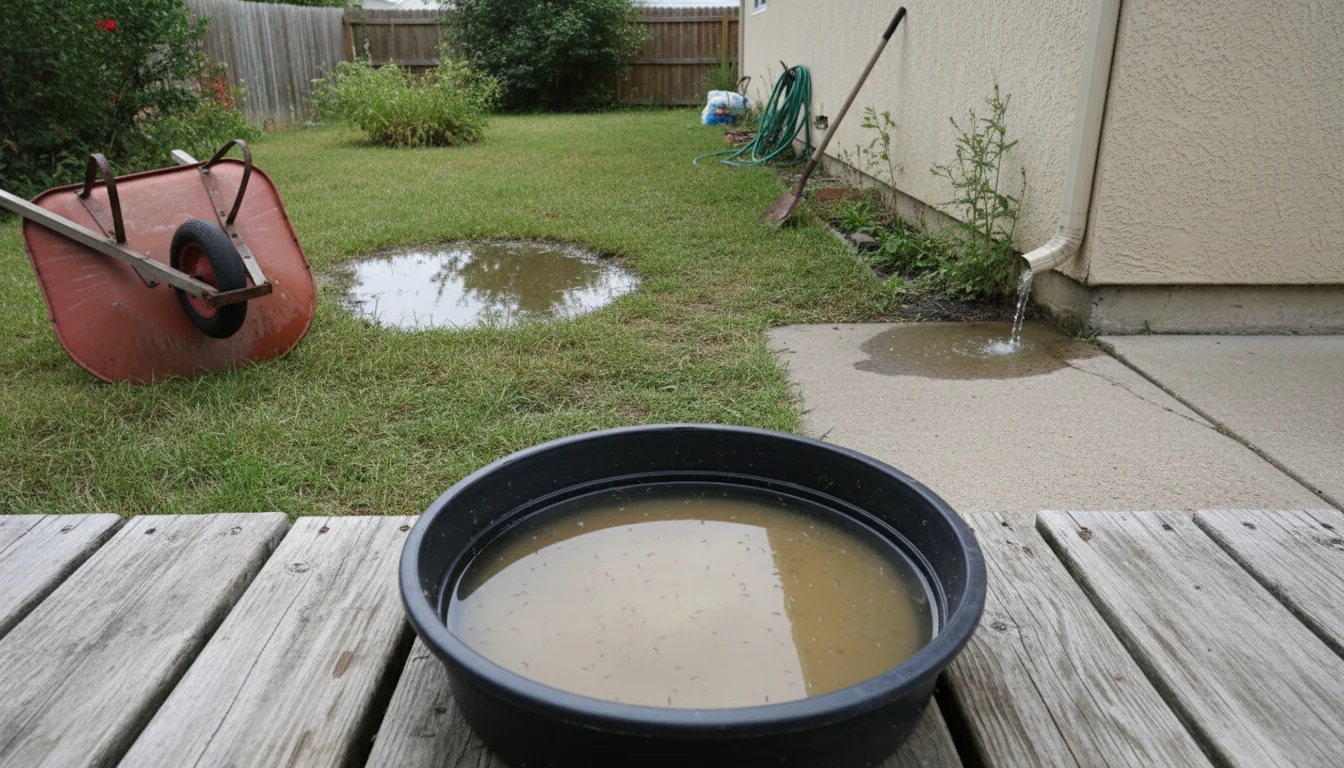
This is the foundation. Walk your property and tip over anything that collects water: flower pots, wheelbarrows, buckets, kids’ toys, tarps, grill covers, trash can lids. Turn them upside down so they can’t refill in the next rain.
Pay attention after any rainfall. That plastic saucer under your potted plant? It probably has mosquito larvae wriggling in it right now. Empty it, scrub it with a stiff brush to dislodge eggs stuck to the sides, and either remove it entirely or check it every five days. This single walk-around does more to cut your mosquito population than any spray or repellent you’ll buy.
Don’t skip the overlooked spots: pool covers, tire swings, tarp folds, low spots in tarps sagging under their own weight, the base of bird feeders, plant drainage trays indoors and out. Mosquitoes need less than half an inch (1 cm) of standing water to breed. If it holds water for more than a few days, it’s a candidate. The tip-and-turn takes 20 minutes the first time. After that, a quick check after rain is enough to stay ahead of it.
2. Empty and Scrub Water Containers Weekly
Some containers can’t go away – bird baths, pet water bowls, outdoor planters. For these, change the water completely every five to seven days. Mosquito eggs become flying adults in 7-10 days, so a weekly refresh breaks the lifecycle before it completes. Skip a week and you’ve handed them a free generation.
Scrub the container while you’re at it. Mosquito eggs can survive drying out and will hatch when water returns – just emptying and refilling isn’t enough if the eggs are still clinging to the sides. That’s the mistake most people make. A 30-second scrub with a stiff brush removes the dormant eggs before they get a second chance. For bird baths, this routine also keeps the water fresh, which the birds prefer anyway.
3. Maintain Gutters and Drainage
Clogged gutters are mosquito factories. Leaves and debris trap water that sits for weeks, out of sight. Clean your gutters at least twice a year – spring and fall – and check them after heavy storms when debris accumulates fast.
While you’re up there, survey the ground-level drainage situation too: low spots in the yard that hold water for more than a day after rain, leaking outdoor faucets creating persistent puddles, AC condensate drip pans that overflow, sump pump discharge areas. Fix the leaks. Fill the low spots with soil or gravel to improve runoff. Every wet patch that lingers more than two days is a breeding ground you’re maintaining for free.
4. Treat Standing Water with Larvicide
For water you genuinely can’t eliminate – ornamental ponds, rain barrels, drainage ditches, large decorative containers – use a larvicide containing Bacillus thuringiensis israelensis (Bti). This naturally occurring bacteria kills mosquito larvae specifically and is safe for fish, birds, frogs, pets, and people.
Mosquito Dunks and Mosquito Bits are the most widely available products. Dunks are donut-shaped tablets that slowly release Bti over about 30 days – drop one into standing water and walk away. Bits work faster for an immediate knockdown. Both are at garden centers and online.
Use this alongside the tip-and-turn method. Larvicide doesn’t replace source elimination – it handles the water you can’t drain. If you skip source elimination and just dunk everything, you’ll be buying dunks forever while the problem stays constant.
The four methods above work as a system. Walk the property, tip and scrub what you can eliminate, schedule weekly refreshes for what you can’t, clear the gutters, and treat any permanent water features. Do all four once and you’ll notice the difference in a week.