Table of Contents
Mold in your house is a moisture problem wearing a mold costume. You can scrub a patch off the wall and it looks gone, but if the water feeding it stays, it comes back within the week. That is why cleaning alone almost never works: it treats the stain, not the cause. The order that does work is find and fix the water source, remove the visible growth safely, then hold the humidity down so spores never get a foothold. The twelve methods below run in that order, from the fix that matters most to the professional help a big infestation needs.
1. Identify and Fix Moisture Sources
Start here. Every other method on this page is treating a symptom if water is still getting in.
Check pipes, the water heater, and any appliance connection for slow drips. Look at foundation walls for cracks where water seeps through after rain, and at window wells for standing water or poor drainage. The usual culprits are groundwater through porous concrete, condensation on cold surfaces, a leaking pipe, and ground that slopes toward the house instead of away.
Fix plumbing leaks the same day you find them. Seal foundation cracks with hydraulic cement for an active leak or epoxy injection for a dry one, and regrade soil so it drains away from the walls. If the damp is condensation rather than a leak, tackle the condensation at its source first. Skip this step and every other one is a holding action.
2. Wear Protective Gloves and Mask
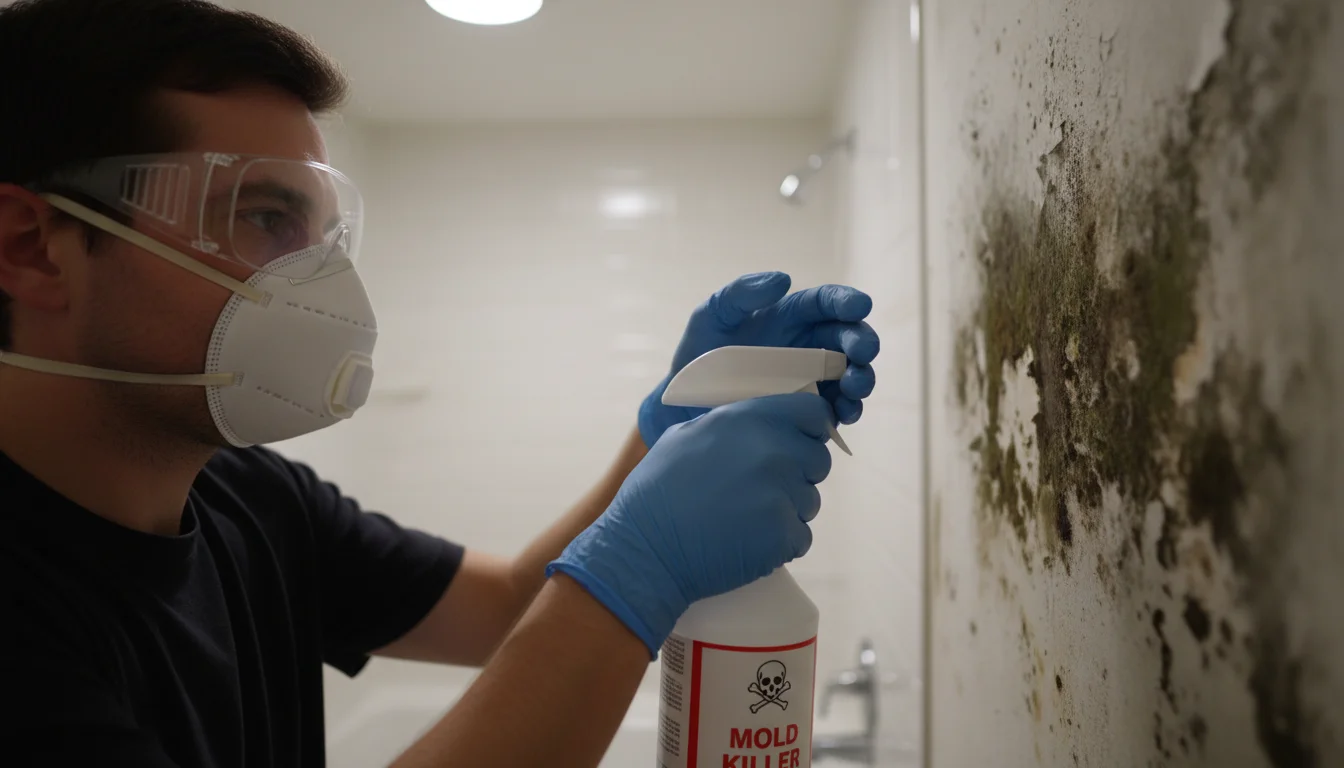
Before you clean anything, protect yourself. Mold throws spores into the air the moment you disturb it, and those spores irritate eyes, noses, and airways, most of all in people who are already sensitive.
Wear rubber gloves, safety goggles, and an N95 respirator (a standard dust mask is not enough – N95 or better). Long sleeves and long trousers keep it off your skin. Open a window for airflow while you work so you are not breathing a concentrated cloud in a closed room.
If you have asthma, an allergy to mold, or a weakened immune system, do not clean it yourself. Hand the job to a professional. Saving a cleaning fee is not worth the reaction.
3. Clean with Mild Detergent Solution
For most household mold on a hard surface, you do not need anything harsh. Scrub with hot soapy water first: a squirt of dish soap in a bucket of warm water, worked in with a stiff brush. The soapy scrub does the real work, because it breaks the mold’s surface layer so it lifts instead of smearing. Rinse, then dry the surface completely – leaving it damp just resets the clock.
For stubborn dark staining on a non-porous surface like tile or sealed grout, follow the scrub with a diluted bleach solution, no more than 1 cup of bleach per gallon (3.8 L) of water, the ratio the CDC lists. Wipe it off, then rinse. Never mix bleach with ammonia or another cleaner; the fumes are genuinely dangerous.
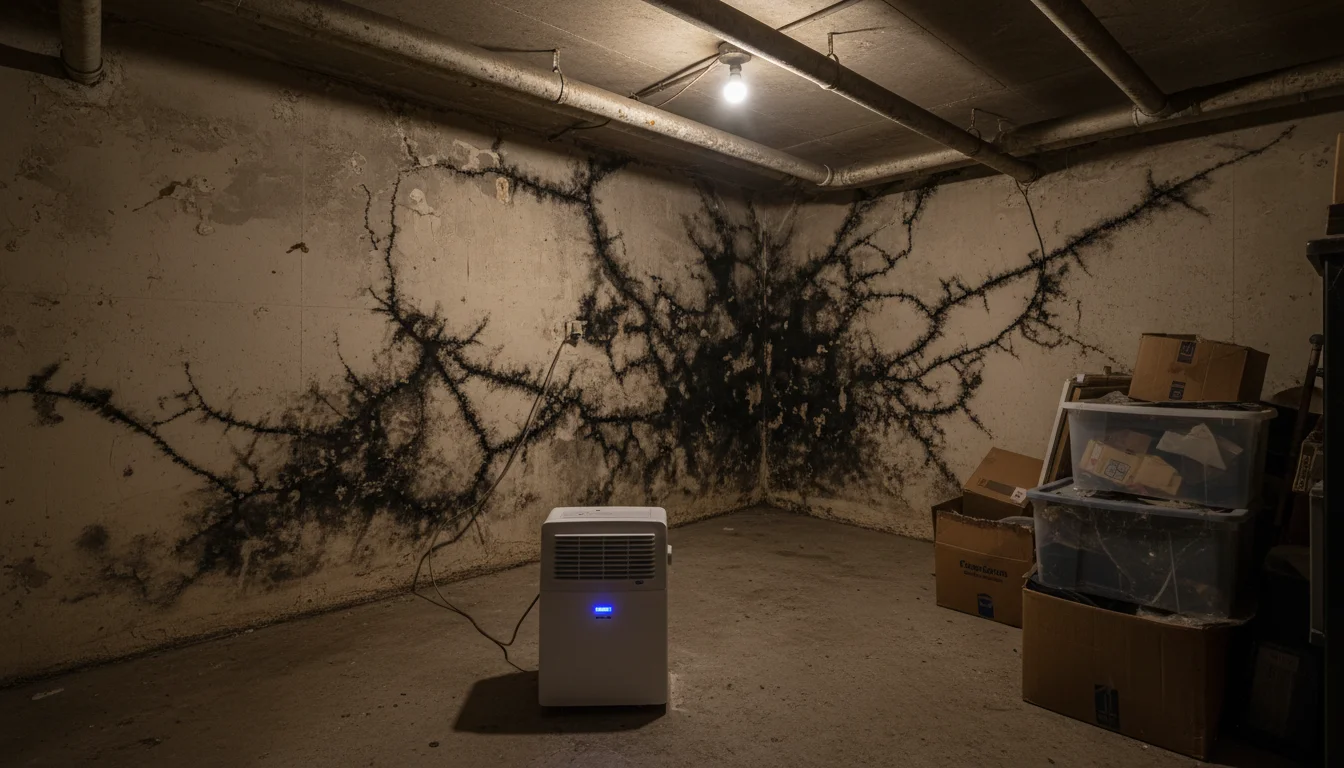
The catch is porous material. Bleach and detergent clean a surface, but they cannot reach mold that has grown into soaked carpet, ceiling tiles, insulation, or drywall. Anything absorbent that stayed wet and grew mold usually cannot be saved – cut it out and bin it rather than trying to scrub it clean. On walls specifically, the depth of the growth decides whether you wash the surface or open it up.
4. Maintain Humidity Below 50%
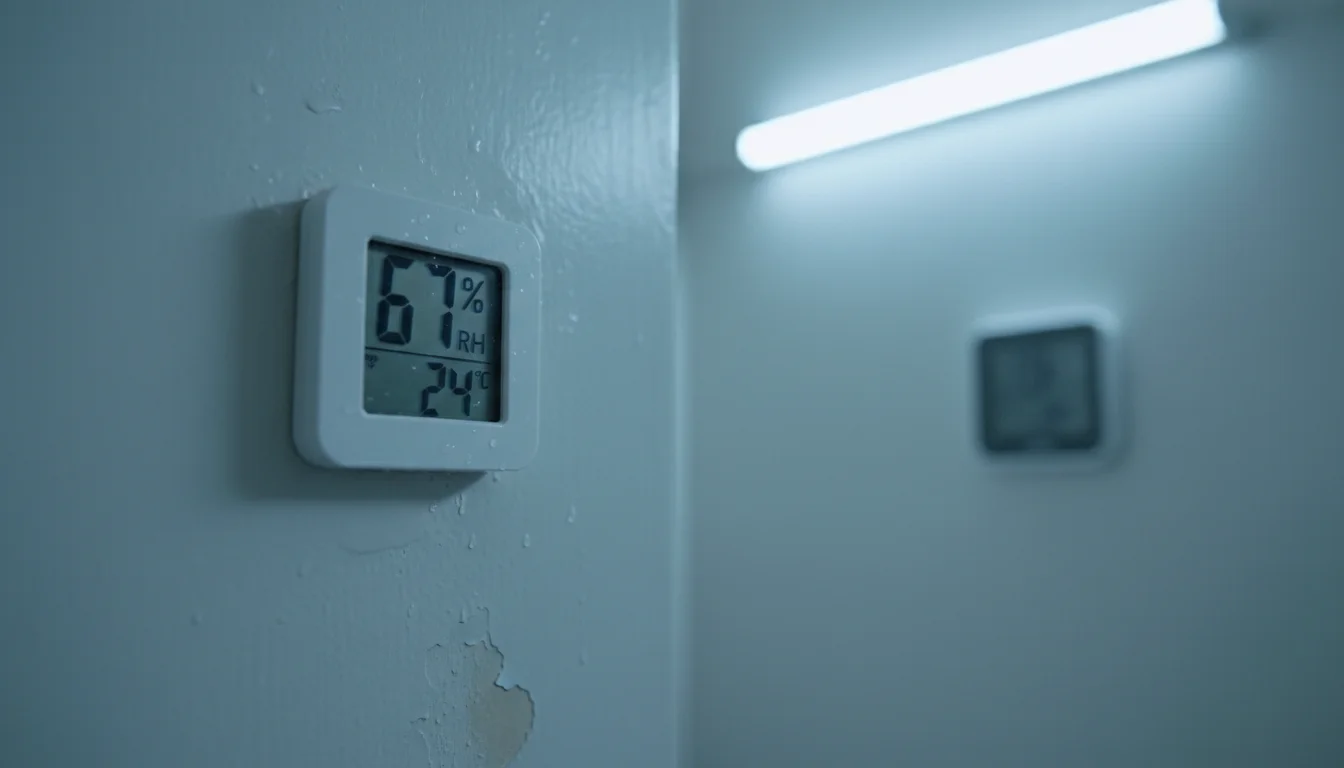
Mold needs moisture in the air as much as on the surface. Holding indoor humidity between 30 and 50 percent helps control it, but that alone will not stop mold growing on a surface kept wet by a leak or condensation. Buy a hygrometer – under $15 at any hardware shop – and check the rooms that feel damp: the basement, the bathroom, the laundry.
If a room sits consistently above 50 percent, you are running a mold nursery. Run the HVAC or a dehumidifier more, open windows when the weather outside is drier than the air inside, and fix leaks the day you spot them. Humidity climbs in summer and in still, unventilated corners, so watch it before mold appears rather than after.
5. Dehumidifier
When a room stays damp no matter what you do, a dehumidifier is the most direct tool you have. Mold struggles below 50 percent relative humidity, and a unit running continuously in a wet basement or crawl space pulls the room under that line and holds it there.
Size it to the space: roughly 30 to 50 pint capacity per 1,000 square feet (93 sq m) of genuinely damp room, or an undersized unit runs flat out and never wins. Set the target to 45 to 50 percent and leave it. Run a hose to a floor drain for continuous drainage rather than relying on emptying the tank – the moment it fills and shuts off, the humidity creeps back up. The musty smell eases within a few days once the air stays dry.
6. Open Windows for Ventilation
The cheapest way to move damp air out is to open the windows. Stale indoor air holds moisture; drier outdoor air displaces it.
Open windows on opposite sides of the house to pull a cross-draught through – that shifts far more damp air than a single open window. Even in winter, a few minutes of real airflow does more than it sounds like it should. Hit the worst rooms first: bathrooms, kitchens, and basements trap the most moisture. Make it a daily habit, ten minutes each morning, and you keep humidity from building up in the first place.
7. Use Extractor Fans
Bathroom and kitchen extractor fans only earn their keep if you use them properly. Switch the fan on before you start the shower or the cooking, and leave it running 15 to 20 minutes after you finish, not the few minutes it takes to towel off. That trailing run is what clears the moisture the room just generated.
Clean the cover and filter monthly; a clogged fan moves almost no air and does nothing. If yours is weak or loud, it is probably due for replacement. A modern fan is quiet, cheap to run, and far better than the unit fitted to most homes twenty years ago.
8. Avoid Drying Clothes on Radiators
Drying laundry indoors dumps moisture straight into the room. A single wash load releases around 2 liters (half a gallon) of water into the air as it dries. Drape it over a radiator and that water raises the humidity, then condenses on the coldest walls and windows – exactly where mold starts.
If you must dry indoors, put the airer in one room with a window cracked or a dehumidifier running, and shut the door so the damp does not spread. Better still, use a vented tumble dryer or dry outdoors. The convenience of the radiator is not worth the mold on the wall behind it.
9. Washing Clothes Regularly
Fabric that has sat in a humid room picks up mold spores, and a damp pile in a hamper becomes a launch pad for the rest of the house.
If you find mold on clothes, take them outside and brush off the visible growth before it spreads indoors. Wash on the warmest cycle the care label allows. Bleach works on whites, but check the label first. And never leave a wet load sitting in the drum: clothes mold faster there than almost anywhere else in the house.
10. AC Equipment Inspection and Cleaning
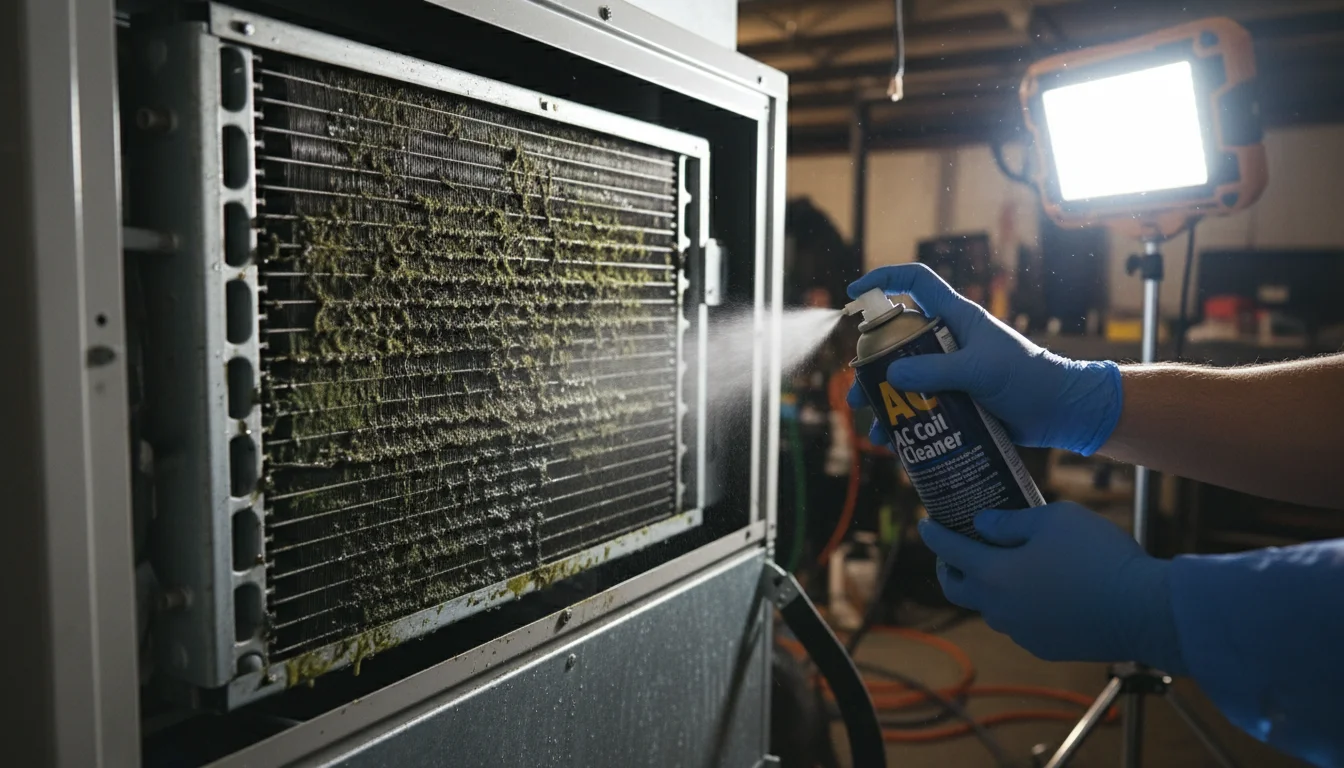
An air conditioner pulls moisture out of the air, which makes its coils and drip pan a favourite mold spot. Switch the unit off and take off the access panel.
Check the evaporator coils for visible mold or slime. Spray them with a coil cleaner from the hardware shop and let it drain. Clean or replace the filter. Then check the condensate drain line: a clogged line backs water up into the pan, and a full pan is a mold incubator. Keep the pan clean and the line clear and unobstructed so it drains freely. Do not pour bleach down it: bleach is not recommended near air-conditioning equipment, and a clear, freely draining line is what keeps the pan dry.
11. Professional Inspection and Spore Counting
If mold shows up in several rooms, keeps returning after you clean it, or you can smell it but cannot find it, bring in a professional. They use moisture meters and thermal imaging to find growth hidden behind walls or under floors that a visual check misses entirely. Air sampling and spore counts are not routine: the EPA says they are usually unnecessary when mold is already visible, and a good inspector reserves them for the cases where the result would actually change the plan and interprets them with the experience that takes. A thorough inspection typically runs $300 to $800 – money well spent when the source is hiding.
12. Professional Mold Remediation
Some jobs are beyond a bucket and a brush. Contamination from sewage or flood water, mold inside HVAC ducts, or growth spread across structural material calls for remediation. The crew seals off the area, runs HEPA vacuums and air scrubbers, removes the material that cannot be saved, and treats what remains. Costs run from around $500 for a contained job to $6,000 or more for a severe one. It is not cheap, but it is cheaper than living with the growth or letting it eat the structure.
When to Call a Professional
The line most guidance uses is the EPA’s: if the mold covers less than about 10 square feet (roughly a 3-by-3-foot patch) and sits on a hard surface, you can handle it with the methods above. Call a professional when the growth is larger than that, when it is in the HVAC system, when it followed sewage or flood water, or when it keeps coming back after you have cleaned it and fixed the obvious leaks – that pattern means the source is hidden. Get help sooner, not later, if anyone in the house has asthma, a mold allergy, or a weakened immune system.
FAQ: Getting Rid of Household Mold
Does bleach or vinegar kill mold better?
On a hard, non-porous surface both work, and a plain hot-soapy-water scrub does most of the job before either. Vinegar penetrates slightly into porous surfaces where bleach stays on top; bleach is better at removing the dark staining mold leaves behind. Use whichever you have, scrub first, and never mix bleach with vinegar or ammonia.
Can I remove mold myself, or do I need a professional?
A patch under about 10 square feet on a hard surface is a DIY job with gloves, an N95 mask, and a scrub. Hand it over when the area is larger, when it is in ductwork or followed contaminated water, or when it returns after you have cleaned and fixed the leaks. Anyone with asthma or a mold allergy should not clean it themselves regardless of size.
Why does mold keep coming back after I clean it?
Because cleaning removes the growth but not the water feeding it. Mold can regrow on a surface that stays wet within 24 to 48 hours. If it returns in the same spot, there is still a moisture source there – a leak, condensation, or humidity that never drops – and finding and fixing that source is the only thing that stops the cycle.
What surfaces can’t you clean mold off?
Porous, absorbent materials that have soaked through: carpet, ceiling tiles, insulation, and often drywall. Bleach and detergent clean a surface, but they cannot reach mold that has grown into the material itself. Once those are wet and moldy, the fix is to cut them out and replace them, not to scrub them.