Table of Contents
Fish smell is the worst kind of cooking smell because it embeds everywhere and stays. Surfaces, fabrics, the air itself – all of it holds onto it. The proteins and oils in fish break down slowly and keep releasing scent long after the pan is clean and the plates are washed. If you cooked fish an hour ago and the house still smells like a dockside cafe, here’s what actually works. The approach is three-pronged: clean the active contamination first, then eliminate the hidden sources still leaching odor, then deploy passive absorbers overnight to clear what’s left in the air.
1. Spray Surfaces with Vinegar Solution
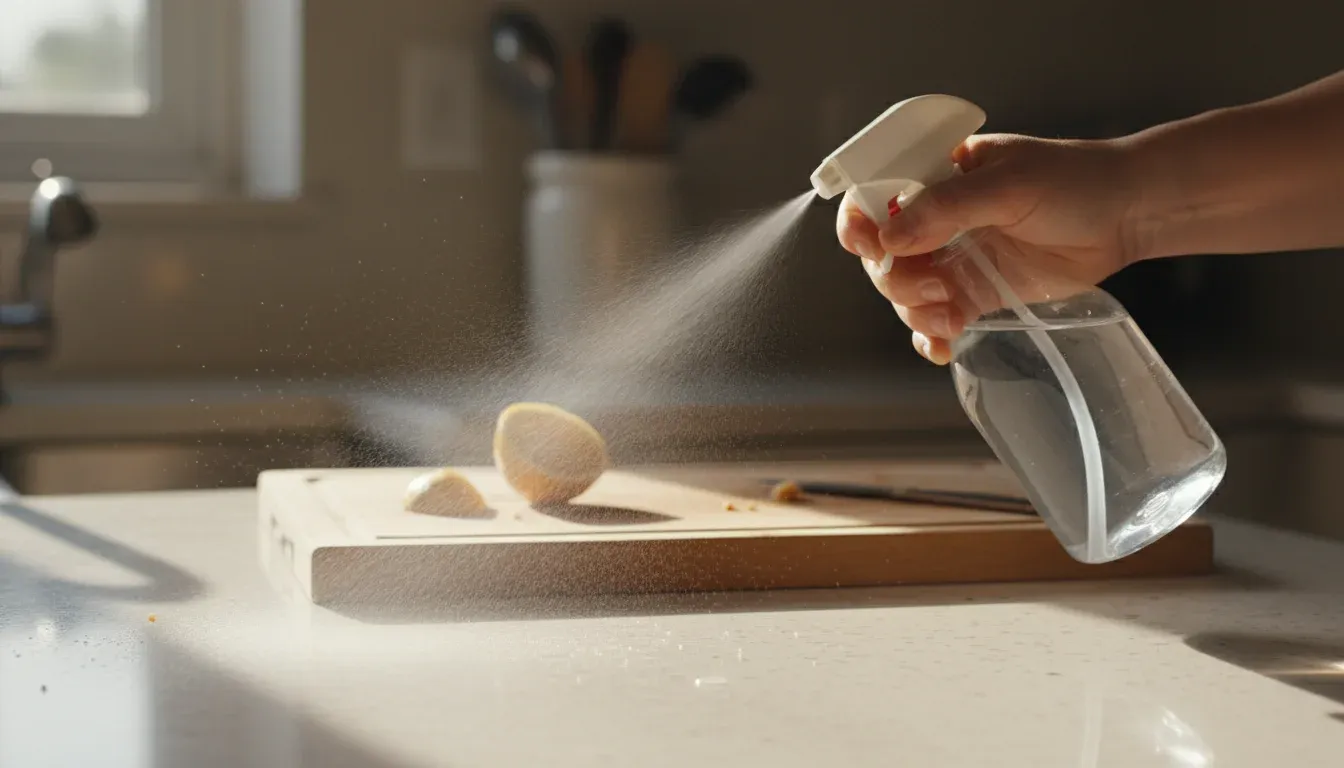
This is the first thing you should do after cooking fish, not 20 minutes later. Mix 1 cup (240 ml) white vinegar and 1 cup (240 ml) water in a spray bottle. Spray down counters, cutting boards, stovetops – every surface that got near the fish. Let it sit for a minute, wipe clean.
Vinegar’s acetic acid neutralizes the alkaline compounds that make fish smell so persistent. And before you worry about trading one smell for another: the vinegar scent is gone in 10-15 minutes, and it takes the fish smell with it. This is confirmed by basically every source that’s tested it seriously.
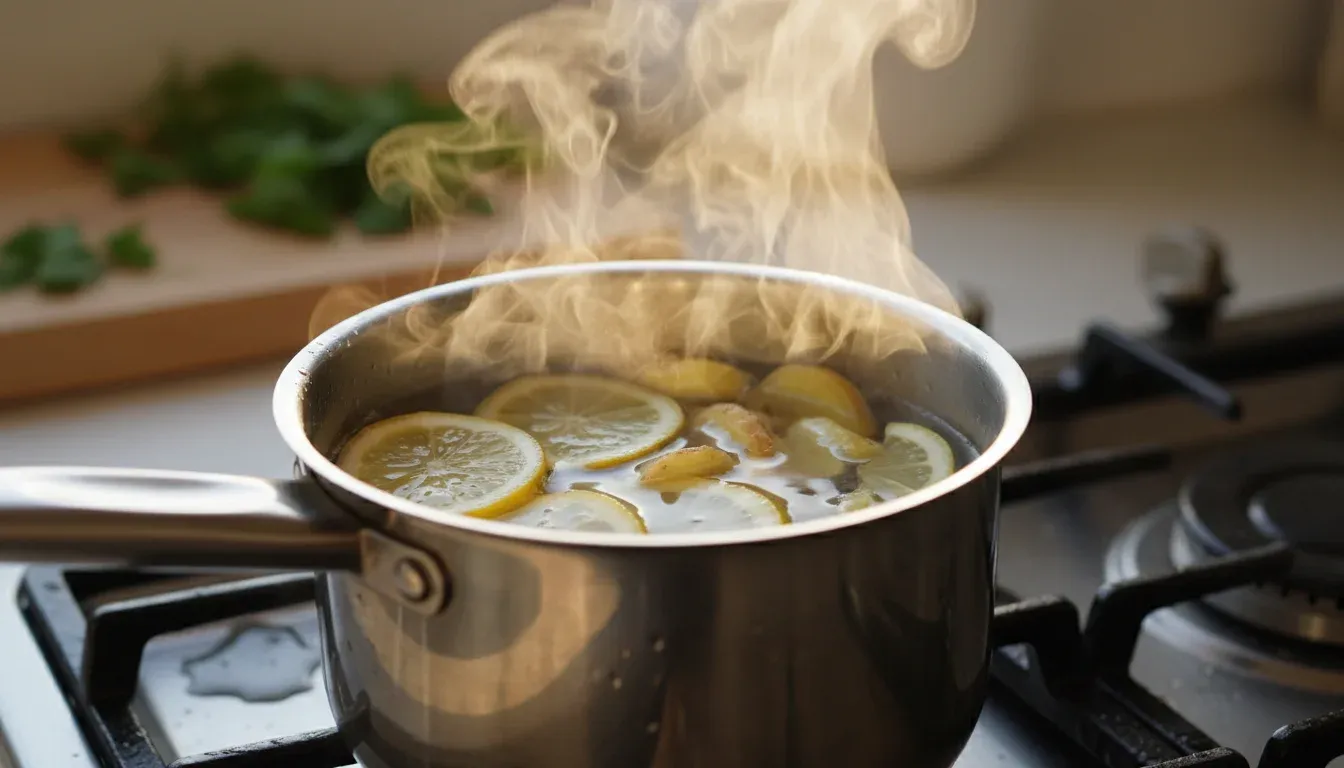
If the smell is really bad (whole fish, frying in oil), skip the spray bottle and boil 1 cup (240 ml) of vinegar in a small saucepan for 15 minutes while cleaning. The steam neutralizes airborne molecules simultaneously.
2. Wash Fabrics Exposed to the Odor
Here’s what most people skip. They clean the surfaces and wonder why the house still smells two hours later. It’s the curtains. It’s the tea towels. It’s the throw blanket on the couch closest to the kitchen.
Toss them in the wash with 1 cup (240 ml) of white vinegar added to the rinse cycle (not the wash cycle – adding it to the rinse prevents it from getting washed out before it can work). Regular detergent handles the wash cycle; vinegar handles the deodorizing.
For upholstered furniture you can’t machine wash, sprinkle baking soda directly on the fabric. Leave it for at least an hour – rushing this doesn’t work. Then vacuum it up. The baking soda pulls absorbed odor molecules out of the fibers as it sits.
3. Run Garbage Disposal with Lemon
Your disposal is a hidden fish smell factory. Every time you rinsed fish trimmings or water from thawing, fish residue stuck to the blades and inside the chamber. It’s quietly releasing odor every time you run the tap.
Cut a lemon into quarters and run them through with cold water. Run the disposal for 30 seconds after the last piece disappears – that clears everything through the drain. The citrus oils coat the blades and neutralize what the water couldn’t reach.
No lemons available? Pour 1/2 cup (120 ml) of white vinegar in while running cold water. It disinfects as it deodorizes, killing the bacteria that generate secondary odors. Vinegar smell is gone within minutes. For a serious smell, hit it with vinegar first, then lemon – one-two combination.
4. Clean Your Oven Regularly
If you cooked the fish in the oven, its oils are now baked onto the walls. They’ll release odor every single time you preheat until you clean it.
Make a paste: 3 parts baking soda to 1 part water. Spread it on the oven interior, focusing on walls and the bottom. Leave it for 15 minutes, then scrub and rinse. After cleaning, run the oven at 200°F (93°C) for 10 minutes with a small pan of lemon water on the lower rack. The steam clears residual smell from any spots you missed.
Don’t skip the oven step if you baked or roasted fish. It’s the reason the smell comes back “out of nowhere” the next day.
5. Place Activated Charcoal Around the House
Activated charcoal is what professional deodorizers use because it actually works. Its porous surface traps odor molecules by pulling them out of the air – no fragrance masking, no spray, just molecular absorption. Put sachets or small bowls of loose granules near the kitchen, in adjoining rooms, anywhere the smell has reached.
Unlike baking soda, activated charcoal keeps working for weeks. When it’s spent, recharge it: spread it on a baking sheet and leave it in direct sunlight for a few hours. UV light releases the trapped molecules, and you can reuse it. This is the best passive absorber for enclosed spaces like cabinets and pantries.
6. Set Out Bowls of Baking Soda Overnight
Baking soda absorbs airborne odors. Use shallow bowls (more surface area), and place them in the kitchen and any rooms that caught the smell. Leave them overnight and toss the baking soda in the morning.
For extra punch, add a few drops of an essential oil (eucalyptus or tea tree work well) to the baking soda. It actively deodorizes while the baking soda absorbs. This works because baking soda is alkaline and neutralizes acidic odor compounds – fish smell sits right in that category.
7. Scatter Coffee Grounds in Open Containers
Dry coffee grounds absorb and neutralize ambient odors, and most people already have them. Fill small bowls or jars with fresh grounds and place them around the kitchen. Replace after 24 hours – they’re spent by then.
This isn’t the strongest method on the list. It’s best for the residual background smell after you’ve done the active cleanup. But it’s fast, it smells decent while it works (assuming you like coffee), and it costs nothing if you’ve already brewed a pot today. Don’t use used grounds from the morning filter – they need to be fresh and dry to absorb anything.
Clean the surfaces first, eliminate the hidden sources before they recontaminate the air, then let the absorbers work overnight. Do all three and the smell is gone by morning. Do only one and you’ll still catch a whiff tomorrow.