Table of Contents
Mice are disease vectors, they chew through wires, and they breed fast: pups arrive 18 to 21 days after mating, five or six to a litter, and a female can have several litters a year. You need to act now, not after you hear scratching for the third night in a row or find droppings behind the toaster.
The good news: mice are predictable. They follow walls, they hate open spaces, and they’re obsessed with food. Use that against them. Get rid of existing mice with traps, block their entry points so new ones can’t get in, and remove anything that makes your home appealing to rodents.
Where you live changes who does the work. In a house, the whole job is yours. In an apartment building, mice can move between units along pipes and through gaps in shared walls, so trapping your own kitchen only holds if the building treats the units around you too. The sections below cover every approach, and the guides at the end go deeper on attics, walls and apartments.
Inspection and tracking
Before you set a single trap, confirm you actually have mice and figure out where they’re concentrated. Droppings (black grains of rice along walls), grease smudges on baseboards, gnaw marks on stored items, and shredded nesting materials in corners are the obvious signs. A musky smell in enclosed spaces is another common sign.
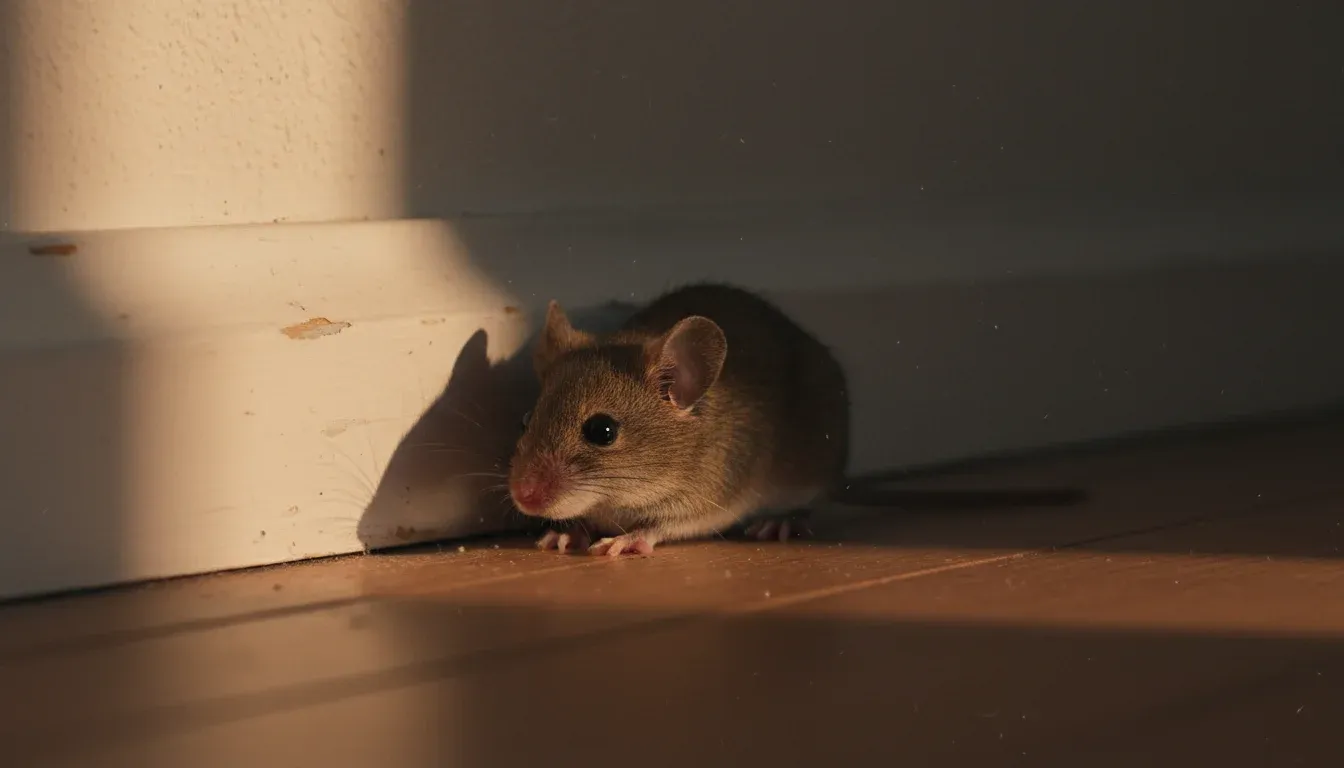
Mice are active mostly at night, but they do turn up in daylight now and then. A daytime sighting on its own doesn’t tell you how many you have; the droppings and tracks do.
Track their routes with baby powder or baking soda sprinkled along baseboards and near suspected entry points. Mice leave footprints and tail drag marks that tell you exactly where to put traps and where they’re getting in. Check under cabinets, behind appliances, inside pantries, and in void spaces. They usually live within 20 ft (6 m) of their food source.
Exclusion and structural sealing
If you can fit a ballpoint pen into a crack, a mouse can fit through. Check where pipes enter walls, around door frames, behind appliances, and where different building materials meet. Foundations are full of gaps.
Stuff holes with steel wool first (they can’t chew through it), then seal the gap for good with metal or concrete. Steel wool on its own is a temporary plug. Skip expanding foam, wood and other soft fillers, because mice chew through them. Use copper wool instead of steel in wet areas (under sinks, near dryer vents, around floor drains) because steel wool rusts.
Doors are the gap people forget. If you can see light under a closed door at night, fit a rubber-blade door sweep that touches the threshold all the way across, and replace worn weatherstripping around the frame. Check the gap under your garage door, and the interior door from the garage. Don’t forget chimney caps – an uncapped chimney is an open invitation.
Traps and bait for mice
Snap traps work. They’re cheap, reusable, and instant. Place them perpendicular to walls with the trigger end facing the baseboard. Bait with peanut butter, not cheese. Use plenty of them, spaced no more than about 10 ft (3 m) apart along walls where you’ve seen droppings.
Electric traps kill instantly and you don’t have to see the result, which suits anyone squeamish about disposal. Live traps mean checking them often, and then deciding what to do with the mouse: moving wildlife off the property where you caught it is illegal in some places (California, for one, without a permit), so check your local rules before you buy one. Glue traps are effective in tight spaces but they’re cruel. Use them only when no other trap physically fits. Whatever trap you use, put it where children and pets can’t reach it.
If you’d rather use poison, use it only in tamper-resistant bait stations, never as loose pellets or blocks. Put the stations where children, pets and other animals can’t get at them, and follow the product label for where to place them, how much bait to use and how often to check them. The label is the legal instruction, not a suggestion.
One warning: poisoned mice sometimes die inside walls. If you can’t tolerate the smell of decomposition, stick with traps.
Repellents and deterrents
Peppermint oil, ammonia and plant-based repellent pouches are sold to keep mice away, but extension researchers don’t rate repellents as a reliable way to control or prevent mice. They won’t clear an active infestation. Ultrasonic repellers are what people buy instead of sealing, and the research doesn’t back them. There’s little evidence that sound, magnetic or vibrating devices drive out established house mice. The sound is directional, doesn’t carry behind furniture, and fades fast with distance. If your entry points are already sealed, plugging one in near a wall with activity does no harm, but stop paying for it if fresh droppings keep appearing.
Don’t let any repellent stand in for trapping and sealing.
Sanitation and habitat reduction
Mice are nibblers: they eat around 200 tiny meals a night, so a few crumbs are enough to keep them fed. Every food source you cut off is one less reason to stay.
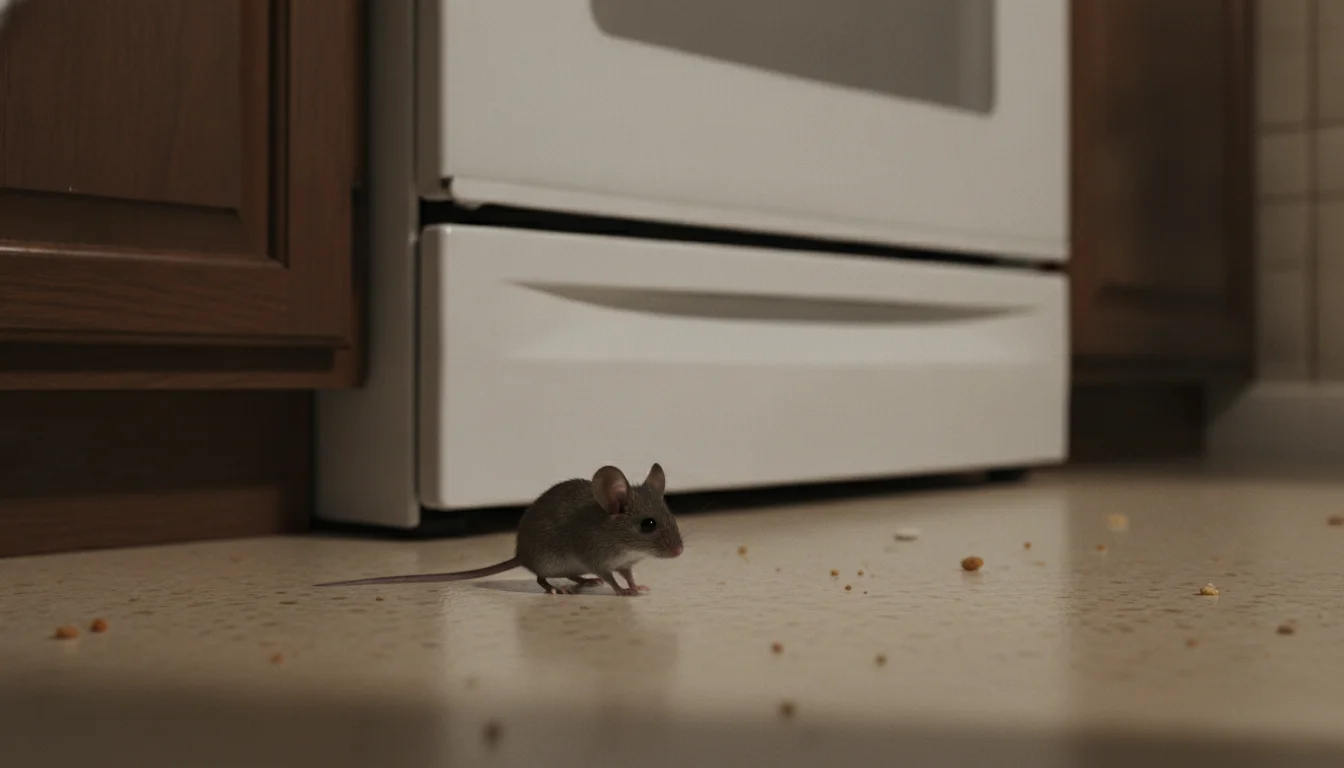
Transfer flour, cereal, crackers, pasta, rice and other dry goods into hard-sided glass, metal or thick plastic containers with tight-sealing lids. Mice chew straight through cardboard boxes and thin bags, so those are worthless. Throw out old, forgotten packets rather than moving them into a new jar. Pick up pet food bowls after meals instead of leaving kibble down overnight, keep opened pet food bags in hard-sided sealed containers, and sweep up spilled kibble. Birdseed stored in its bag in a shed or garage is just as attractive: move it to a metal can with a tight lid. Take trash out daily, use cans with tight lids. Then pull the stove and fridge out from the wall and clean what’s under and behind them: the crumbs and grease there feed mice, and the warm space behind a fridge motor is a favorite nesting spot.
Clear clutter. Stacked boxes, paper piles and bags of old clothes are cover, and mice nest and breed in them unseen. Replace cardboard storage with sealed plastic bins. Outside, mice nest around woodpiles and in plants growing against the house, so move firewood away from the walls and thin or cut back plants that touch or climb the building.
Clean up droppings and nests wet, never by sweeping or vacuuming, which stirs dried material into the air you breathe. Wear rubber gloves, soak the area with household disinfectant or 1 part bleach to 9 parts water, leave it for 5 minutes, then wipe it up with paper towels and bin them.
Building-wide and professional control
Mice don’t respect property lines. Clear one home and mice from next door can move straight back in. Control holds when everyone nearby works on it at the same time.
If you rent, report mice to your landlord or building manager in writing, by email or through the maintenance portal, and keep a copy. Say what you’ve seen, where and since when. Ask for three things: treatment of your unit, a check of the units above, below and beside yours, and sealing of the gaps where pipes and utility lines pass between apartments. A dated record is what you’ll need if nothing happens. If you own, talk to the neighbors on either side and agree to clean up, secure bins and trap over the same weeks, so mice have nowhere nearby to fall back to.
Call an exterminator if you’re still catching mice daily after more than a week of trapping and sealing. Something is still feeding or letting in new mice, and a professional inspection and exclusion job can find the entry points and nests you missed. Don’t wait until you hear scratching in several rooms.
Where it shows up
Mice get into specific areas depending on the structure and access points of your home. Each location needs a different approach:
- Mice in the Attic – detection, trapping, and elimination methods for attic infestations
- Mice in Walls – finding and dealing with mice nesting inside wall cavities
- Mice in the Attic (Prevention) – exclusion and sealing methods to stop them before they get in
- Mice in an Apartment – what a renter can do inside the unit, and how to get the landlord to treat the building
Traps alone won’t fix the issue if you’re not sealing entry points. Sealing entry points won’t help if you’re leaving food out. Do all of it, and check progress weekly: fresh droppings and new catches tell you it isn’t over yet.