Table of Contents
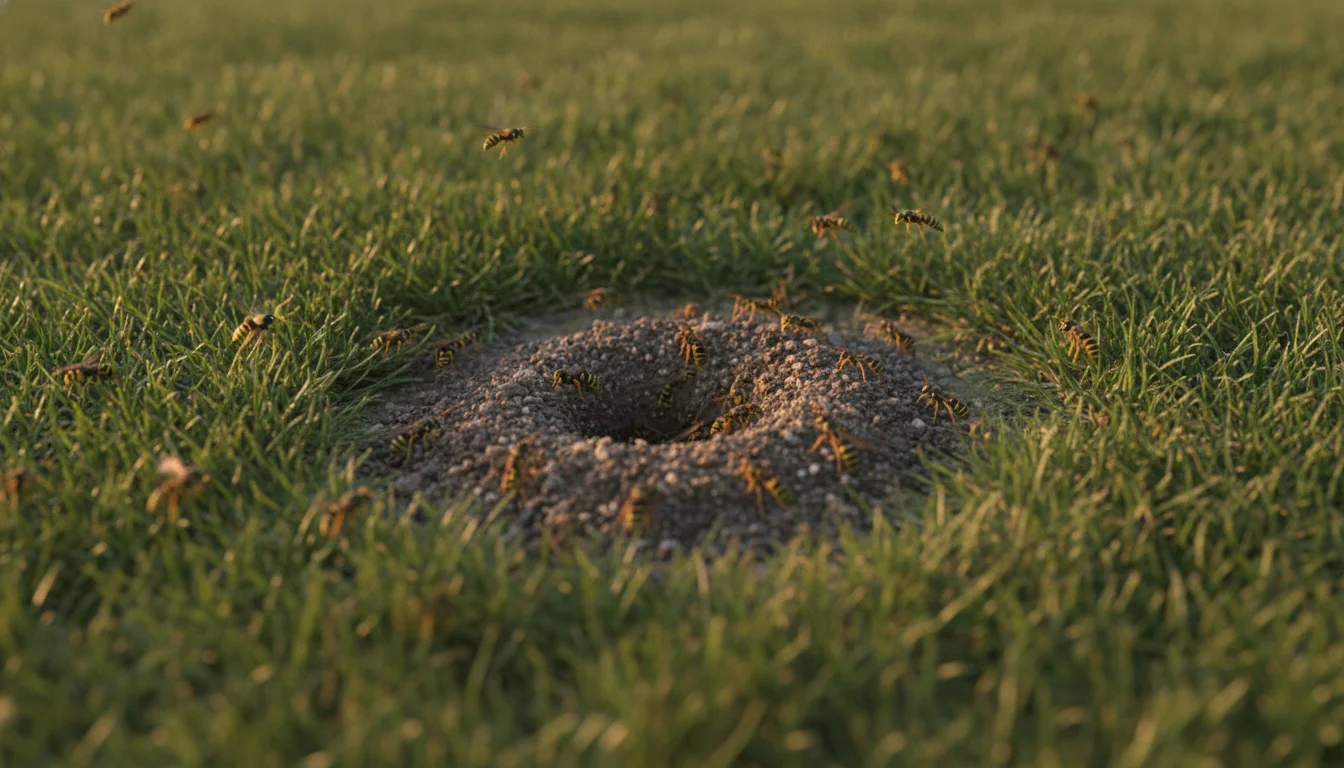
“Ground wasps” is not one insect, and that matters before you do anything. Two very different things nest in the dirt. Ground-nesting yellowjackets (and the ground-nesting relatives people call ground hornets) live in a shared colony and defend it hard when it is disturbed. Solitary digger wasps dig their own single burrows, do not guard a colony, rarely sting, and pollinate and hunt garden pests while they are at it. If you are seeing a steady stream of wasps in and out of one hole in the lawn, that is a social colony worth treating. If you are seeing single wasps each tending a separate burrow in bare or sandy soil, those are solitary diggers, and the best move is to leave them alone or wait out the season.
The rest of this page is about a defended colony in the ground. A social nest is busiest during the day, when the workers are out hunting. They come home at night, and the cool evening air slows them down, so that is the window you work in.
1. Treat Ground Wasps in the Evening
Daylight is the wrong time. The colony is active and out, and a disturbed nest can put a lot of wasps in the air fast. Work at dusk or later, when the workers are home and sluggish.
Scout the entrance in daylight first, when you can see it clearly, and mark it with a small flag or stake a step or two back. That marker is what you will aim at once the light is gone.

2. Use Aerosol Wasp Spray With 10+ Foot Range
A long-range aerosol lets you treat from a distance. Look for a jet-stream wasp product that reaches 10 to 20 feet, so you are never standing over the hole. These knock wasps down quickly.
Aerosol is not automatically the right tool for a ground nest, though. A liquid jet can miss a nest that sits deep or off to the side of the entrance, which is why extension services often point to insecticide dust for holes in the ground (method 6). Read the label, confirm the product is cleared for the site and the insect, and follow it. Dress for it before you go near the hole: long sleeves, long trousers tucked into socks, closed shoes and gloves, so a wasp that slips past the spray cannot reach bare skin. Approach slowly: quick movement and ground vibration can set the colony off even at dusk.
3. Spray Directly Into the Hole
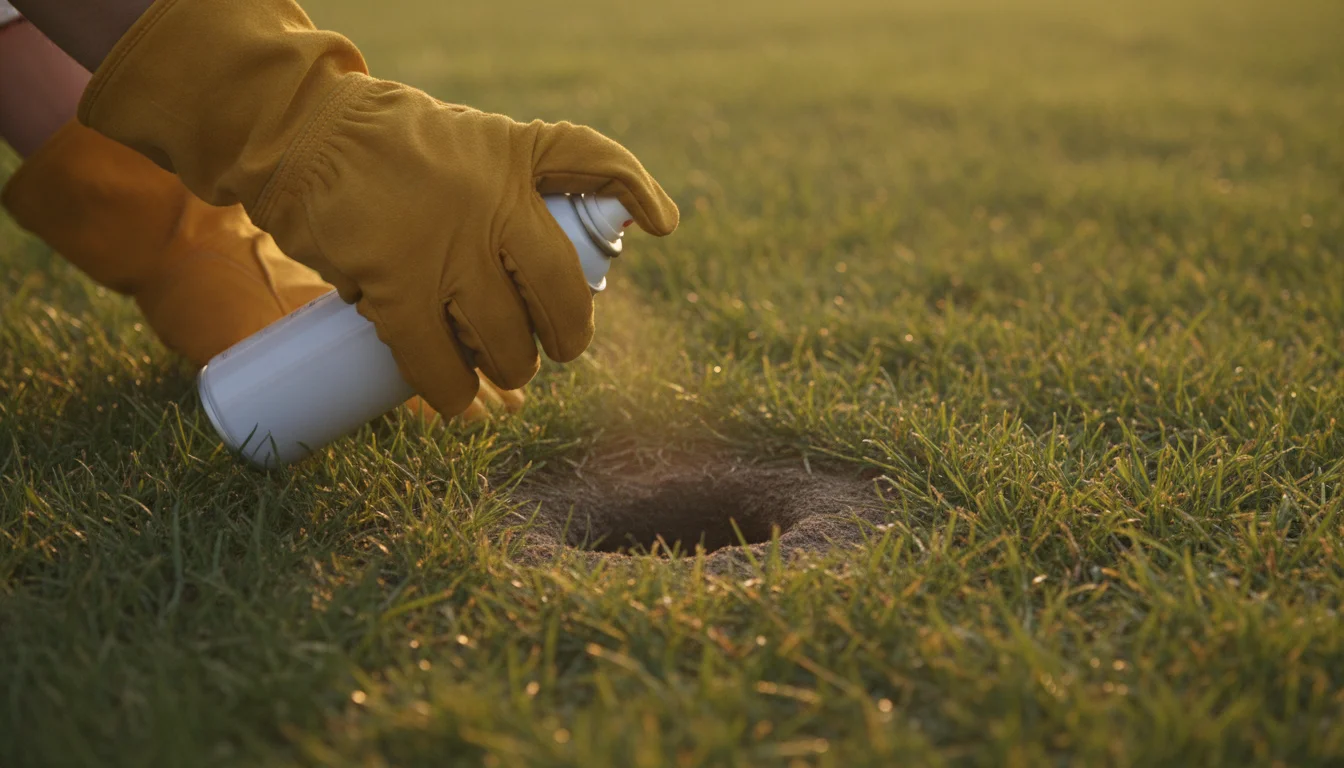
Stand with the wind at your back so nothing drifts into your face, put on eye protection first, and aim the nozzle straight into the entrance. Apply as the product label directs, long enough to carry down into the nest rather than just wet the surface. The label sets the amount and the timing, not a rule of thumb, and using a pesticide against its label is against the law.
Then leave. Do not linger to watch. Wasps can still come out after treatment, so back off and give it the rest of the night.
4. Skip the White Flashlight
Light is the quiet mistake here. A bright white beam at the entrance reads as a threat, and the colony will come out to meet it. If you need to see, use a red-filtered light or keep the beam low and on the ground beside the nest rather than in the hole. Red is far less visible to them, so a strip of red cellophane taped over an ordinary flashlight does the job.
5. Wait 24 Hours, Then Check
Leave the nest alone the next morning. Give it a full day, then watch the entrance from a distance. Traffic in and out means the colony is still alive; treat again that evening.
Once you have seen no activity for a day, the nest is done. Yellowjackets do not generally reuse an old underground nest, so you do not need to seal it to keep them out. If a bare hole in the lawn bothers you, fill it after the colony is dead. Never bury a nest that is still active, which only traps wasps that then dig their way out.
6. Use Insecticide Dust for a Ground Nest
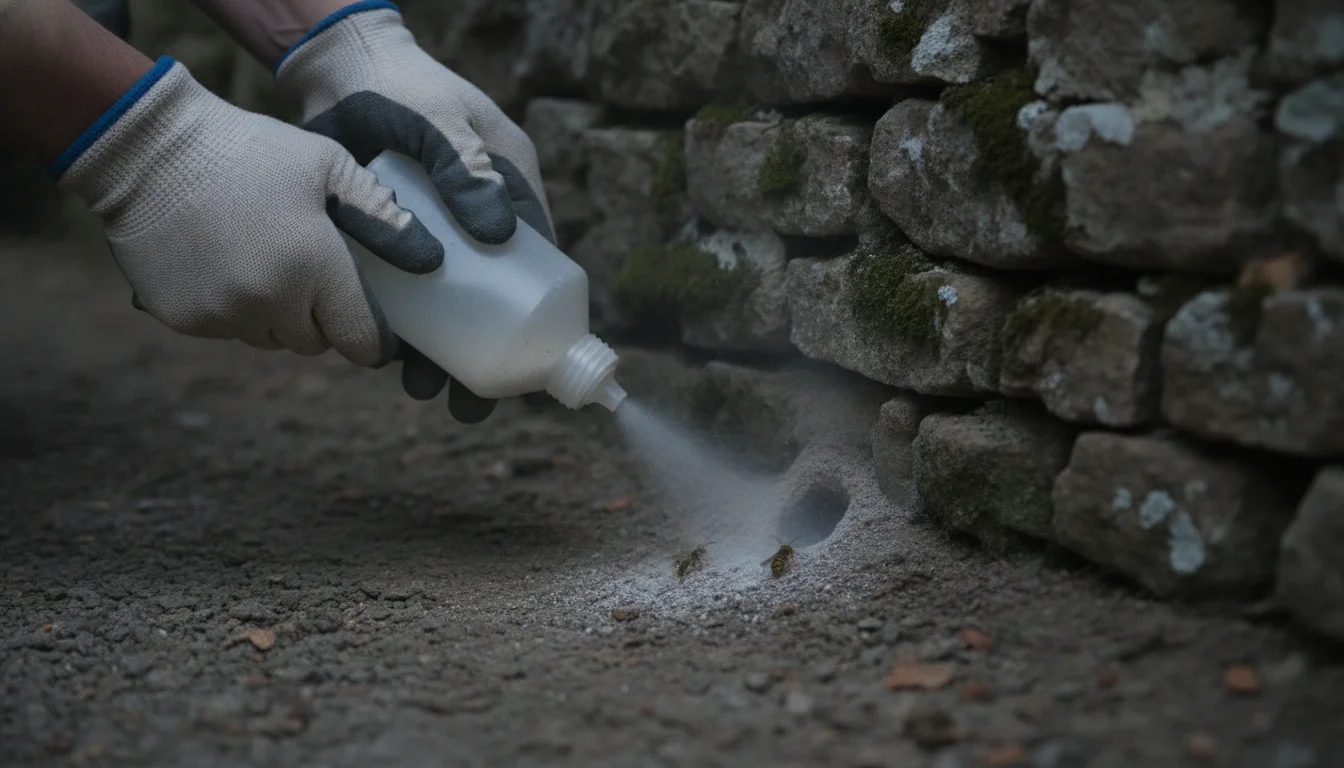
Dust is the tool most extension guides reach for with holes in the ground. A dust carrying an ingredient such as permethrin or deltamethrin clings to the wasps as they pass and gets carried through the nest, and it reaches into spaces a liquid jet skips, like a hole running back under a stone wall or a tree root.
Puff it into the entrance with a hand duster or squeeze applicator, at dusk, from as much distance as the tool allows. Dust drifts on the air more than a liquid jet does, so wear the same covered clothing and gloves as for spraying, add eye protection and a dust mask, and stay out of the plume. As with any pesticide, the product label decides where you can use it and how much, so match the dust to the site and follow it.
7. Take Away What Draws Foragers
This step is about the next colony, not the one you just treated. It will not clear an active nest. Yellowjacket workers forage on food and sweet drinks, so once the nest is dead, cutting off that food makes the yard less useful to the next scouts: cover trash cans, clear fallen fruit, and rinse recycling. Keeping grass cut and clearing debris piles gives you a clear view of the ground, which makes a new hole easy to spot early. Bear in mind that solitary diggers key on bare or sandy soil rather than your bins, so tidy foraging cues mostly move the social wasps along.
8. Call a Professional When the Nest Is High-Risk
Some nests are not a do-it-yourself job, and a treatment mistake here can land someone in hospital. Call a pest control professional if any of these is true:
- Anyone in the household reacts badly to stings.
- The nest sits by a door, a path, a play area, or anywhere people pass close.
- You cannot reach the entrance safely, or cannot tell what is nesting there.
- You have treated it twice and it is still active.
A pro brings protective gear, better equipment, and products you cannot buy, and takes the sting risk off you. For a nest higher up rather than in the ground, see how to get rid of a wasp nest; for the wider picture, our guide to getting rid of wasps covers the other species you might be dealing with.
Corrections
- 2026-09-17: Rewrote the opening to separate defended ground-nesting yellowjackets from solitary, non-aggressive digger wasps, rather than calling all ground wasps aggressive. Replaced the claim that aerosol is the best treatment with label-led guidance and noted that dust is the usual choice for ground nests. Removed a fixed spray duration and now defer to the product label. Removed a flooding method and a diatomaceous-earth method that extension sources do not support for a ground colony. Corrected the claim that filling the hole prevents a new colony, and removed a specific professional-removal price and the blanket claim that these nests are safe to handle yourself.