Table of Contents
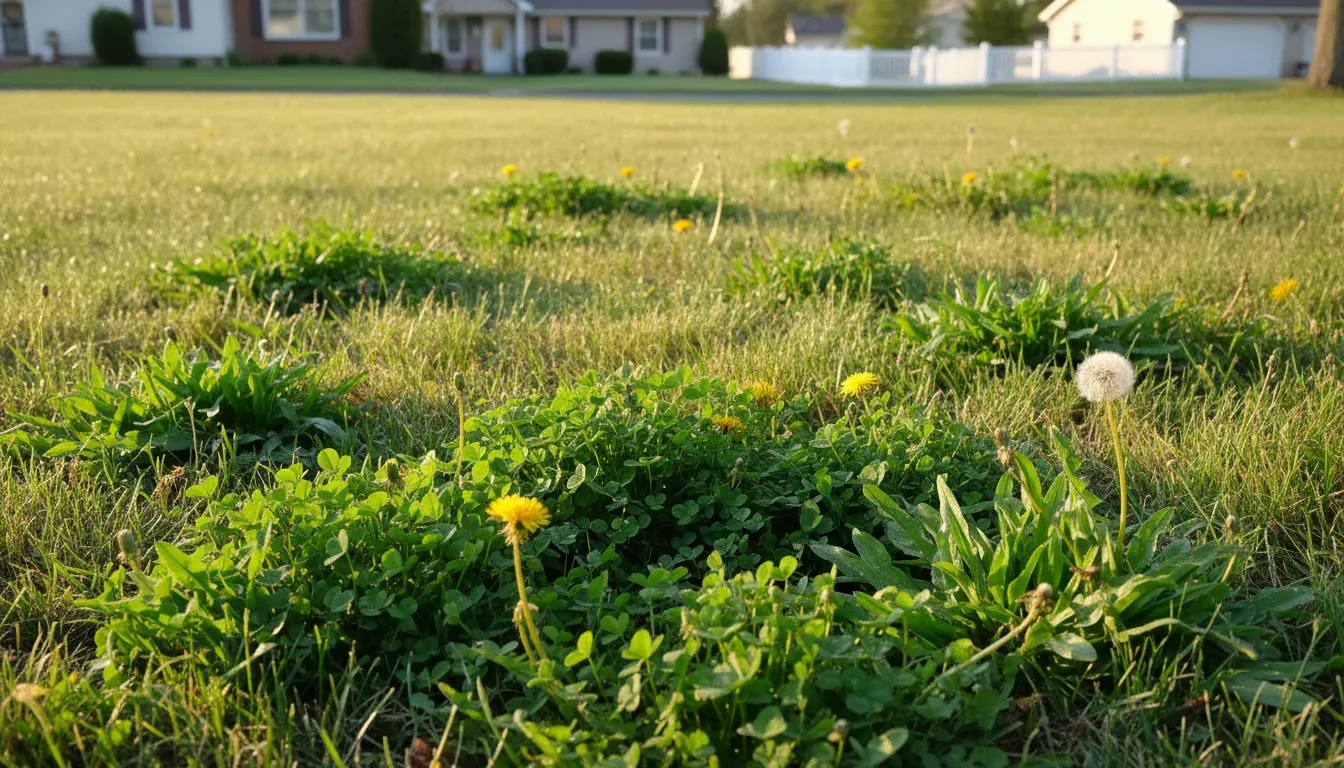
Weeds in your lawn are a symptom, not the disease. Dandelions, clover, crabgrass and creeping charlie do not invade thick, healthy turf. They colonize the weak spots: bare patches, thin growth, compacted ground, the scalped strip along a path. Kill what is already there, by hand or with a targeted spray, but the weeds keep winning until you fix the conditions that let them in. This guide does both. It starts with removing the weeds in lawns you can see, then builds the dense turf that shuts the next generation out.
What Causes Weeds in Lawns
Weeds are opportunists. Every common lawn weed is filling a gap the grass left open, so the cause is almost always something about the turf, not bad luck.
- Thin or bare turf: weed seeds need light and open soil to germinate. A dense canopy denies them both.
- Compacted soil: hard ground stunts grass roots but suits shallow-rooted weeds like crabgrass and plantain.
- Scalped grass: mowing too short stresses the lawn and exposes soil to sunlight.
- Shallow watering: frequent light sprinkling keeps moisture at the surface, exactly where weed seeds sit.
- Poor feeding: many weeds tolerate low-nitrogen soil better than grass does, so an underfed lawn tilts the competition their way.
Match the fix to the cause. Spraying without correcting the underlying weakness just clears space for the next weed.
1. Hand-Pull Weeds (The Right Way)
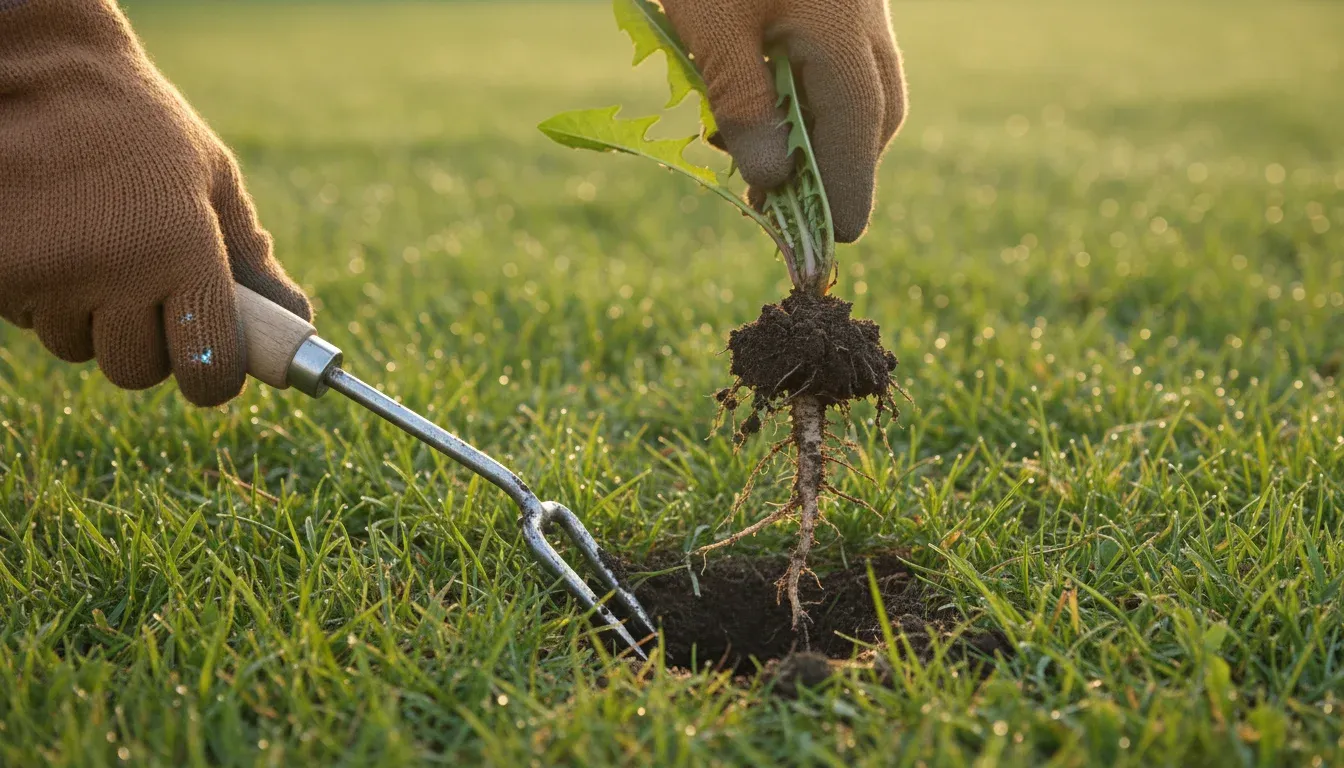
Pull when the soil is moist, after rain or a good watering. You need the entire root or the weed regrows. For tap-rooted weeds like dandelions, use a weeding knife or fishtail weeder to lever out at least 4 in (10 cm) of root; a mature dandelion taproot can run 10 in (25 cm) deep and snaps if you just yank the leaves.
Get them young. Pulling a two-week-old seedling is a quick tug; a two-month-old plant is a five-minute dig.
Bag the pulled weeds, do not compost them, unless you are certain they have not set seed. One dandelion head carries around 200 seeds.
2. Spot-Treat with Vinegar Solution
For a no-synthetic option, use horticultural vinegar (20% acetic acid), not the 5% kitchen kind, which is too weak to do more than wilt the leaves. Horticultural vinegar is a registered product: read and follow its label. Because 20% acetic acid burns skin and eyes and its vapor irritates the lungs, wear eye protection, gloves and covered skin, avoid breathing the spray or vapor, and spray only the weed’s foliage on a dry, still, sunny day. It burns everything green on contact.
Vinegar is non-selective: it kills grass as readily as weeds, so aim a spray bottle at the weed, never a broadcast sprayer. It burns the top growth but will not kill a deep-rooted perennial outright, which often regrows from the root, so young annual weeds are the realistic target.
3. Kill Weeds with a Selective Herbicide
When weeds outrun hand-pulling, a selective post-emergent herbicide clears them without harming the grass. Match the product to the weed: broadleaf weed killers (the common ones combine ingredients like 2,4-D, mecoprop and dicamba) handle dandelions, clover, plantain and chickweed, while grassy weeds and sedges need their own specific formulas. The label lists exactly what it controls and which grasses it is safe on, so read it before you buy.
Apply when the weeds are young and actively growing, in spring or fall, not during summer heat or drought stress. Follow the label for how much to use and whether a repeat treatment is needed; if weeds persist, the label sets the minimum interval before you spray again. Spot-treat the patches rather than blanketing the whole lawn.
4. Mow High
Cut at the top of the range for your grass, not as short as the mower goes. Cool-season lawns (fescue, bluegrass, ryegrass) do best around 3-4 in (7-10 cm); warm-season grasses sit lower, with zoysia about 2-2.5 in (5-6 cm), centipede 1.5-2 in (4-5 cm) and bermuda as low as 0.5-1.5 in (1-4 cm). Whatever the species, hold it near the high end of its range: taller grass shades the soil so weed seeds never get the light they need to germinate, and it grows deeper roots that beat weeds to water and nutrients. A groundskeeper on r/Frugal put it plainly: short grass just gets shaded out and out-seeded by faster-growing weeds.
Scalping does the opposite. It stresses the lawn and opens bare patches where weeds move in, which is why golf-course-short lawns need constant chemical babysitting.
Leave the clippings. Grasscycling returns nitrogen to the soil and lays down a thin mulch that suppresses germination.
5. Water Deeply and Infrequently
Shallow, daily sprinkling favors shallow-rooted weeds like crabgrass and keeps the surface moist for germinating seeds. Give the lawn 1-1.5 in (2.5-4 cm) of water a week in total, counting rainfall, in one deep soak or split across two, so the moisture reaches 6 in (15 cm) down and the grass grows deep roots to match.
Between waterings the top inch (2.5 cm) dries out, which is poor ground for weed seeds. Water in the early morning so the blades dry through the day; grass left wet overnight invites disease that thins the turf and lets weeds back in.
6. Fertilize to Feed the Grass, Not the Weeds
Most lawn weeds tolerate poor, low-nitrogen soil better than grass does, so an underfed lawn hands them the advantage. A well-fed lawn grows thick and crowds them out. One gardener’s entire weed program was mowing high, leaving the clippings and feeding in spring and fall, with no weed killer at all.
Time the feeding to your grass. Cool-season lawns (fescue, bluegrass, ryegrass) are fed mainly from late summer into fall; warm-season lawns (zoysia, bermuda) from late spring into summer. Apply at the rate on the bag for your grass type and follow any local rules on timing. Use a slow-release formula for steady growth, and do not overfeed: excess nitrogen burns grass and causes its own problems.
7. Aerate Compacted Soil
If water puddles after rain, or you cannot push a screwdriver 6 in (15 cm) into the ground, the soil is compacted, and compaction stunts grass roots while suiting shallow-rooted weeds. Relieve it with a core aerator, which pulls out plugs of soil, not a spike aerator, which only presses the ground harder.
Run it in fall for cool-season grass or late spring for warm-season. Most lawns need aerating about once a year; within that single treatment, make several passes over the area so you pull roughly 20-40 plugs per square foot, and go over heavily compacted ground more. Aerating just before you overseed and feed lets air, water and new roots reach the root zone.
8. Aerate and Overseed
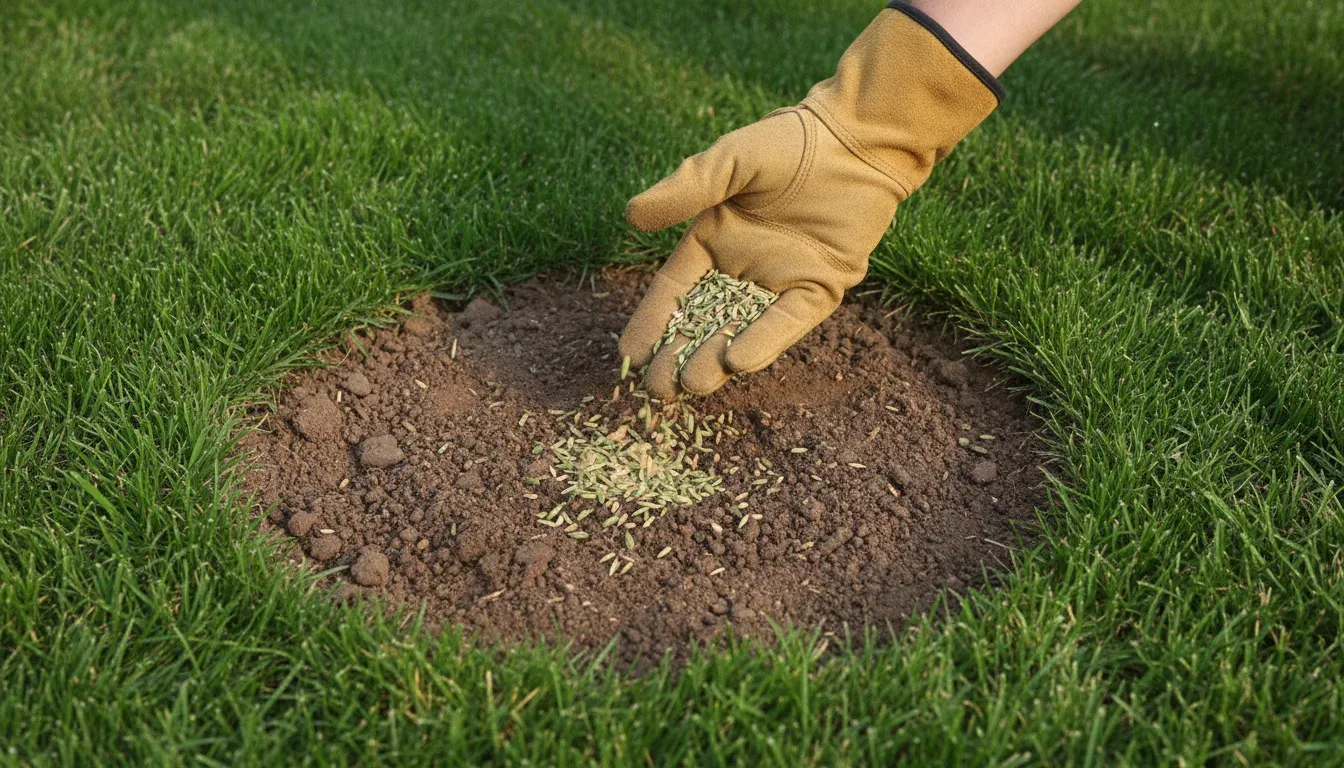
Bare and thin patches are open invitations, because weed seeds germinate wherever the grass is not. Overseeding closes those gaps so there is no open ground left to colonize.
Rake the bare areas to loosen the top half-inch (1 cm) of soil, spread seed at the rate on the bag, top-dress lightly with compost, and keep it moist for two weeks while it establishes. Overseed cool-season grasses (fescue, bluegrass, ryegrass) in early fall and warm-season grasses (bermuda, zoysia) in late spring, when soil temperatures suit germination. Seed sown onto hard ground germinates poorly, so aerate first if the lawn is compacted. A dense sward is the single most effective long-term weed defense: once the turf is thick, most weeds cannot get a foothold.
9. Use Corn Gluten Meal as a Pre-Emergent
Corn gluten meal is an organic pre-emergent: as weed seeds germinate, it inhibits their root formation so the seedlings dry out and fail to establish, while rooted plants are left untouched. Use a corn gluten product labeled for weed control and spread it in early spring at the rate on its label, timed to when forsythia blooms. Water it in lightly, then let the lawn dry for a few days.
It blocks grass seed too, so do not overseed for several weeks after applying it; the label gives the interval. Results build over two to three seasons of consistent use.
10. Apply Mulch Around Lawn Edges
The seam between lawn and flower beds is where creeping weeds sneak in. Keep 2-3 in (5-7 cm) of mulch in the beds right up to the grass edge so weed seeds cannot germinate and spread into the turf.
Cut a clean edge with a spade or edging tool once or twice a season to sever the runners of creeping weeds like creeping charlie and ground ivy before they cross into the lawn.
Frequently Asked Questions (FAQ)
How do I get rid of weeds in my lawn permanently?
There is no one-and-done spray. Permanent control comes from thick turf: mow high, feed and water correctly, and overseed bare spots so weeds have nowhere to establish. Kill the weeds present, then hold the ground with dense grass.
What kills lawn weeds but not the grass?
A selective post-emergent herbicide, matched to your weed and labeled safe for your grass, kills weeds while sparing turf. Non-selective options like vinegar or soapy sprays burn grass just as fast, so they are only for careful spot-treatment.
When is the best time to treat lawn weeds?
When weeds are young and actively growing, usually spring and fall. Herbicides work poorly on plants stressed by summer heat or drought, and pre-emergents like corn gluten must go down before the seeds sprout.
Is it better to pull weeds or spray them?
Pull isolated and tap-rooted weeds while the soil is moist; spot-spray dense patches or persistent perennials that keep regrowing from the root. Most lawns need both, plus the turf care that stops new ones.
Weeds are the scoreboard, not the game. Keep the grass thick and you will spend far less time on your knees with a weeding knife.