Table of Contents
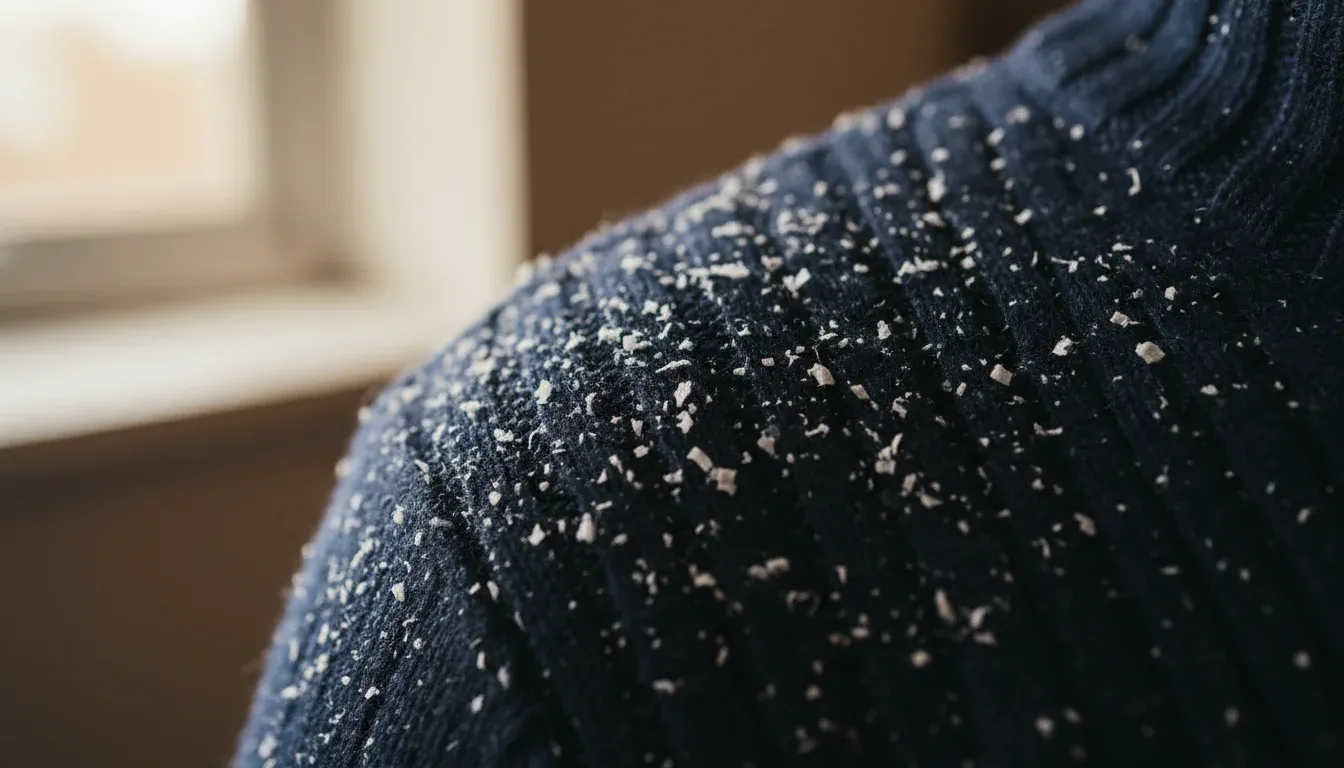
Snow-capped shoulders aren’t a good look unless you’re an actual mountain. Dandruff is dead skin flaking off your scalp in small white or yellow bits, sometimes with an itch thrown in. It isn’t contagious and it isn’t harmful. It’s just annoying as hell, and it makes dark shirts look like you’ve been standing in a blizzard.
Bad news first: there’s no cure, and it tends to come back. But most people get it under control with the right shampoo used the right way. Start with method 1. It does most of the work.
1. Let shampoo actually work
This is the winner, and every dermatology source puts it first. Grab an over-the-counter dandruff shampoo with one of these active ingredients on the label: zinc pyrithione, selenium sulfide, ketoconazole, salicylic acid, sulfur or coal tar. The brand matters less than the ingredient.
Then use it properly. Anti-dandruff shampoo isn’t a 30-second rinse situation. Lather it into your scalp, then leave it alone for the time the label gives before you rinse. Just stand there. Think about your grocery list. Wait times vary between products, so the bottle is the instruction, for how often too.
If one ingredient does nothing after you’ve used it the way the label says, switch to a shampoo with a different one.
2. Wash the scalp, not the lengths
Most people lather the hair they can see and barely touch the skin underneath. The flakes are on the skin. (Same fix as for a smelly scalp.) So put the shampoo in your palm and work it into the scalp in sections with your fingertips: front, crown, behind the ears, the nape.
Fingertips, not nails. Scratching and hard scrubbing irritate a scalp that’s already irritated. Use lukewarm water and rinse longer than feels necessary, until the roots no longer feel slippery. If your hair is coarse, curly or coily, keep the medicated stuff on the scalp only, because its ingredients can dry out the hair.
3. Wash your hair less
Stop washing your hair every single day if your scalp feels tight and dry. You’re stripping away all the natural oils that keep your scalp from turning into the Sahara. Switch to every other day. Your scalp needs those oils to stay moisturized, and when you wash constantly, you’re creating the exact dry-skin problem you’re trying to solve.
Oily hair is the exception: dermatologists say fine, straight or oily hair may need a daily wash. While you’re at it, go easy on the hair dryer.
4. Protect your scalp from the sun
Nobody thinks about this one. A sunburned scalp peels, and dermatologists note that a scalp sunburn can increase flaking.
Wear a wide-brimmed hat or stick to the shade when the sun is strong. If your hair is thin or you’ve got a sharp parting, put a broad-spectrum, water-resistant sunscreen of SPF 30 or higher on the bare skin. Powders and sprays get through hair far better than a cream. And if you picked a coal tar shampoo in method 1, this one is not optional: coal tar can make your scalp more sensitive to UV light.
5. Apple cider vinegar rinse
Wash your hair normally first. Vinegar is an acid, so never put it on your scalp neat: dilute it well with water, pour it over your head, work it into your scalp and rinse it out thoroughly. Nobody has tested a strength or a timing for the scalp, so keep it weak and don’t leave it on. Keep your eyes shut unless you enjoy pain.
Patch test it on a small area first. Don’t use it on broken, sore or irritated skin, and stop if it stings or turns the skin red. The evidence that it helps is mostly people saying it worked for them, which is why it’s last on this list.
When to call a professional
See a board-certified dermatologist if:
- Flaking, itching or redness doesn’t improve after you’ve used a dandruff shampoo as its label directs, or it gets worse.
- It turns severe: heavy flaking or scaling, bad itching, or a lot of redness.
- Your scalp gets irritated by a product. Stop using it first.
- You see raised red or dark-red patches with silvery flakes, or a dry, burning scalp. That can be psoriasis.
- You have scaly patches with hair loss or broken hairs. That can be scalp ringworm, which is contagious and needs prescription treatment.
- A rough, crusty patch or bump stays put and doesn’t act like the rest of the flaking.
Babies are a separate case. Flaky, scaly patches on an infant’s head are usually cradle cap, which tends to clear on its own in a few months. Wash with a mild baby shampoo, not a dandruff shampoo, and ask your child’s doctor if it’s severe or spreads beyond the scalp.
Dandruff: frequently asked questions
Is it dandruff or a dry scalp?
Dandruff flakes are white or yellow, and dandruff is a mild form of seborrheic dermatitis. If over-the-counter products don’t help, or the flakes come with raised patches or hair loss, see a dermatologist. Psoriasis and fungal infections can pass for dandruff.
Can you get rid of dandruff permanently?
No. It tends to come back even after treatment. Many people keep it away by carrying on with a dandruff shampoo, as the label directs, once the flakes clear.
Is dandruff contagious?
No. Scalp ringworm, which can look similar, is contagious, one more reason to get scaly bald patches checked.
Corrections
- 2026-10-19: The page used to end by telling readers to take a multivitamin. No source we used supports a multivitamin for dandruff, so that line is gone.
- 2026-10-19: The apple cider vinegar rinse used to say to mix equal parts vinegar and water, leave it on for 10 minutes and repeat daily for a week. No source supports that strength, contact time or frequency for the scalp, so it now says to dilute it well, rinse it straight out, patch test first and stop if it stings. The shampoo step used to give a fixed 3-5 minute wait; it now says to leave the shampoo on for the time its label gives.