Table of Contents
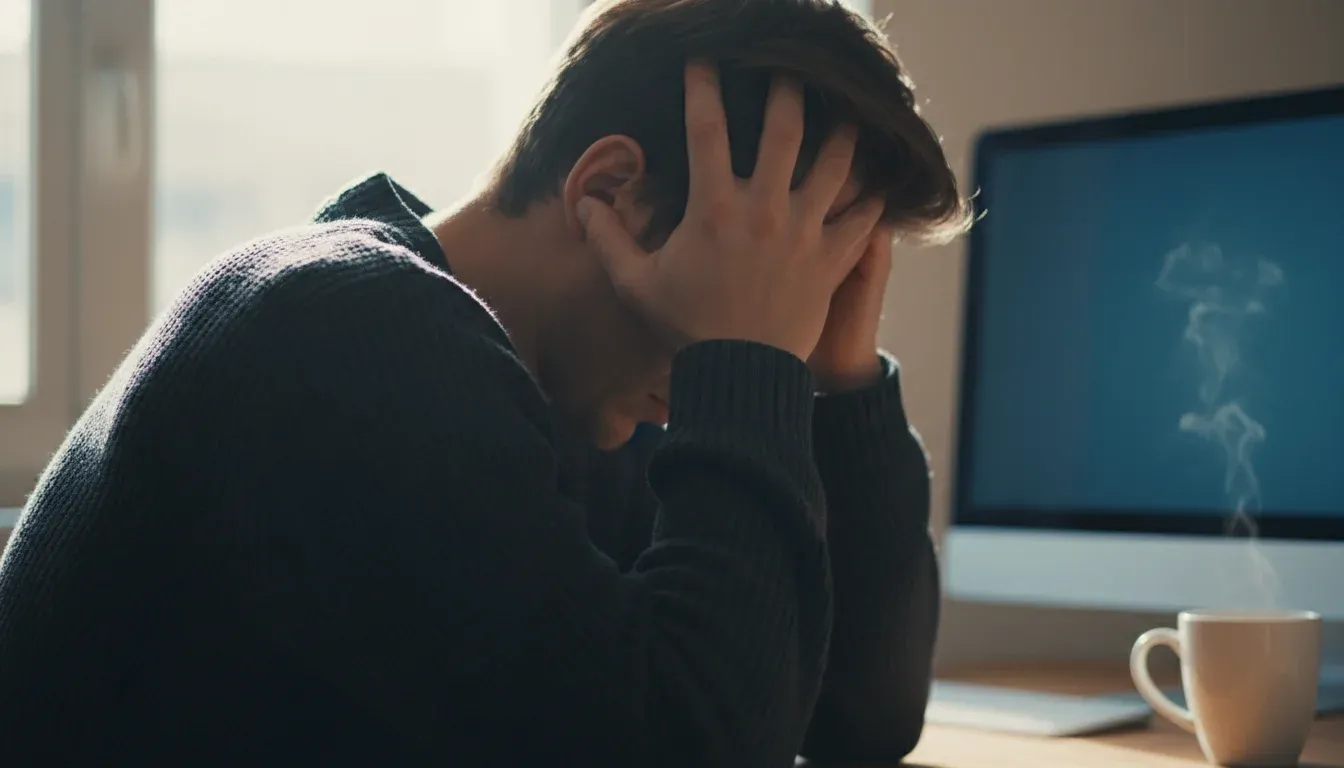
A headache lands and the rest of your day shrinks to one thing: making it stop. The good news is that most everyday headaches come from something ordinary. Not enough water, a skipped meal, a screen you’ve stared at too long, a bad night’s sleep, or too much (or too little) of your usual coffee. And because the cause is ordinary, the fix usually is too. The cheapest one here works more often than people expect, so start there. Here’s what to reach for, in the order worth trying.
1. Drink water first
Before you reach for anything else, drink a glass of water, then keep sipping. Dehydration is one of the most common everyday headache triggers, so rehydrating is a sensible, low-risk first move, and it costs nothing. Sip steadily rather than gulping a pint in one go, which can leave you queasy. Plain water is fine. Watery fruit, broth, or a weak herbal tea count too. It’s worth doing every time, even alongside the others.
2. Over-the-counter pain relief
Ibuprofen or acetaminophen, taken early. Don’t wait for a mild ache to become a pounding one before you act, because the sooner you take it, the less it has to claw back. Follow the directions on the label, and don’t double up thinking more means faster. It doesn’t, and acetaminophen in particular is genuinely hard on your liver in excess. Watch for the hidden trap: a lot of combination cold and flu products already contain acetaminophen, so a separate dose on top can push you over the daily limit without you noticing. One painkiller, the label dose, alongside that glass of water.
3. Cold compress
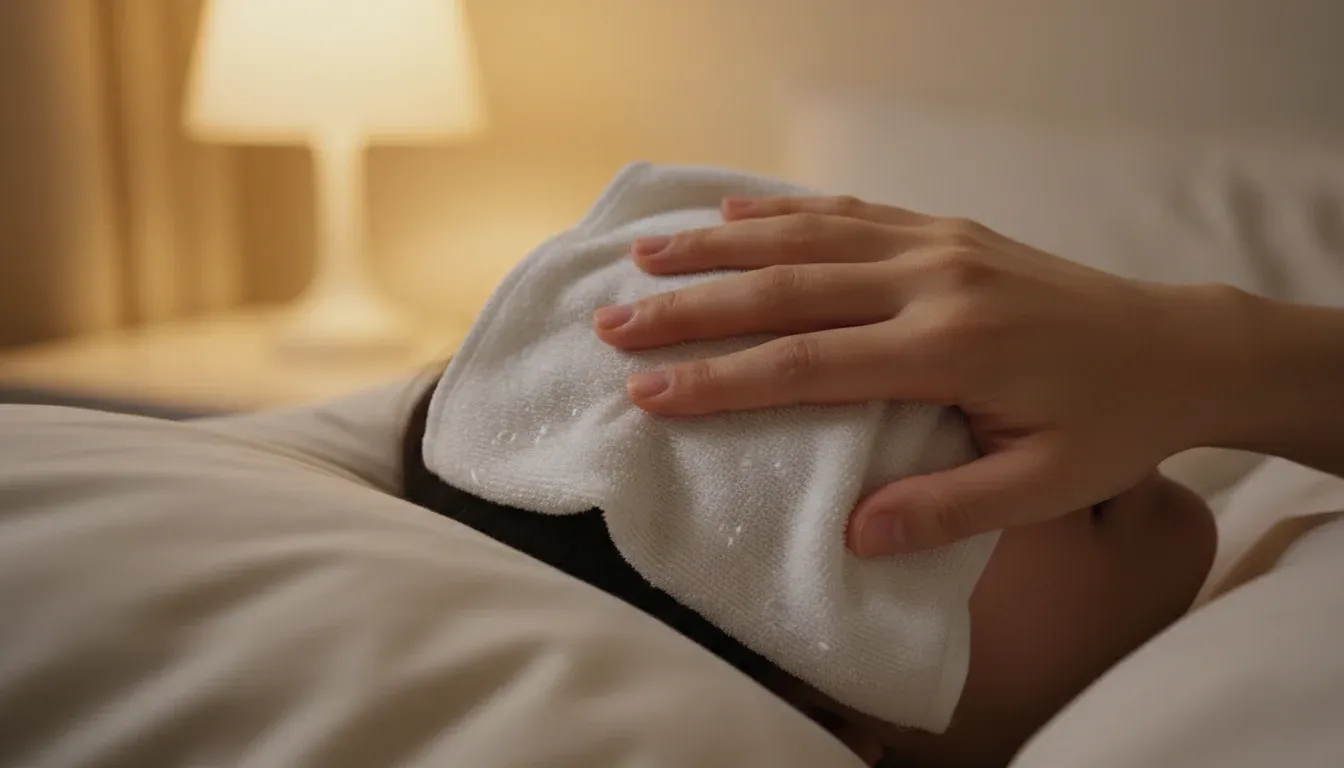
Soak a washcloth in cold water, wring it out, and hold it against your forehead or the back of your neck. A bag of frozen peas wrapped in a thin towel works even better because it molds to the shape of your head. Fifteen to twenty minutes is the sweet spot. Longer risks an ice burn, so keep a layer between the cold and your skin and take breaks. The cold dulls the pain signals and takes the edge off a throb. Repeat in an hour if it creeps back.
4. Rest in a dark, quiet room
Lie down somewhere dark and quiet, eyes closed, phone face-down and out of reach. Bright light and noise are fuel for a headache, and a screen is both at once. Even twenty or thirty minutes of genuine stillness can take a headache from unbearable to manageable. This pairs perfectly with the cold compress, so do both together. If you can actually fall asleep, better still. Sleep is one of the few things that resets a tension headache properly rather than just muting it.
5. Caffeine, in moderation
A small, early dose of caffeine can help some people. One cup of coffee or tea, not a pot. Caffeine is an ingredient in a number of combination pain-relief tablets, and a cup at the first twinge can take the edge off. The catch is the rebound. Lean on it every day and the morning you skip your usual cup, you can get a withdrawal headache of its own. So treat this as a one-off nudge, not a habit you build around. And keep drinking water alongside it, because dehydration is a common trigger in its own right.
6. Massage the tension out
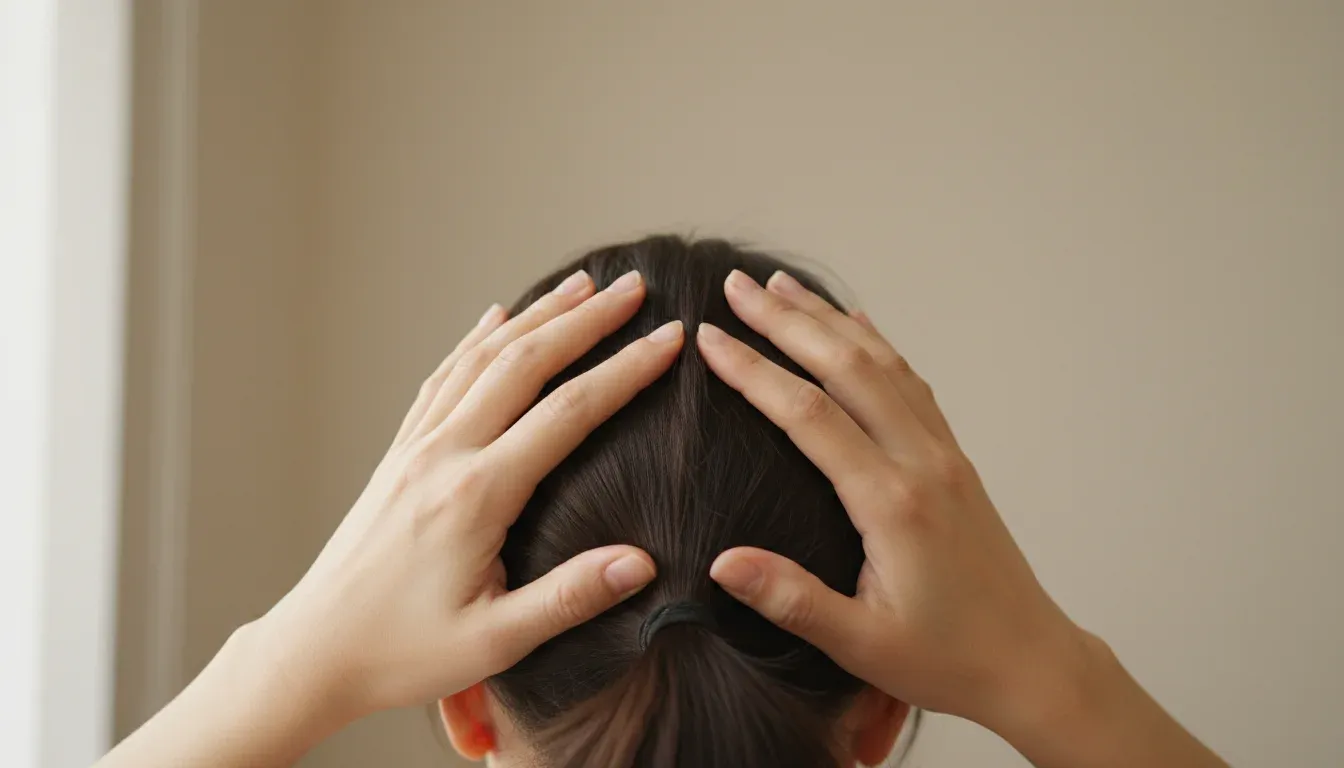
Tension headaches sit in the muscles as much as in the head. Press your fingertips into your temples, the base of your skull, and the tight band across the tops of your shoulders, working small circles with firm, steady pressure for a minute or two at each spot. You’re aiming for a good ache, not sharp pain. Rolling your shoulders and slowly tipping your head from side to side loosens the same muscles. The relief is temporary, but sometimes temporary is exactly enough to get through the afternoon.
7. Slow your breathing
This one won’t cure a headache, but slowing down can take the edge off while everything else kicks in. Sit or lie somewhere comfortable, close your eyes, and breathe slowly and deeply for a few minutes, letting each exhale run a little longer than the breath in. Focus on the breath instead of the throb. Stress tightens the muscles across your head and neck, so easing off it even a little gives the other methods room to work.
What causes a headache
Most everyday headaches trace back to something mundane, which is good news, because it means the fix is usually mundane too. The usual suspects: not drinking enough water, skipping meals so your blood sugar dips, poor or broken sleep, hours locked onto a screen with your neck craned forward, stress pulling your shoulders up around your ears, and caffeine, either too much of it or missing your usual amount. A big night of drinking rolls several of these into one. You don’t need to pin down which trigger was yours. Running down the list points you straight at the fix: thirsty, so drink; hungry, so eat; three hours at the screen, so get up and look at something far away. The headache that matters more is the one that fits none of these, which is the next section.
When to call a professional
Most headaches are the ordinary kind and clear up with the steps above. A few are signals of something serious, and these are worth knowing cold.
Get emergency care, meaning call 911 or go to the ER, for a sudden, severe headache that peaks within seconds or minutes (the “worst headache of your life”, sometimes called a thunderclap), or a headache that comes with a fever and a stiff neck, confusion, weakness or numbness, trouble speaking, drooping on one side of the face, or loss of vision. Treat a headache after a blow to the head the same way.
Book a doctor’s visit, without the same rush, if a headache keeps getting worse over days, regularly wakes you from sleep or is already there when you open your eyes, is a brand-new type of headache after age 50, or won’t budge with over-the-counter relief. And if you’re reaching for painkillers more than a couple of days a week, say so, because overusing them can cause a rebound headache that keeps the whole cycle going. A doctor can also tell an ordinary headache from a migraine or another condition that needs its own treatment. When something simply feels off and unlike your usual, that’s reason enough to get it checked.
Frequently asked questions (FAQ)
What gets rid of a headache fastest?
Water and an over-the-counter painkiller, taken together and early. Dehydration is behind a large share of everyday headaches, so rehydrating often does most of the work on its own, and the painkiller covers the rest.
Can dehydration really cause a headache?
Yes. It’s one of the most common everyday triggers, which is why drinking a glass or two of water is the first thing to try, and often the only thing you need.
Does caffeine help a headache or cause one?
Both, depending on the dose. A small amount early can ease the pain for some people, which is why caffeine is an ingredient in some combination pain-relief tablets. But daily heavy use, or missing your usual cup, can trigger a rebound or withdrawal headache. Keep it moderate.
When should I worry about a headache?
If it’s sudden and severe, follows a head injury, or comes with fever, a stiff neck, confusion, vision or speech trouble, or weakness, get emergency care. The section above has the full list of warning signs.