Table of Contents
Knowing how to get rid of oven cleaner smell starts with one fact: an oven that smells of cleaner still has cleaner in it. That’s why the vanilla-and-lemon tricks in the search results only buy you an evening. Next time the oven heats, the smell’s back.
So work in this order: take the residue out, clean around the heating elements, wipe with vinegar water, air the kitchen, then check your work with an empty run. Scent comes last, if you still want it.
Inhaled oven cleaner can irritate your airways, so open a window before anything else.
What causes this problem
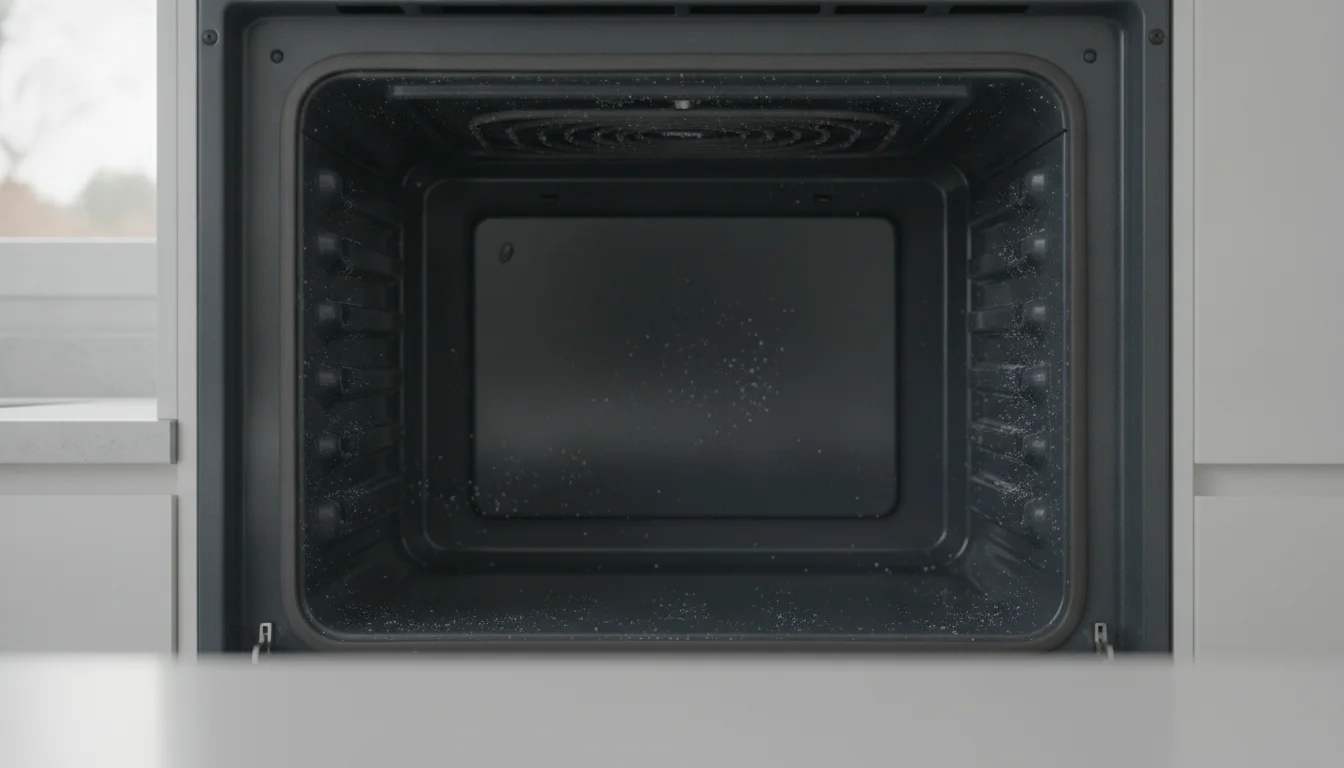
Most heavy-duty oven cleaners are built on lye (sodium hydroxide), and NMSU Extension lists lye and ammonia as their usual active ingredients. The Alabama Department of Public Health calls them caustic because of their high pH. Anything left on the walls, the door seams, the rack supports or the heating elements gets cooked every time you use the oven. If the cleaner hasn’t been wiped off completely, the department says, it smokes as it burns off. That’s the smell, and it’s why it gets worse when the oven is hot.
1. How to get rid of oven cleaner smell: rinse out every trace
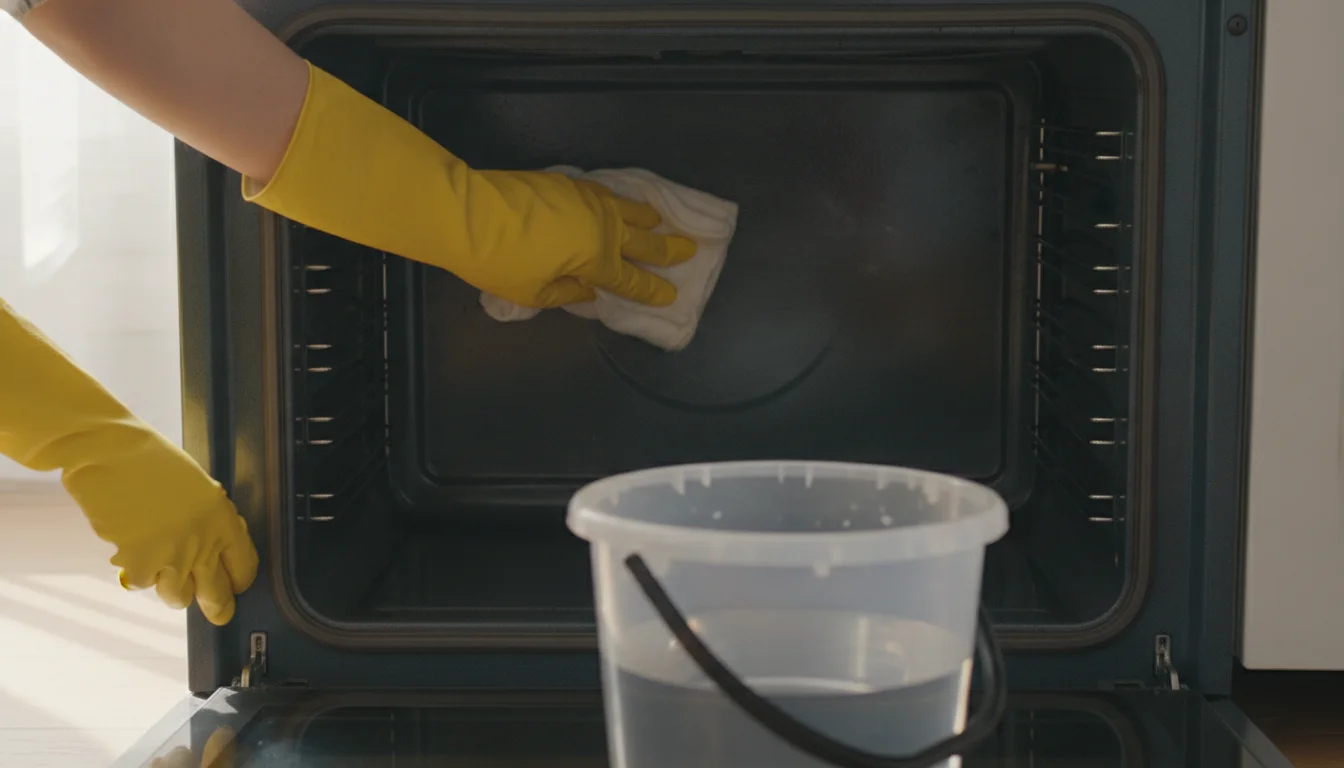
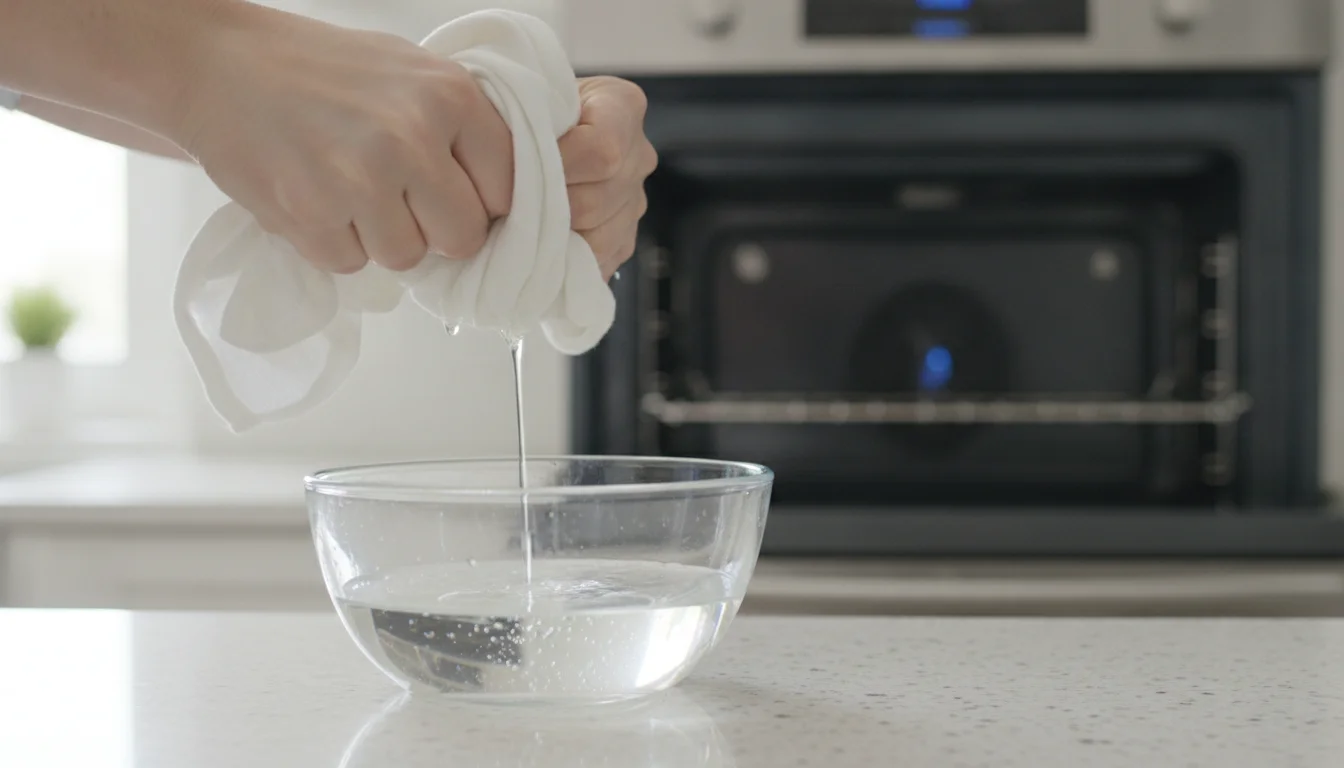
With the oven off and cold, put on long rubber gloves and eye protection. Soak a clean rag in hot water, wring it out, and wipe the walls, roof, floor and inside of the door. Rinse the rag often. Change the water when it goes cloudy, then go over everything again. The label directions on oven cleaner end with “wipe clean with a wet sponge, cloth or paper towel”, and a guide to Easy-Off’s fume-free formula from Abbotts At Home says to keep rinsing and repeating until all the residue is gone.
Then hunt the hiding spots. Hunker’s guide to an oven that smokes after Easy-Off points to the underside of the rack supports, the corners and the door seams. Take the racks out and rinse them the same way.
The Alabama Department of Public Health says most oven cleaner exposures happen because people spray it and then don’t wipe it off, or don’t wipe it off well enough, before they cook.
2. Clean around the heating elements, not on them
Oven cleaner labels say to keep the spray off the heating elements, thermostat, switches and electrical connections. If some landed there anyway, it’s sitting on the hottest parts of the oven.
Don’t scrub the elements themselves. GE’s use and care manual for its JTP15 wall oven says not to clean the bake or broil element at all, because any soil burns off when they heat. What it does allow, with the oven cold, is gently wiping around the bake element with warm water when residue builds up there. It also says you can lift the bake element gently to clean the oven floor underneath. Ovens differ, so check your own manual before you touch an element. Whatever is left on the element itself will burn off in the empty run in step 5, which is why you do that with the window open.
3. Wipe it down with vinegar water
Once the plain-water rinse is done, go over every surface once more with diluted white vinegar. Hunker’s residue guide mixes 3 quarts (2.8 L) of warm water with 2 cups (475 ml) of vinegar; its smoke guide uses a 50-50 mix. Either works.
Vinegar is mildly acidic and the cleaner is strongly alkaline, so it’s a sensible last pass over whatever film the water left.
4. Open the windows and keep air moving
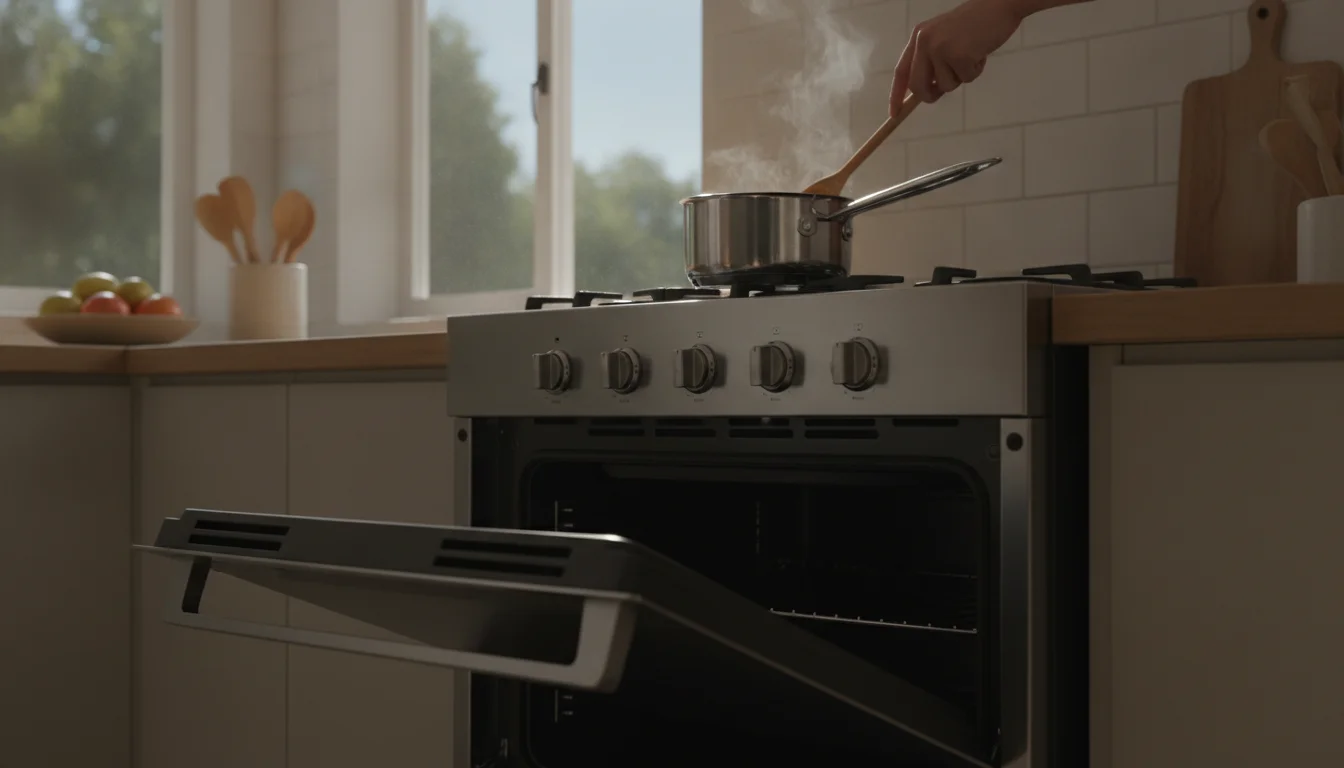
Open windows, as you would for cooking smells, ideally on opposite sides of the house so air actually flows through, and run the extractor fan.
On its own, airing out only thins the smell. Texas A&M AgriLife Extension makes the same point about smoke odor: ventilation dilutes it but doesn’t remove it.
5. Run the empty oven as a test
Now heat it. With nothing inside, the window open and the fan on, run the oven at 350°F (177°C) for about 20 minutes. That’s the Abbotts At Home routine, which says the heat and the fan help clear the leftover scent. Hunker suggests about 15 minutes before cooking.
Then turn it off, let it cool, open the door and sniff. The run doesn’t prove the oven is ready for food; what the Alabama Department of Public Health asks is that the cleaner is completely wiped off before you cook, and Easy-Off’s label tells you to wipe it out with a wet sponge, cloth or paper towel. The run just shows you where you missed. Smoke means residue is still in there, usually in the corners, door seams or under the rack supports, so let it cool, wipe those spots and run it again. If it smoked enough to leave a burnt smell through the house, air the other rooms too.
One thing not to do: use the self-cleaning cycle to burn the residue off. Easy-Off’s own directions say its Fume Free cleaner can go in a self-cleaning oven only if the self-clean cycle isn’t used with it.
6. Leave the door open for a few days
If a faint smell hangs on, give it time. One person in r/CleaningTips with a bad oven cleaner smell left the oven door open for 2 to 3 days and didn’t use the oven at all, cooking only on the stovetop. Each day they wiped the inside with wet rags and paper towels. When they finally used the oven a few days later: no smell.
Others had told them the smell got worse as soon as the oven heated up, which fits: heat drives off whatever is still on the walls.
7. Bake citrus or vanilla water, but only at the end
Every other page leads with this, and it’s a mask. The how-to guide it comes from calls vanilla “a great mask for other odors”, and Texas A&M says scented candles and sprays only cover a smell for a while. Use it after the oven runs empty without smoking, if you want the kitchen to smell nice.
Preheat to 250°F (121°C). Pick one:
- Vanilla: an inch (2.5 cm) of water in a small baking dish with 1 teaspoon (5 ml) of vanilla extract.
- Lemon: two lemons cut in half, juice squeezed into an inch of water in a baking dish, halves dropped in.
- Orange: the peel of one orange on a baking sheet.
Heat it for 30 minutes to an hour, topping up the water if it gets low. Then turn the oven off and leave the door slightly open.
8. Use a fume-free cleaner next time
Easy-Off sells a Fume Free formula that it says works with “no caustic fumes”, and it goes into a cold oven, so you never heat the cleaner. Spray from 9 to 12 inches (23 to 30 cm) away, wait 30 seconds for a spot or close the door for 2 hours for a deep clean, then wipe it out with a wet sponge, cloth or paper towel. You still rinse it out properly (step 1 applies to every cleaner).
Prefer no oven cleaner at all? eHow’s alternative is to wipe the oven with white vinegar and scrub with baking soda on a sponge or nylon scrubber, which leaves no cleaner fumes behind.
FAQ
Are oven cleaner fumes harmful?
They can be. The Alabama Department of Public Health says inhaled oven cleaner can irritate your airways, with symptoms from coughing and chest pain to shortness of breath. If someone has symptoms, call Poison Help at 1-800-222-1222.
Is it safe to cook in the oven if it still smells of cleaner?
Not until the cleaner is completely wiped off. That’s the Alabama Department of Public Health’s rule, and Easy-Off’s label directions say to wipe the oven out with a wet sponge, cloth or paper towel. If it smells sharp, assume there’s cleaner left and rinse again. A clean empty run doesn’t prove the oven is safe; a smoky one tells you it isn’t finished.
Why does the smell get worse when the oven heats up?
Because the heat is burning off cleaner left on the surfaces. Leftover cleaner smokes when it burns off, and the elements and walls get hottest.
Can I run the self-clean cycle to burn off the residue?
No. Easy-Off’s directions say not to use the self-clean cycle in combination with its cleaner. Rinse the residue out by hand instead.