Table of Contents
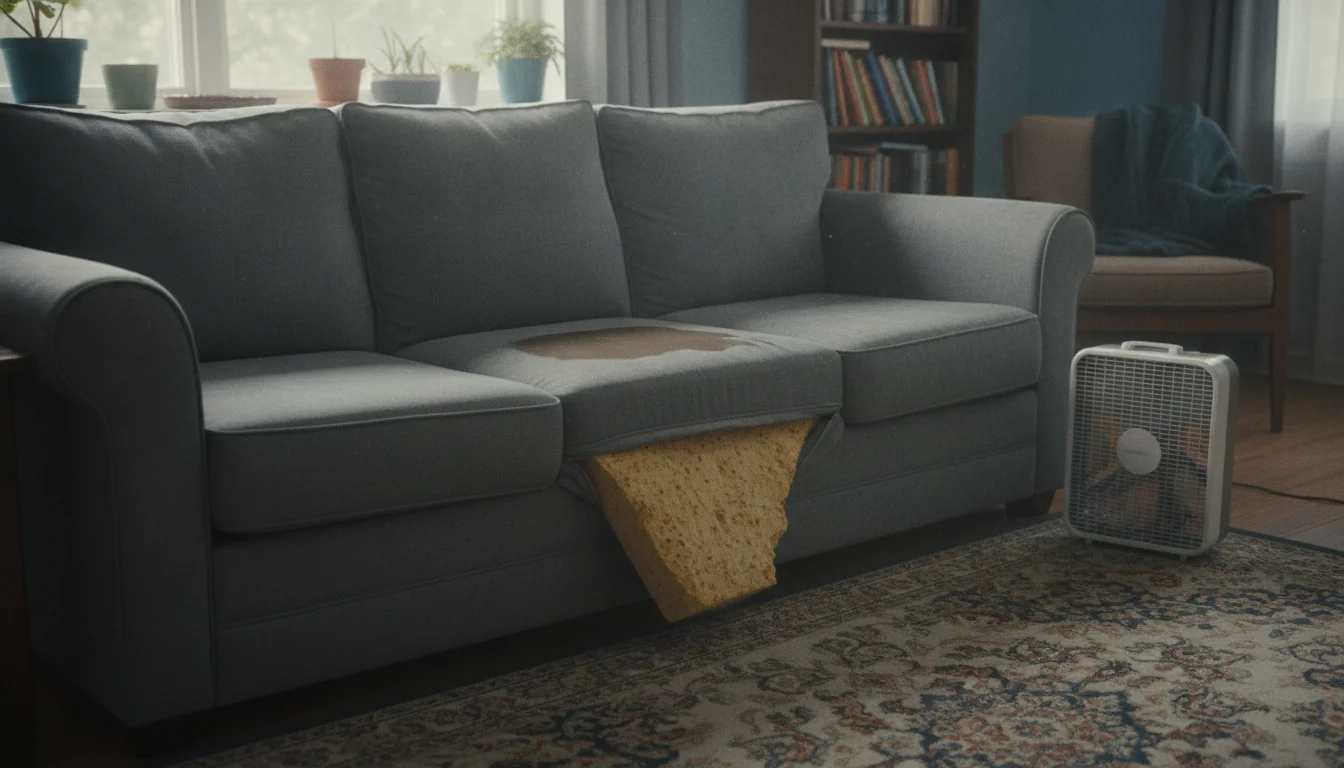
Knowing how to get rid of couch smell starts with one fact: it rarely comes from the fabric you can see. The smell lives underneath, in the cushion foam and padding, which is why a spray and a wipe don’t fix it. And if you cleaned it and it now smells worse, that’s not bad luck. The cover dried in a few hours. The foam inside didn’t. It’s still damp and going musty, full of soap you never rinsed out, or holding old urine the water woke back up.
So work in order. Find the part that smells, try the dry fixes, and if it’s in the foam, take the foam out, wash it, rinse out every bit of soap and dry it properly. That takes days, not an afternoon.
1. Sniff out which part holds the smell
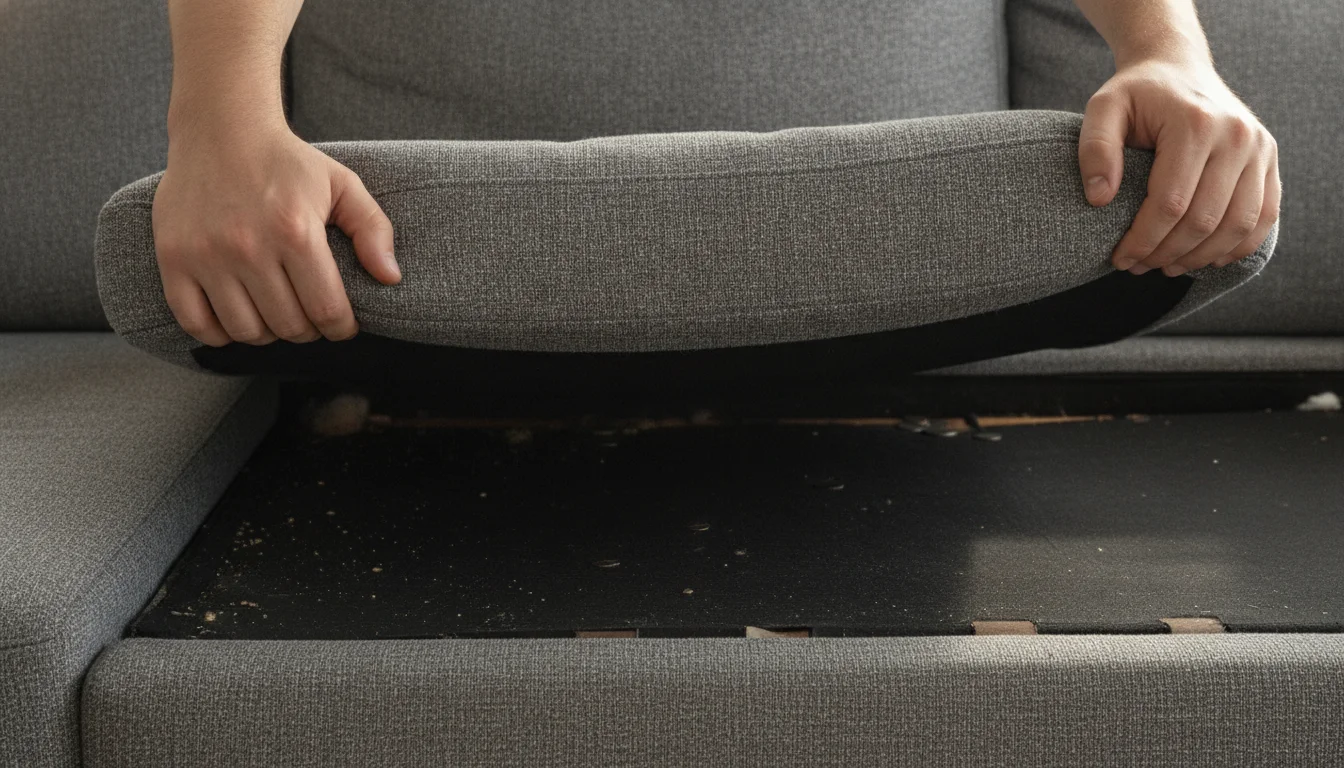
Do this before anything gets wet. Pull every cushion, pillow and throw off the couch and smell each one on its own, both sides. Then smell the bare frame, the seat deck and the arms.
The smell usually lives in one part, and that part decides the fix. One owner who dragged home a curbside chair dusted the whole thing with carpet deodorizer and got deodorizer plus the old stink. Once the seat cushion came out, the chair smelled fine. The foam was the whole problem.
A smell that gets stronger when someone sits down, or on a humid day, is in the padding, not the cover. For urine you can’t see, a blacklight in a dark room makes dried urine glow.
2. Check the cleaning code before you wet anything
The tag is usually under a seat cushion or on the base, and different cushions can carry different codes.
- W: water-based cleaners are safe.
- WS or S/W: water-based or solvent. Test on a hidden spot first.
- S: solvent only. Water can mark the fabric.
- X: vacuum and soft brush only. No liquid at all.
On W fabric, a little mild detergent in water, dabbed into the worst spots with a damp cloth, lifts the body oil behind a lot of couch smell. Then wipe with a cloth dipped in plain water to take the soap off. Every wet method below is for W and WS fabric only.
3. Baking soda and a thorough vacuum
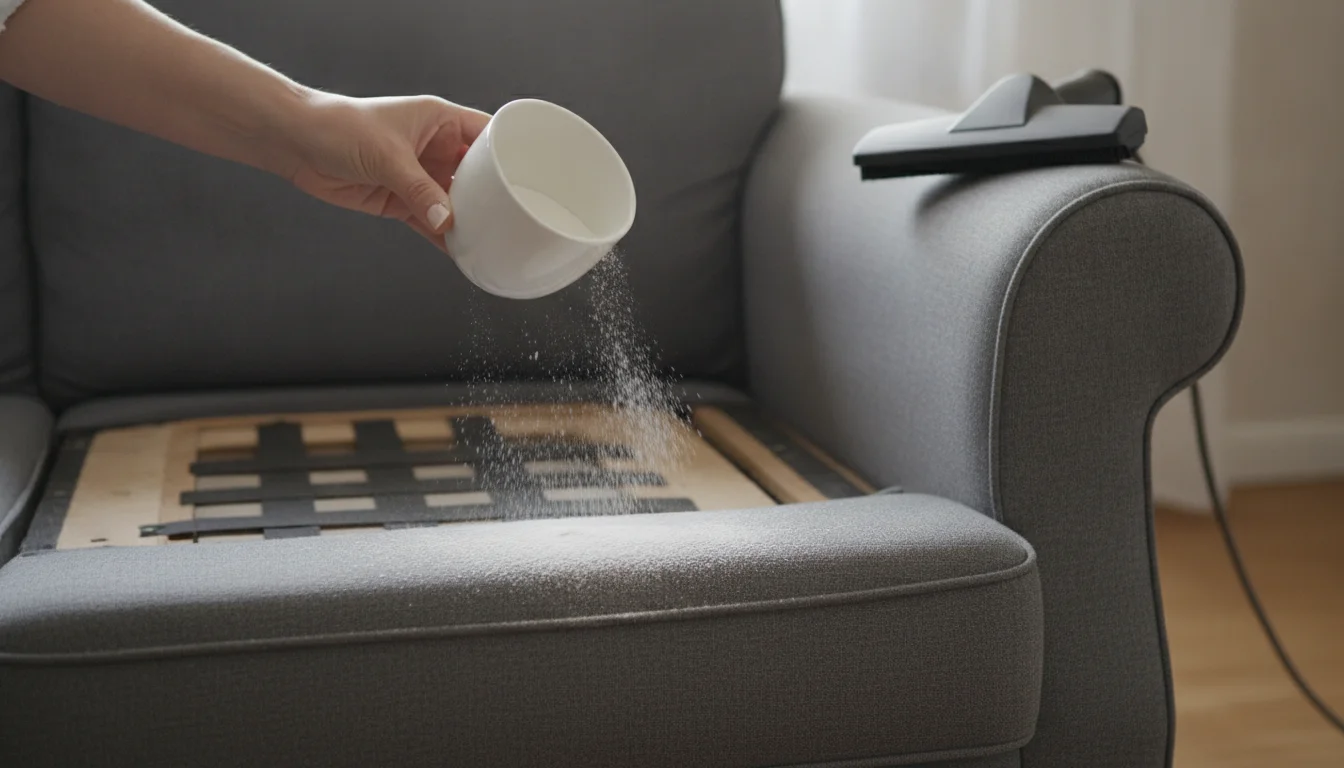
The right first move for a general stale smell. Vacuum with the upholstery tool, cushions off, into every crevice (crumbs rot slowly down there). Then sprinkle baking soda over every fabric surface, a thick layer for a strong smell.
Leave it at least 15 minutes, or a few hours to overnight for a bad one. Vacuum up every bit, since leftover powder shows on dark fabric. If the smell is back within days, the source is inside the foam and baking soda won’t reach it.
4. Enzyme cleaner for urine, vomit and pet accidents
Use an enzyme cleaner whose label lists urine, vomit or pet accidents, the same product you’d reach for on cat urine smell in carpet. It’s made for organic messes, so it won’t fix a musty smell.
Urine soaks through to the padding, so a surface spritz never reaches it. Blot up anything damp, then apply enough to follow the urine down on that spot only. Leave it for the label’s contact time, blot again, then dry it properly (method 8). One Reddit owner fighting a urine couch said enzyme sprays did little for them, and that soaking and washing the foam itself, two or three times, is what worked.
5. Wash the covers, but only if their label says so
Zip-off covers often have their own wash label. Follow it, not the W code, which only says water is safe on the fabric where it sits. Cold water unless the label says otherwise, mild detergent, no scent boosters (they leave residue), and air-dry. Wash the throws and pillows too.
A cover with no wash label isn’t a machine job. One owner who machine-washed a velour cover anyway got it back crinkled.
6. Soak and squeeze the foam in a tub
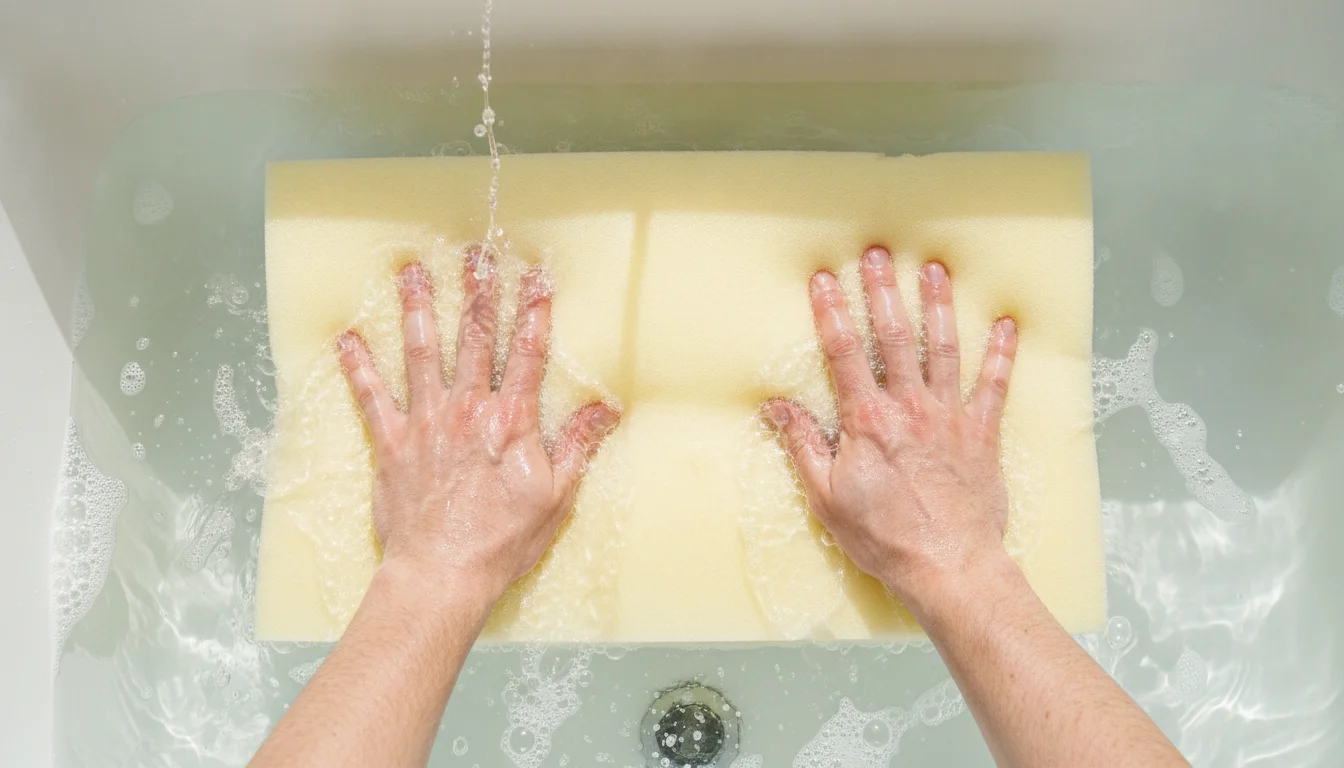
The fix for a cushion that holds the smell. Take the foam insert out, put it in the bathtub and wet it right through with warm water. Work in a little mild dish soap and squeeze the suds through the smelly area.
Then rinse until squeezing brings up no bubbles at all. This is the step people cut short, and leftover soap is exactly what makes a “cleaned” cushion smell stale. Press the water out, then press again under a thick towel, flipping and swapping towels, until it’s only slightly damp.
For a big cushion, use your feet. The curbside-chair owner walked all over her foam in about 5 inches (13 cm) of water, refilled to rinse, then folded it and walked the water out. A bad urine smell may need two or three rounds. Never wring foam, and never tumble-dry it, which can melt it.
7. Rinse and extract the parts that don’t come out
Seat decks, arms and fixed backs can’t go in the tub. Mist them with plain water until damp, not soaking, then run a wet-dry vacuum or handheld upholstery extractor over them in slow, overlapping passes. Repeat until the water coming up runs clear. That pulls out shampoo from an earlier clean too.
This is where rented carpet machines go wrong. They put down a lot of solution without the suction to get it back out, so the surface dries and the padding stays wet. Use less water and more passes. No extractor? Mist and blot hard with dry towels, again and again.
8. Dry the foam on its edge in moving air
Damp foam is the main reason a couch smells worse after cleaning. Stand the foam on one edge in a room with good airflow, or outside in the shade, with a fan on it. Every couple of hours, turn it end over end and front to back. For the frame, aim fans at it and open windows on both sides of the room.
Keep heaters, hairdryers and long spells of direct sun away, since heat and UV damage foam. Start the moment the rinse is done (the EPA’s advice is to dry wet items within 24 to 48 hours to keep mold from growing), but expect dense foam to take a few days, with the middle drying last. The chair owner left hers out a full day after it already felt dry. The cover goes back on only when the foam is completely dry.
9. Activated charcoal between the cushions
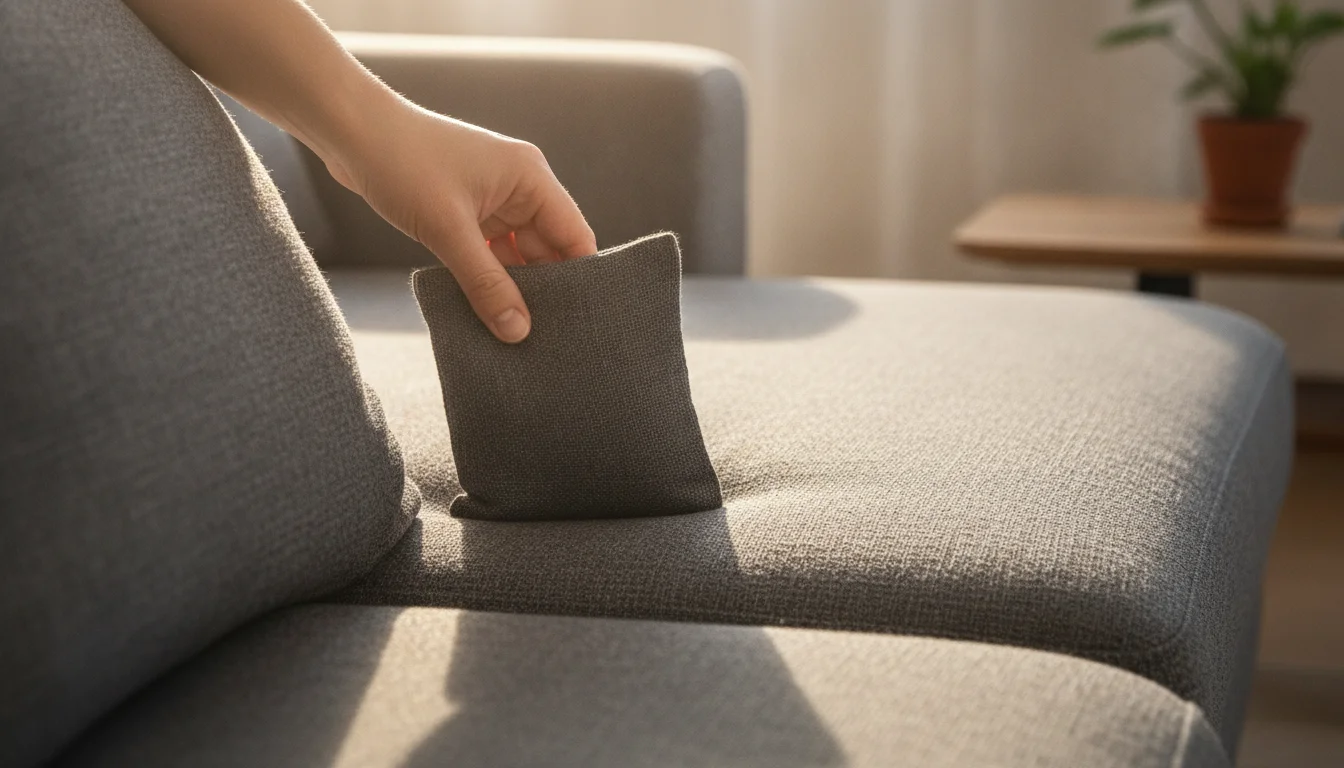
Tuck pouches of activated charcoal between the cushions, or set bowls of it beside the couch, for several days. It soaks up smell without adding perfume. Don’t sprinkle it on the fabric, because it stains. A backup for a mild smell, not a fix for a soaked cushion.
10. Replace the foam when it fails the last test
Wash it properly, dry it completely, then smell it. If the smell is still there, the foam is the source, and replacing it is the only fix. Some fabric stores sell foam cut to the size of your old cushion. Foam that’s gone moldy may have to go regardless.
What causes couch smell
Day to day, it’s body oils and sweat, crumbs breaking down in the crevices, pets, and damp. A couch in a basement or humid room picks up a musty smell from moisture trapped in the cushions.
A couch that smells worse after cleaning has one of three problems:
- Damp foam. The cover dries in hours, the padding in days, and a wet core inside a zipped cover goes musty.
- Soap residue. Shampoo left in the fabric and foam smells stale once it dries.
- Urine re-released. Dried urine salts don’t smell until moisture or humidity reaches them, so wetting an old accident brings it back. Body heat warming a seat cushion brings a buried smell up too.
How to get rid of couch smell and prevent it coming back
Vacuum weekly with the cushions off, more often with pets. Blot spills straight away, then run a fan on the spot until it’s dry. Keep a washable throw on the pet’s favorite spot. Rotate the cushions so one spot doesn’t take all the sweat. Run a dehumidifier if the room is humid. And when you clean, mist lightly instead of soaking.
When to call a professional
Call an upholstery cleaner for X-coded fabric, for S-coded fabric that needs more than a light spot clean, for velvet and other delicate fabrics, and for urine in fixed padding you can’t take out. Tell them about the urine. They’ll use an enzyme treatment, and without it the smell tends to come back. Very old contamination may not come out completely, so expect an improvement, not a miracle.
Skip the ozone generator. The EPA says that at levels safe to be around, ozone doesn’t remove many odor-causing chemicals, and breathing it can damage your lungs.
FAQ
Why does my couch smell worse after cleaning?
Usually the foam is still wet. It can also be soap left behind, or old urine the water reactivated. Rinse with plain water, extract, and dry the foam on its edge before the covers go back on.
What can I use to remove bad smells from my sofa?
Baking soda and a vacuum for a stale smell, an enzyme cleaner for urine or vomit, and a washed and fully dried foam insert for anything in the cushion.
How do I freshen a sofa without washing it?
Vacuum with the cushions off, then baking soda for a few hours, with the windows open and a fan running.
What is the best odor eliminator for a couch?
Enzyme cleaner, if the source is urine or another organic mess. Fabric sprays only mask a smell while its cause stays in the cushion.
How long does sofa off-gassing last?
That depends on the sofa. New furniture can smell from factory treatments like flame retardant or antibacterial treatment of natural fill. Air it out with the windows open.