Table of Contents
Creeping fig doesn’t hold on to your wall. It glues itself to it. Pull it off alive and the paint, the stucco or crumbs of mortar can come away with it. Here’s how to get rid of creeping fig with the least harm: cut it, let it die in place, then kill the roots that bring it back.
But first decide whether it has to go. On the walls of your house, take it off: UF/IFAS advises keeping it off your home’s walls, and Clemson’s extension says wood and stucco can be damaged when the stems come away. On a privacy wall, UF/IFAS says it can stay if you keep pruning it (step 6).
Why creeping fig damages walls
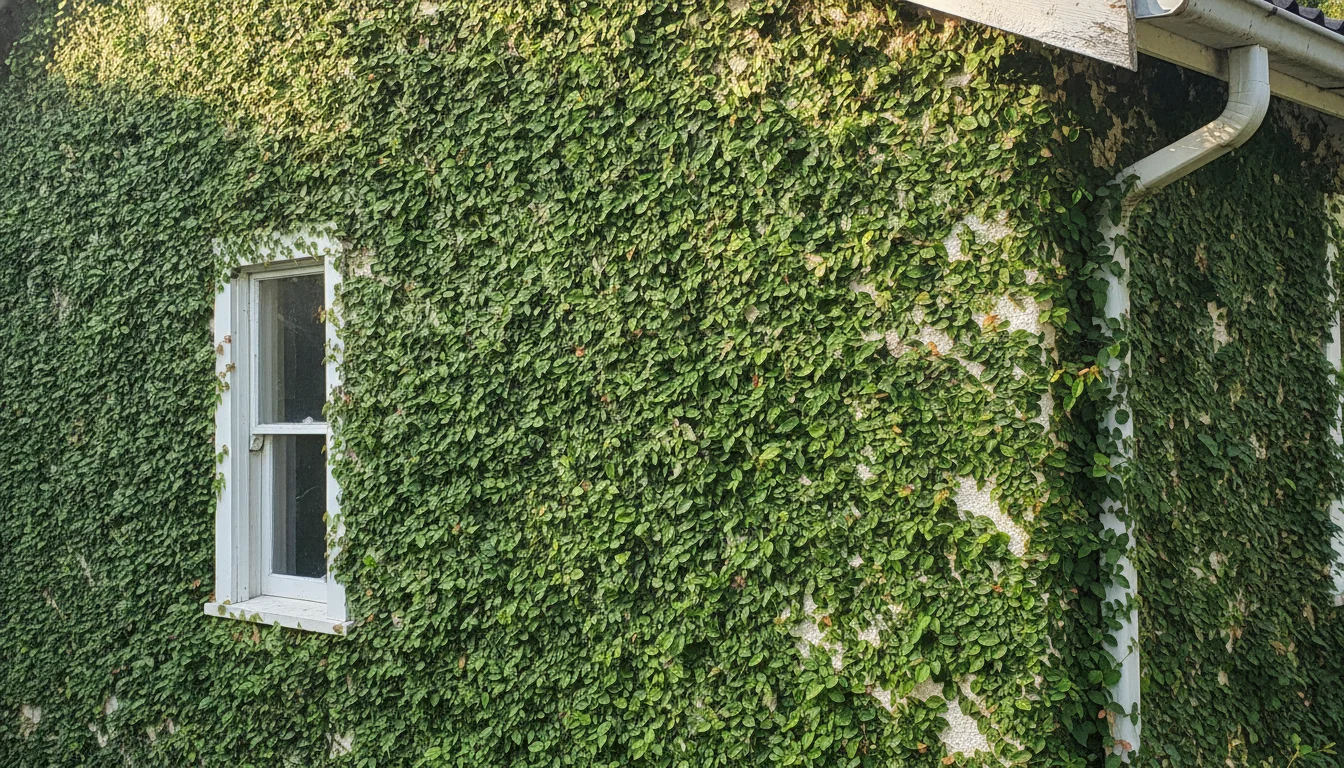
Young creeping fig (Ficus pumila) stems put out aerial rootlets and adhesive pads that ooze a sticky latex and fix the stem to the wall. Clemson University’s home and garden extension says those attachments often stay on the wall when the vine comes off, and that wood and stucco in particular can be damaged when the stems are pulled away.
The National Park Service makes the same point about clinging vines on brick buildings: while growing they don’t generally cause extensive damage, though they may abrade softer mortar, but they attach so thoroughly that paint, mortar and brick are likely to be damaged when the vines are removed. Aerial rootlets can also force their way into crevices. And a thick cover keeps the wall behind it damp, which the NPS links to paint failure, wood rot and soft masonry breaking down.
It grows in sun or shade and can climb to 40 ft (12 m). Older shoots turn shrubby, push out from the wall and fruit. UF/IFAS rates it a high invasion risk in Florida’s natural areas and no longer recommends planting it.
1. Cut it at the base and let it die on the wall
This is the method. Everything else deals with the roots.
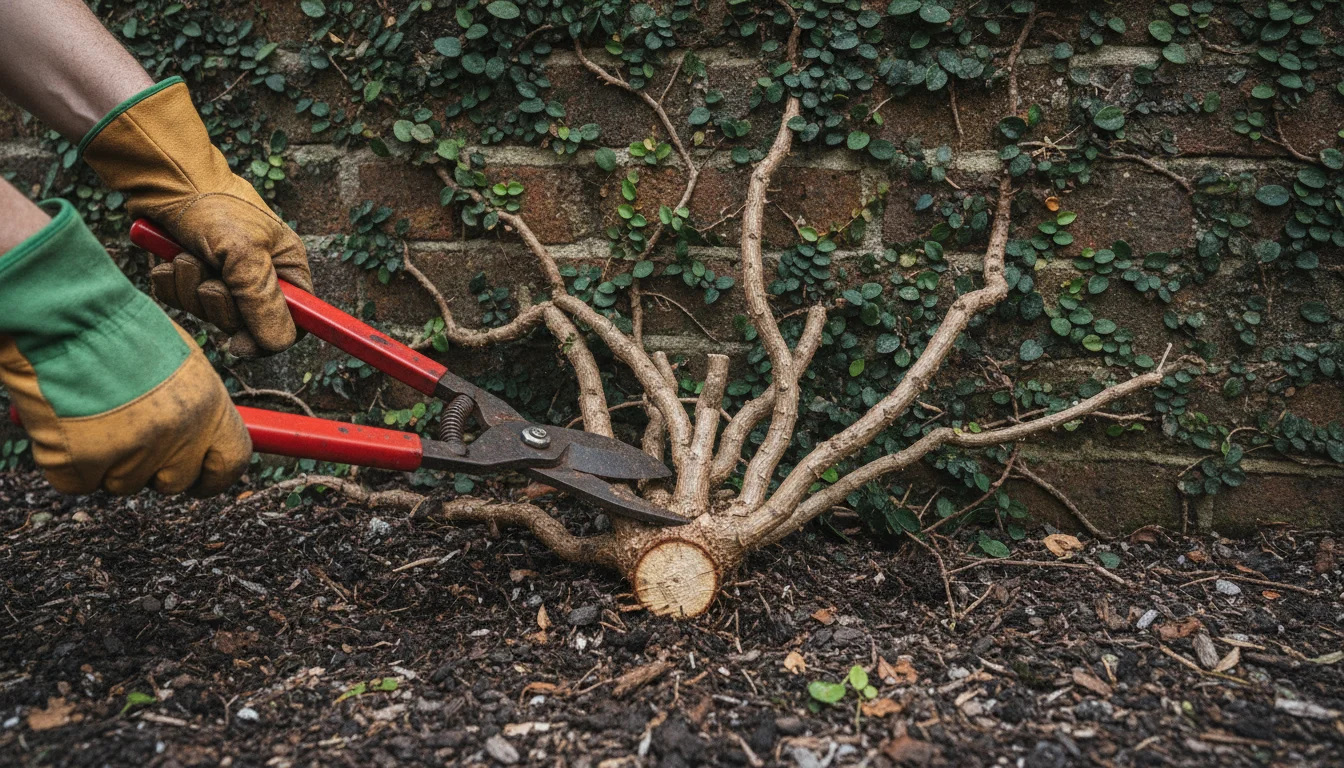
Cut every stem as close to the ground as you can with loppers. Then cut the same stems again about 2 ft (60 cm) up and pull out the piece in between. In a tangle you can’t tell if you got them all, and the gap proves you did. UF/IFAS recommends exactly this “window” cut.
Then leave it. UF/IFAS is blunt: don’t pull vines down from a wall, because they cling tightly and pulling can damage the structure. Let the dead growth decompose. Even if some of it still clings after a couple of years, it will be much easier, and safer, to remove. Take only what comes away without a fight, and stop where a piece resists.
Expect marks. The pads often stay behind and mar the wall, Clemson says, and none of the extension sources we read gives a tested way to clean them off stucco or paint without harm. If they bother you, see “When to call a professional” below.
2. Paint the fresh cut with herbicide
This goes after the roots. Cut the stem a few inches above the ground and brush herbicide onto the cut right after you make it. University of Georgia extension uses glyphosate (a 41% or stronger product) or triclopyr, full or half strength, and says fall gives better results.
Use a product whose label lists the site and the plant you’re treating, and follow its rates over the ones here. As UF/IFAS puts it, the label is the law.
One Florida gardener cut through vine trunks over 2 inches (5 cm) thick that had smothered a dozen cypress trees and brushed triclopyr stump killer on the fresh cuts only. That’s the point: the wound, not the foliage. Don’t spray: UF/IFAS warns the drift can damage nearby plants.
When new shoots reach 6 to 12 inches (15 to 30 cm), UGA treats them with a 5% glyphosate solution, about 7 oz per gallon (55 ml per liter) of a 41% product, if the label allows it.
3. Dig out the roots
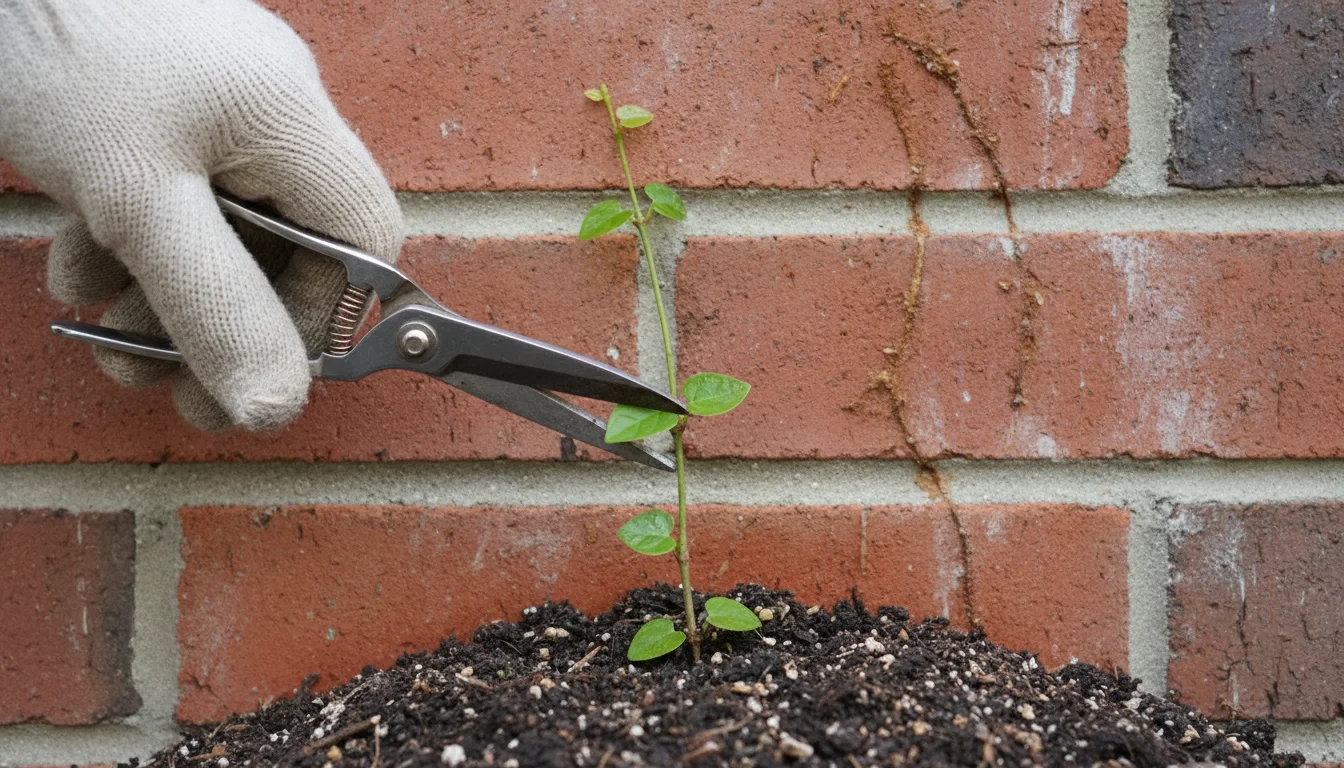
For a young plant or a small patch, dig. UGA extension calls digging out the root mass a great way to deal with seedlings and lighter infestations, if you keep at it. House Digest warns that even tiny root fragments sprout new shoots, so follow every root you find with a shovel, mattock or root-cutting tool and lift it whole. Don’t yank cut stems out of the ground: UF/IFAS says they snap and leave root behind to sprout next season.
Wear gloves. The milky sap can irritate skin.
4. Keep cutting until the roots give up
No herbicide, no digging under the foundation? Then do what wears down perennial weeds: cut every new shoot back to the ground as soon as it appears, all season, and don’t let a single leaf feed the roots. UGA calls for persistence: stop and let it regrow, and you’re back to the start. UGA warns it can take months, even years. But it works.
5. Bag it, never compost it
UF/IFAS says to double-bag invasive plant material and send it to the landfill with the regular trash. Never put it in compost or a yard-waste bin. Young creeping fig stems root easily (Clemson uses them for cuttings), so bag as you go.
6. Or keep it, and trim it hard
On a privacy wall, UF/IFAS treats creeping fig as a plant you can keep, on one condition: vigilant pruning. Clemson’s extension agrees it grows vigorously and needs periodic pruning to remove wayward stems and keep it in bounds. Before you rip out a vine, UGA’s advice is to ask whether it’s really that big a problem, and whether pruning could bring it down to a manageable size.
Hold a clear margin around everything it shouldn’t reach: the roofline, gutters, windows, doors and any wood trim. Cut wayward stems back from those edges rather than tearing them off live, and let the cut bits die before you take them off. Clemson also removes the shrubby, fruiting shoots where they attach to keep the flat juvenile growth. Clip the edge of any creeping fig ground cover near a building regularly, because UF/IFAS says it climbs walls very quickly.
If you won’t keep up with that, take it off.
How to keep creeping fig from coming back
Check the base of the wall often for months after removal. House Digest warns that stray shoots keep coming, and UF/IFAS says scouting early in the growing season catches new sprouts before they’re established. Don’t plant creeping fig against the house again: UF/IFAS advises keeping it off your home’s walls, as it can damage wooden structures. And bag every scrap.
When to call a professional
Call a landscaper or tree service when the vine is higher than a secured ladder reaches, or up in trees. Call a mason or stucco contractor when stucco comes away in chunks or mortar joints look loose once the vine is gone. For pads left on painted siding or stucco, get a painter or stucco contractor to look before you scrub or scrape: the NPS says paint and masonry are likely to be damaged when clinging vines come off.
How to get rid of creeping fig: FAQ
Does creeping fig damage brick?
Mostly when it comes off. The NPS says clinging vines on brick don’t generally cause extensive damage while growing, though they may abrade softer mortar, but paint, mortar and brick are likely to be damaged when they’re removed. That’s why you cut it and let it die rather than pulling.
How long does dead creeping fig take to come off the wall?
Longer than you’d like. UF/IFAS says to let cut vines decompose in place, and that ones still clinging after a couple of years are much easier and safer to remove. Take off only what comes away freely.
Is creeping fig sap dangerous?
It’s a latex that Clemson says may cause dermatitis. Wear gloves and long sleeves.
Can I get rid of creeping fig naturally?
Yes. Cut it, let it die on the wall, then dig the roots or cut every regrowth back until they run out. Expect it to take a while: UGA says repeated cutting can take months, even years.