Table of Contents
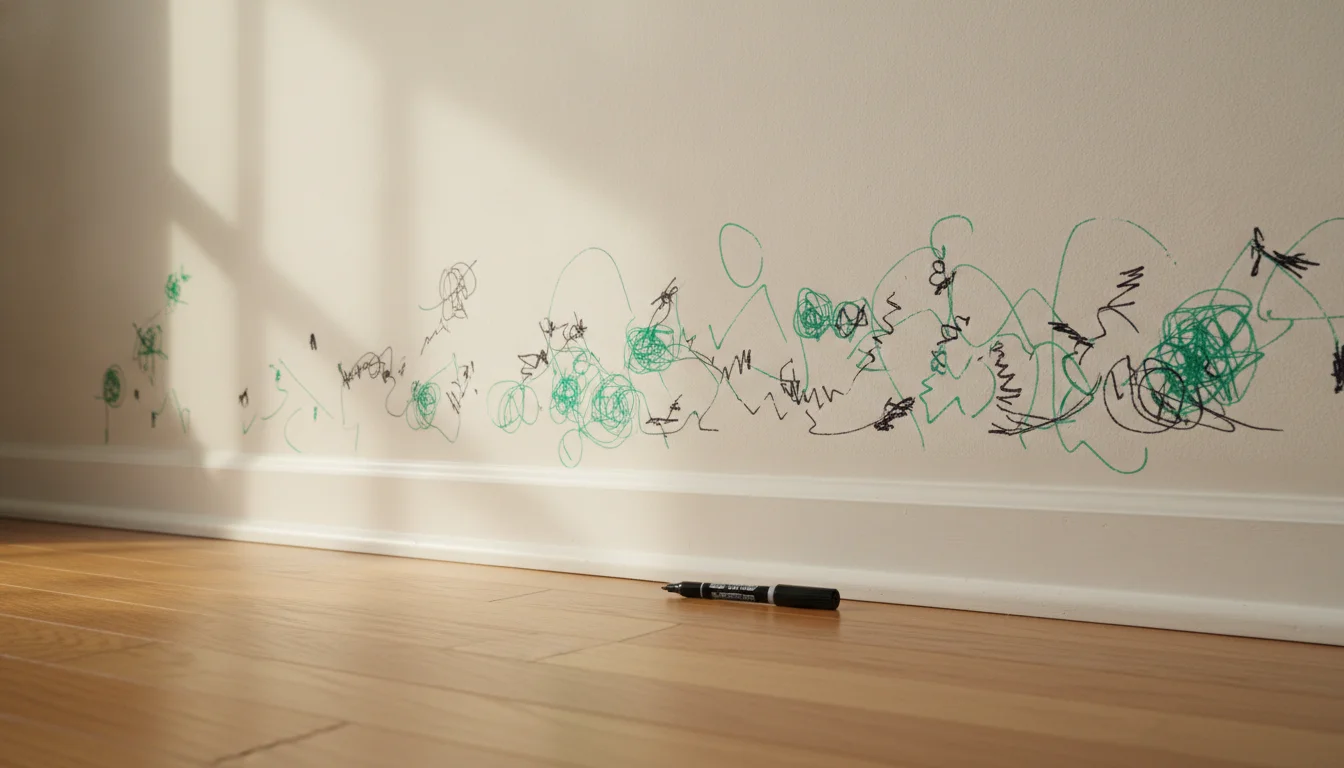
Sharpie is dye carried in a solvent. Once the solvent flashes off, the dye stays bonded to whatever it landed on, and on a wall that means the paint. So how to get rid of permanent marker on walls isn’t about what dissolves marker. It’s about what your paint can survive.
One parent on r/CleaningTips spent a week on a toddler’s green Sharpie mural with a dry erase marker, isopropyl alcohol, Zep and magic erasers. Nothing shifted it. Spray sunscreen started stripping the paint and left the wall sticky. That’s the usual arc: the paint gives up before the ink does.
Read the sheen, go gentle, and know when to stop scrubbing and seal the mark instead.
1. Check the wall’s sheen before anything touches it
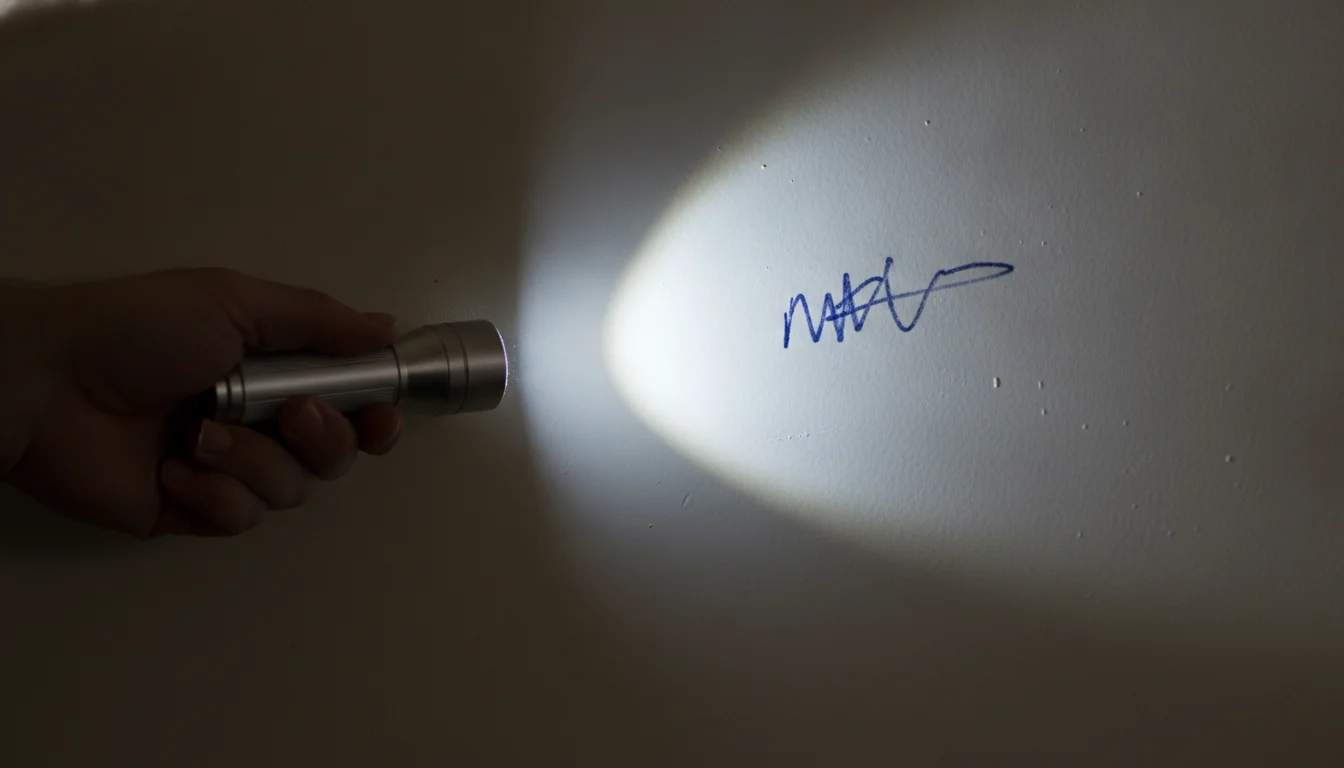
This decides everything else. Look along the wall toward a window or lamp, so the light rakes across it. No reflection at all, a chalky look: flat or matte. A soft glow: eggshell. A clear soft shine: satin. A bright reflection: semi-gloss or gloss, usual on trim and doors.
Flat paint has less binder at the surface, so rubbing polishes it into a shiny patch. That’s called burnishing, and it’s permanent. Sherwin-Williams’ fix for it is to repaint.
If you’re renting, this matters twice. A burnished halo is easier to see than a faded doodle. The same sheen rules apply to scuff marks on walls.
2. Blot it with soapy water first
Warm water, a little clear dish soap, a microfiber cloth wrung out until it’s damp, not dripping. Test it behind the sofa first: wipe, wait two minutes, check in that raking light. Color on the cloth or a shinier spot means stop.
On flat paint, blot. Press, lift, move to a clean part of the cloth, press again. Don’t rub in circles.
Will this lift set Sharpie? Usually not. But it clears the dust and grease so alcohol (or primer) can work, and on a flat wall it’s the last cleaning step you get. Mark still there? Skip to method 5.
3. How to get rid of permanent marker on walls with rubbing alcohol
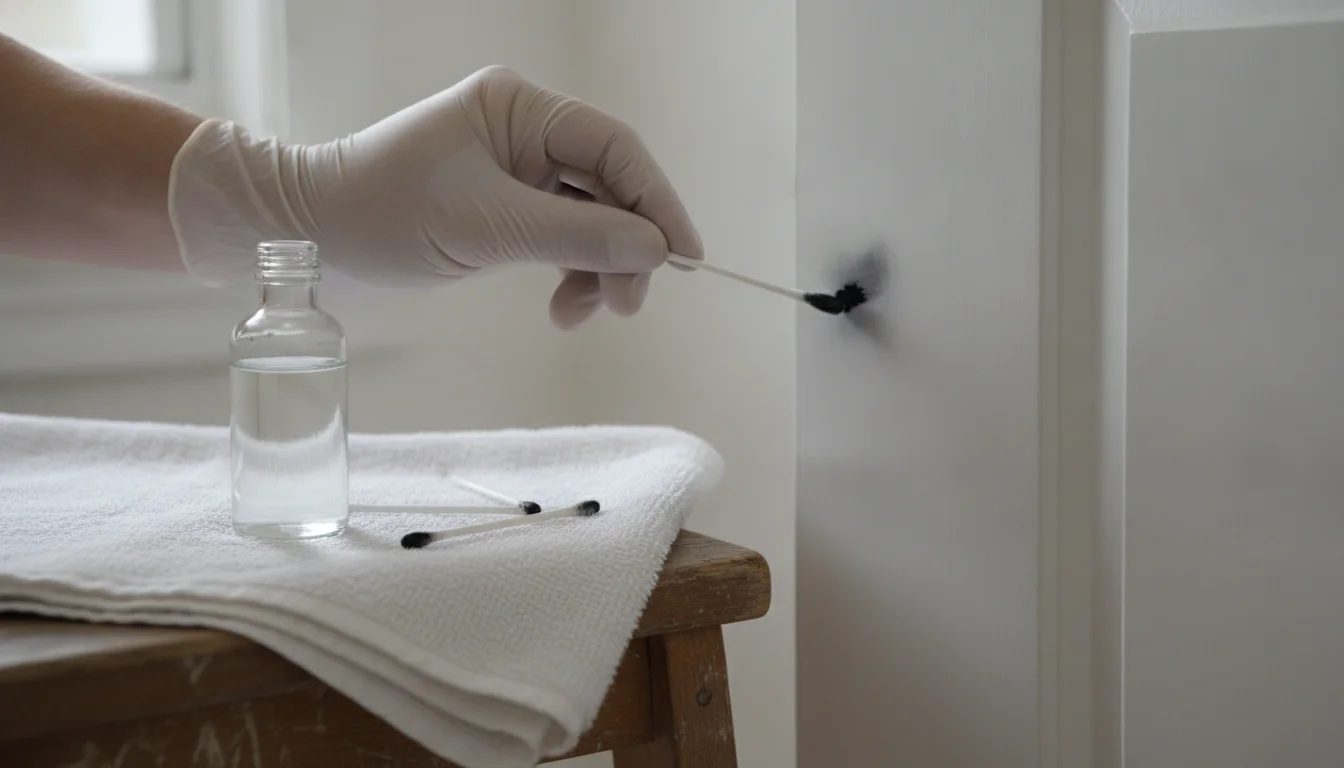
Alcohol is the solvent that actually moves permanent marker. Wet a cotton swab with rubbing alcohol and dab the line. Dab, don’t scrub, and swap swabs as they pick up color. Keep contact short, then wipe with a damp cloth.
Composite Paint draws the line at semi-gloss for this, and adds that marker often just needs primer. On satin or eggshell, try it on a hidden bit first and stop if paint color shows up on the swab. On flat, don’t.
Hairspray and hand sanitizer work for the same reason (their alcohol), with the same limits. Whiteboard ink is a different animal: see dry erase marker stains.
4. Use a melamine sponge on semi-gloss only
A magic eraser doesn’t dissolve anything. It’s an abrasive, roughly like very fine sandpaper, and it sands the mark off along with a layer of paint. On flat or matte you end up with a shiny, slightly lighter patch that’s bigger than the doodle was.
Semi-gloss can usually take it if you’re gentle. Wet it, squeeze it barely damp, and rub the mark only, lightly, checking every few strokes. The sponge’s own label says to test a small area first, and it lists satin and high gloss as surfaces it isn’t recommended for. So on satin or high gloss, don’t.
5. Seal what won’t come off with a stain-blocking primer
You can’t just paint over Sharpie. Water-based wall paint re-wets the dye, which rises into the wet film and is back once the coat dries. People roll three or four coats and watch it return every time.
Clean the spot with soapy water and let it dry. Brush a thin coat of shellac-based primer (Zinsser BIN, the same primer that seals in cigarette smoke smell) over the mark and a couple of inches past it. It’s ready to recoat in about 45 minutes. One coat covers most marker. If a faint line shows once it’s dry, give it a second coat. Then two coats of your wall paint, feathered at the edges. Oil-based stain blockers also hold, but some want an oil-based topcoat, so check the label.
Shellac fumes are strong and it’s flammable: open a window, run a fan, wear gloves.
A small patch in the middle of a wall can still show through one topcoat, even from the same can (check it hasn’t gone off first). If the wall’s semi-gloss or the mark’s bigger than a dinner plate, repaint to the corner.
How to stop the next mark becoming a repaint
When you repaint, go up a sheen: flat to eggshell, or eggshell to satin. On satin, the next mark is a five-minute wipe instead of a repair job, which is why it’s the standard pick for kids’ rooms and hallways.
FAQ
Does dish soap remove permanent marker?
Rarely on its own, Dawn included. It’s the gentle first step that clears grease and dust, but set permanent marker needs alcohol or primer.
What removes permanent marker but not paint?
On semi-gloss and gloss, rubbing alcohol dabbed with a swab. On flat paint, nothing reliably, so seal it with shellac primer and paint over it.
Will vinegar remove permanent marker?
Some cleaners suggest it as a mild first try on glossy walls. Nobody we read claims it beats alcohol, so skip to that.
Is sunscreen safe on painted walls?
No. It started stripping that Reddit parent’s paint. Skip it, along with nail polish remover and anything gritty.