Table of Contents
Most bird droppings on a patio are a bucket-of-soapy-water job, not a hazmat call. The exception is the dried, caked layer under a feeder, roost or favorite railing. That one you wet before anything touches it, because the health concern is dry droppings stirred into dust and breathed in. NIOSH says spray it down first and never shovel or sweep it dry. Some popular guides tell you to scrape and sweep up the powder. Don’t. The surface matters too: vinegar can etch concrete and stone, and a pressure washer strips paver joints. Here’s how to get rid of bird droppings on patio concrete, stone and decking, in the order to try it.
1. Hot soapy water and a stiff broom
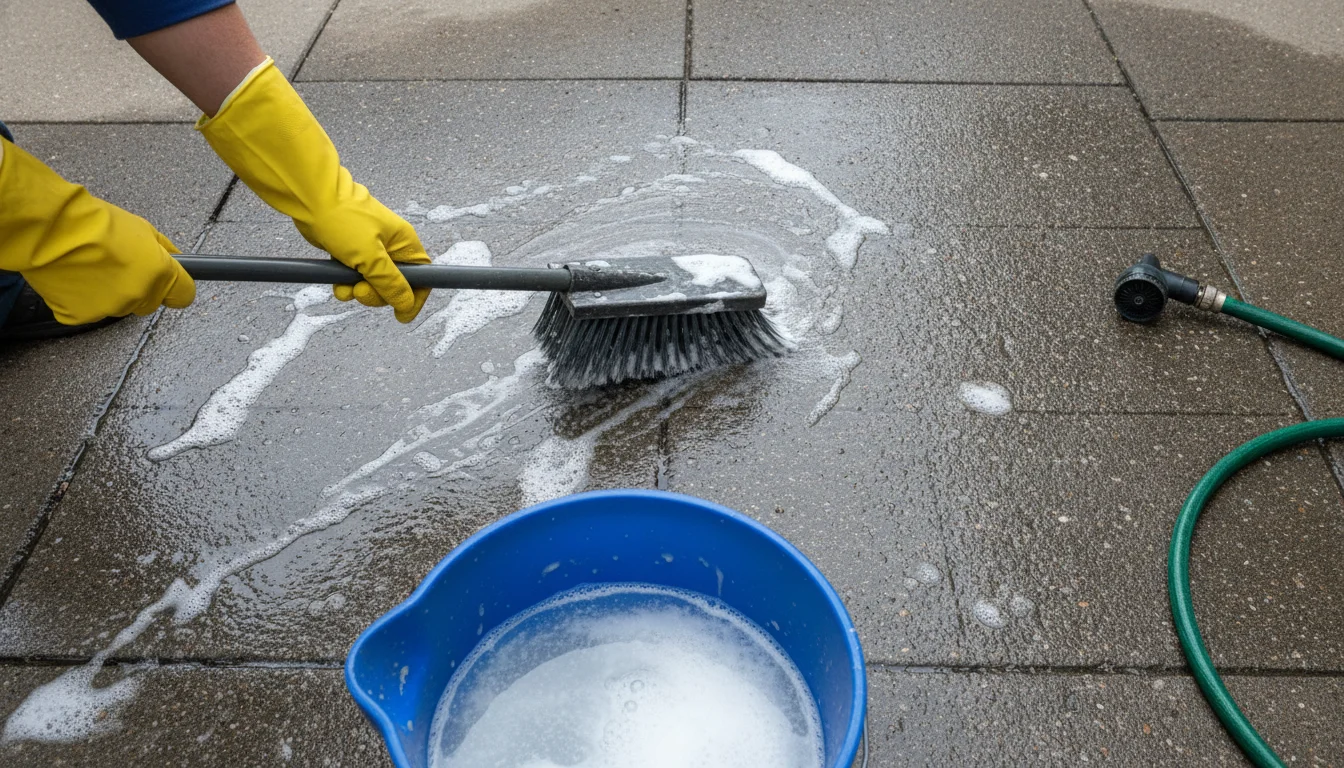
This handles most of it. Hose the patio to lift what’s loose and soften what’s dried. Squeeze hand dishwashing liquid into a bucket of hot water, dip a stiff push broom in it and scrub. The broom is a no-stooping scrub brush that keeps your face out of the splash zone. Rinse, look, repeat.
For a stubborn patch, mix 1 part dish soap to 3 parts water and work it in with a hand brush. Use natural or plastic bristles on concrete; metal ones can leave rust marks. Wear rubber gloves and eye protection for splashes.
Timing beats product: fresh, still-gooey deposits come off far more easily than dried ones. One Daily Herald reader who routinely hoses a flagstone patio under a feeder found the hose alone “doesn’t always remove the stains.” That’s what the scrub is for.
Skip the vinegar unless the deck is wood. It can etch concrete, some composite decking and many stone pavers, sandstone and limestone in particular.
2. Wet caked droppings before you touch them
A built-up, dried pile is a different job. Dried droppings can carry the fungus behind histoplasmosis, and the risk comes from breathing dust off disturbed dry material. So no dry scraping, no sweeping.
Put on rubber or plastic gloves. Mist the droppings with a low-pressure spray (a spray bottle or garden pump sprayer) until they’re soaked, with a squirt of dish soap in the water as a wetting agent. Once it has softened, lift the softened mess with paper towels or a plastic scraper into doubled plastic bags, seal them, and put them in the trash. Wash the spot with method 1, then your hands.
Want to disinfect as well? UConn’s safety office uses a 10% bleach solution on the spot once the droppings are gone. Follow your bleach label for mixing and contact time. Cover nearby plants with plastic sheeting first (chlorine bleach harms landscape plants), and rinse the patio afterward.
3. Enzyme cleaner for dried deposits that won’t budge
For dried droppings that shrug off soap, use an enzyme cleaner sold for bird droppings. The president of a bird-control company told the Daily Herald an enzyme-and-detergent cleaner beats anything he’d found for softening dried droppings so they hose off completely. Soak the deposit, keep it wet for the full label time, then scrub and rinse. Porous concrete drinks it up, so use plenty.
4. Oxygen bleach for the stain left behind
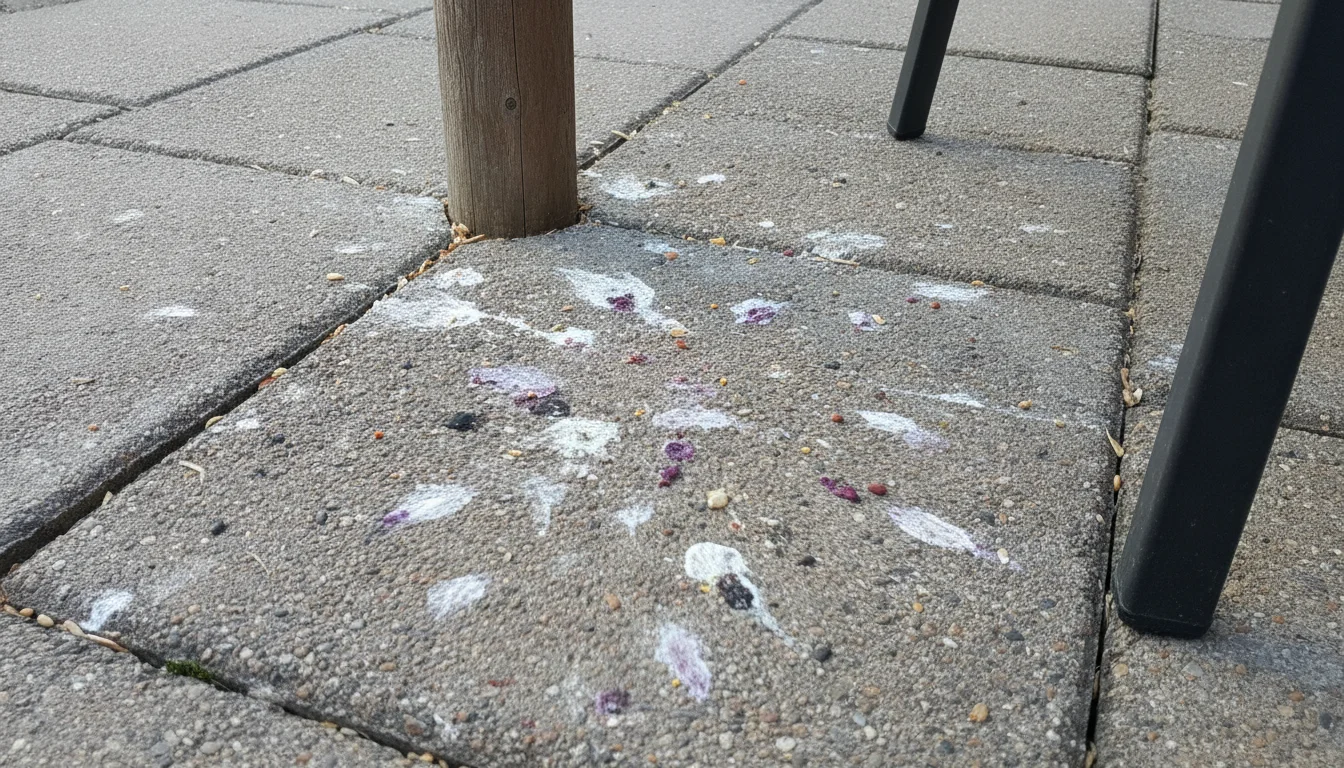
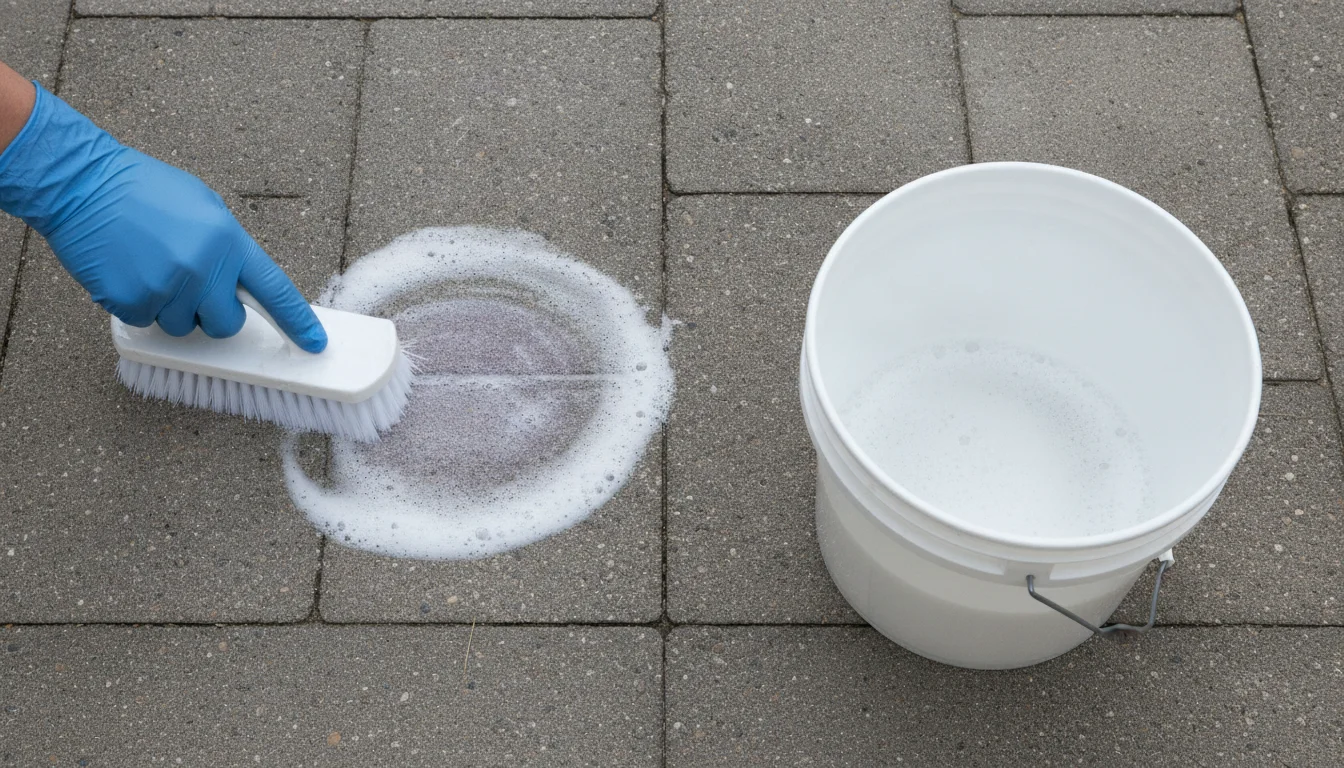
Birds that eat berries leave red or purple droppings that stain like berry juice, and the color can sit in porous concrete after the deposit itself is gone. Oxygen bleach (powdered sodium percarbonate, sold as OxiClean and similar) is the fix. Mix it with warm water as the label directs, wet the stain, scrub the solution in with a nylon brush, and rinse. Repeat if it has only faded.
Use it instead of chlorine bleach, which can leave a pale blotch on concrete. Don’t treat it as plant-safe either: keep the runoff out of beds and rinse any leaves it splashes. Test a hidden corner first anyway: Trex says products containing bleach will lighten its composite boards.
5. Pressure washer, last and carefully
A pressure washer makes short work of a whole patio, but it comes after method 2, not instead of it.
On concrete, 2,500 to 3,000 PSI is the usual range. Natural stone wants 1,000 to 1,500 PSI and a test patch, because soft stones like sandstone scratch, and soft or old brick can be damaged by high pressure. Use a 25 or 40-degree fan nozzle and keep it moving. On pavers the jet strips the sand out of the joints, so sweep in polymeric sand afterward. On a Trex deck, check the line: newer Transcend, Enhance and Select boards take no more than 3,100 PSI with the fan tip no closer than 8 in (20 cm), and Trex doesn’t recommend pressure washing its early-generation boards at all.
Prevention
Move the bird feeder away from the patio, or take it in at dusk like the Daily Herald reader does. Rinse new droppings while they’re fresh, before a week’s worth bakes on. And if birds roost on a beam or ledge over the seating area, block that spot so the roost can’t re-form.
When to call a professional
CDC says large amounts of bird or bat droppings should be cleaned up by professional companies that specialize in hazardous waste removal. An inches-deep layer under a long-used roost is that call.
CDC names people with HIV/AIDS, organ transplant recipients, people taking corticosteroids or TNF-inhibitors, adults over 55 and infants as more at risk from histoplasmosis, so the wet-first precautions in method 2 matter most for them.
Frequently asked questions
Does white vinegar get rid of bird poop? On a wood deck, yes, in soapy water. On concrete, many stone pavers and some composite decking, the acid can etch the surface. Use soap and water there.
What kills bird poop bacteria? The bleach solution in method 2. Soap and water removes droppings but doesn’t disinfect the way bleach does.
Does WD-40 remove bird poop? Some boaters swear by it on vinyl. Nothing we found backs it on concrete or stone. Use soap.
Do I need a mask? UConn’s safety office treats a small accumulation from a few birds as a soap-and-water job. For a large dried accumulation, NIOSH calls for respiratory protection where dust can get airborne, and CDC says hand it to professionals.