Table of Contents
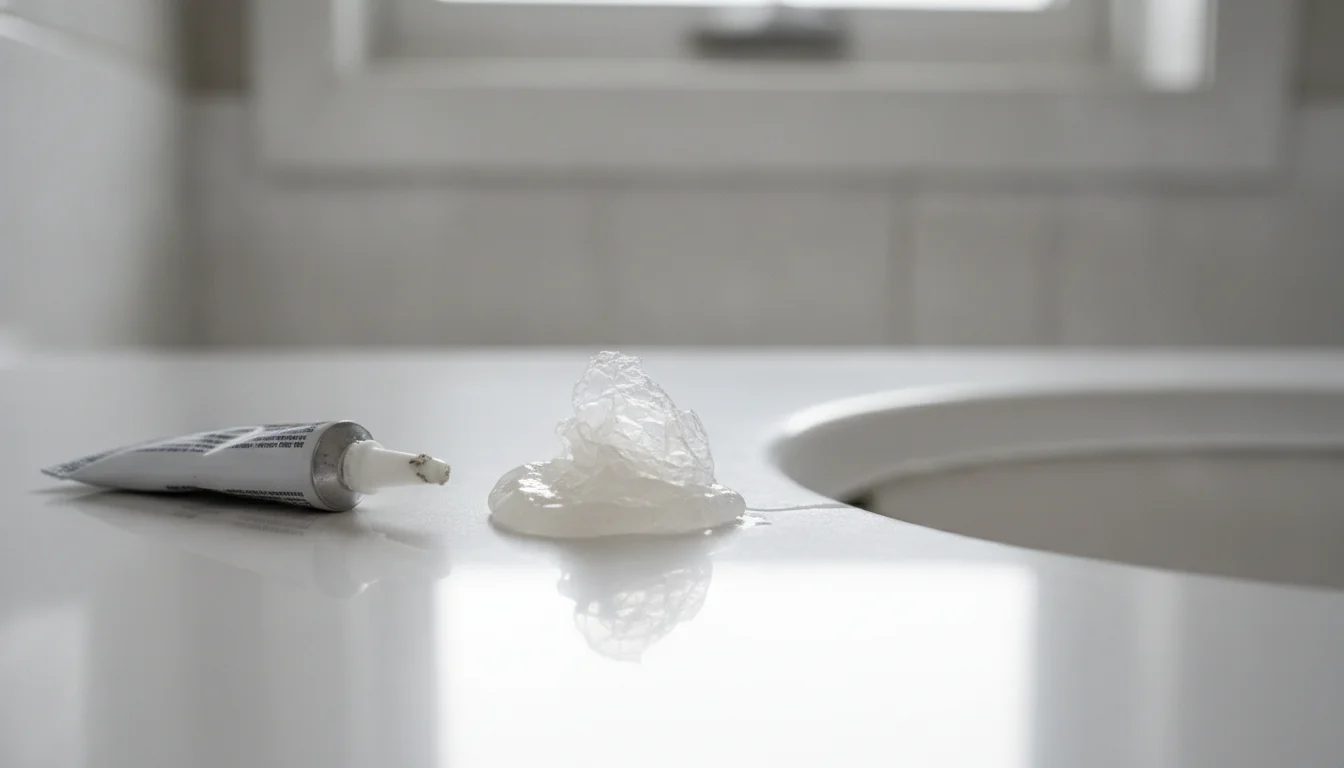
Super glue is the small problem. Learning how to get rid of super glue on countertop surfaces is mostly about the bottle of nail polish remover everyone grabs next. Glue brands call acetone safe on “any” countertop. DuPont, which makes Corian, says keep it off, and on a cultured marble vanity top it can dull the thin gel coat for good.
So start with one question: what’s the counter made of? Then it’s a ladder. Blot it if it’s still wet. If it’s cured, soften it, scrape it, and only then reach for a solvent your surface can take. Stop at the first step that works.
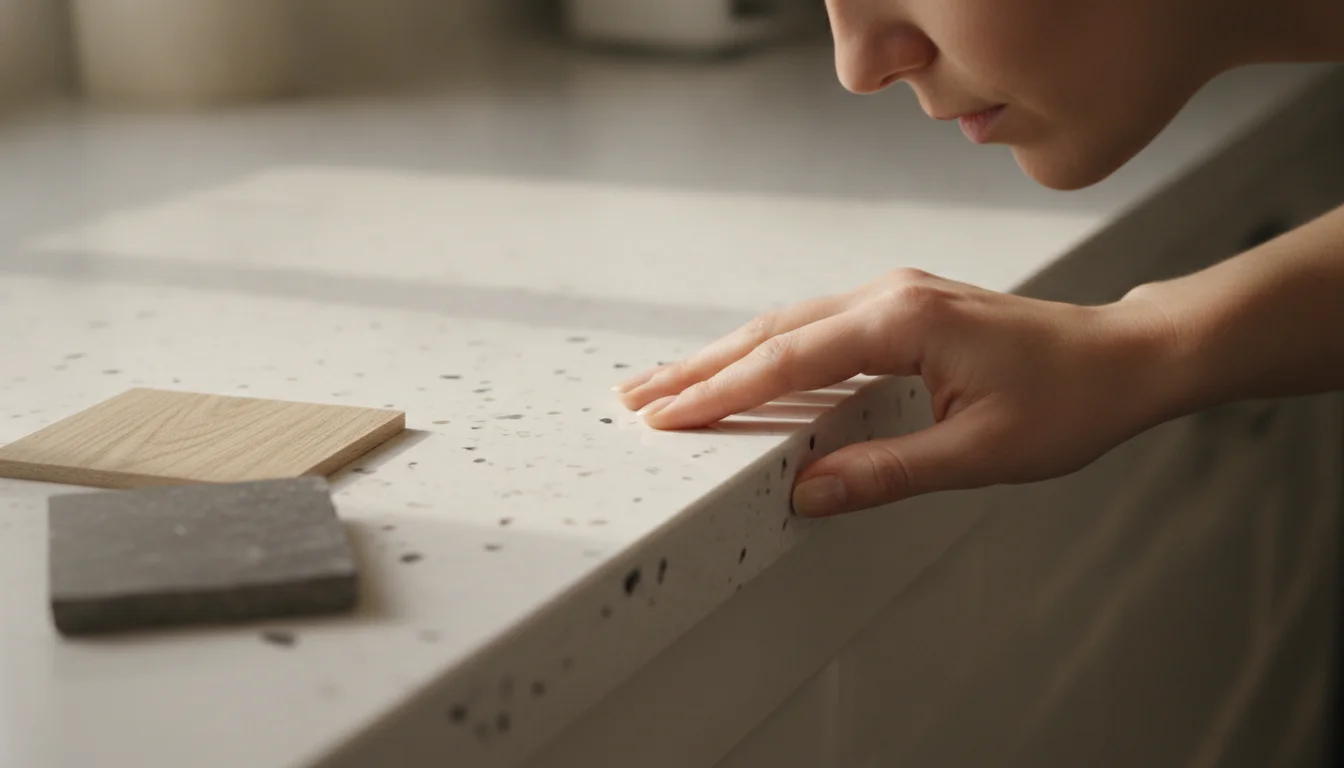
1. Identify the countertop material first
Most counters are one of five things, and each one handles solvents differently:
- Laminate. A thin plastic layer over board. Wilsonart allows acetone for up to two minutes.
- Solid surface (Corian and similar). Color runs all the way through. DuPont lists acetone-based nail polish remover among the strong chemicals to keep off it.
- Cultured marble. Marble powder cast in resin under a clear gel coat, common on vanity tops with a molded-in sink. The gel coat is only about 20 to 30 thousandths of an inch thick, and acetone left on it can leave permanent dullness.
- Engineered quartz. Caesarstone warns strong chemicals and solvents can damage it for good.
- Natural stone. Granite and marble take acetone, but acids like vinegar or lemon etch marble.
Can’t tell solid surface from cultured marble? Treat it as the more fragile cultured marble.
2. Blot wet glue with a dry paper towel
Still wet? Fold a paper towel to a stiff corner, touch it to the edge of the drop, let it wick up, and switch to a fresh corner each time.
And keep water away. Super glue cures on contact with moisture: water is what starts the reaction. Loctite’s own US guide pours water on big spills on purpose, to harden them for scraping. Exactly what you don’t want on a small drop. Skip cotton balls and cotton rags on a wet spill too, since the glue reacts with cotton and can get hot enough to burn.
Too big to blot? Let it harden where it is and scrape it later.
3. Soften it under a warm soapy compress
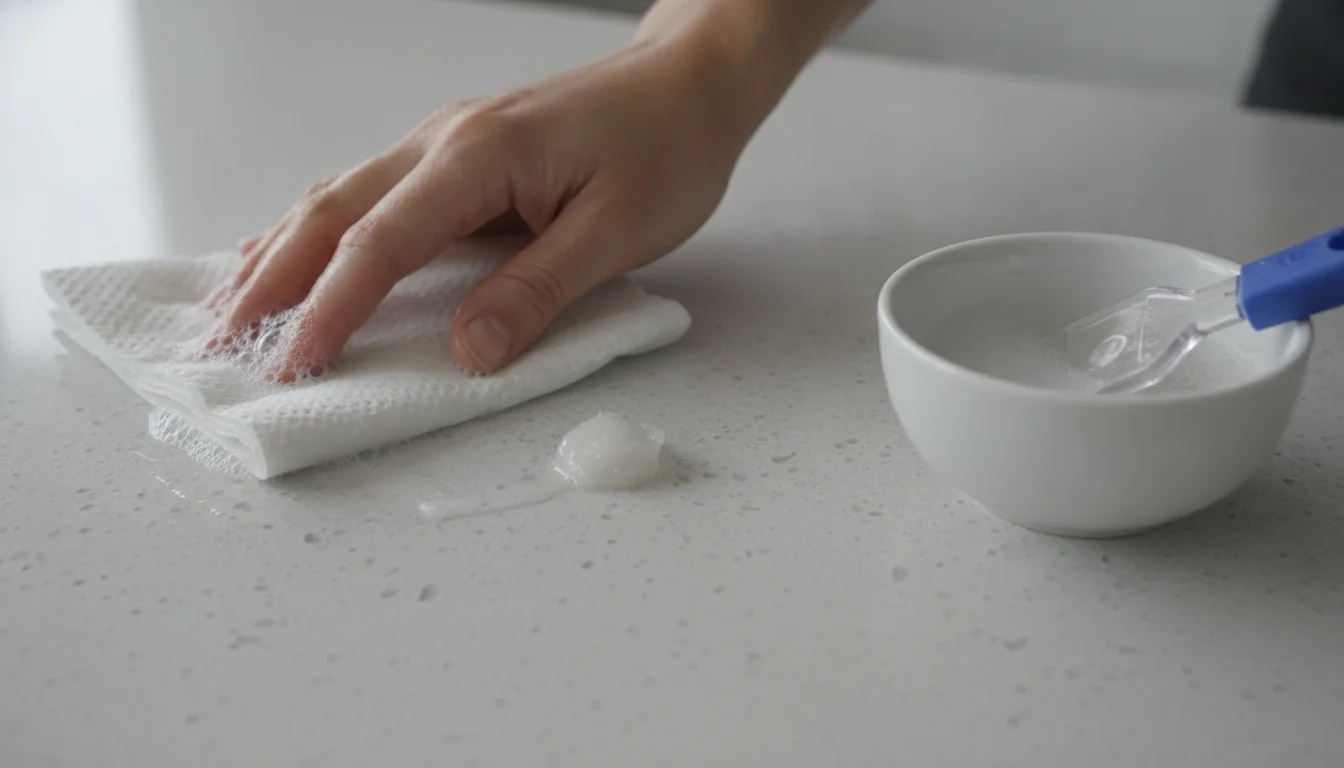
It’s safe on every counter, so it goes first for cured glue. Mix hot water and dish soap half and half, soak a paper towel, and lay it over the glue for 15 to 20 minutes. Then slide a plastic scraper or an old card under the edge. Thick or old glue? Cover the towel with plastic wrap and leave it a few hours. It often comes up in layers, so repeat.
Same goes for plastic packaging stuck in the glue. Peel off whatever lifts, and treat what’s bonded as glue: it comes off when the glue does. (Don’t use acetone on the plastic itself; as our tape residue guide explains, it clouds and dissolves many plastics.)
4. Scrape with a razor blade held nearly flat
On granite and laminate, a single-edge razor gets under cured glue that a plastic scraper just rides over. Hold it almost flat so the edge slides under the glue, not into the counter, and push in short, light strokes. One r/CleaningTips poster was sure the glue was too smooth to catch. Then: “I tried the razor blade thinking it wouldn’t work… I was wrong, it worked!”
Go easy on soft laminate, and skip utility knives, whose pointed tips dig in. On quartz, solid surface and cultured marble, stick with plastic. Caesarstone says to keep sharp objects off quartz and lift stuck-on material with a plastic putty knife. A cut in cultured marble’s gel coat can’t be sanded out.
5. Dissolve it with acetone, if your counter can take it
Acetone softens cured super glue. Non-acetone remover doesn’t, so read the label.
How you use it depends on the counter:
- Laminate. A cotton ball soaked in acetone, rubbed gently for up to two minutes, then rinsed with warm water and dried (Wilsonart’s own instructions). Left longer, acetone can stain laminate permanently.
- Granite and marble. Pure hardware-store acetone, not colored nail polish remover. For a thick lump, pour a little on, cover with wax paper so it doesn’t evaporate, and wait up to an hour before scraping.
- Quartz. Skip it, given Caesarstone’s solvent warning. Repeat the soapy compress and plastic scraper, then follow your maker’s care guide for what’s left. Quartz makers set their own rules, as our rust stains on quartz guide shows.
- Corian and cultured marble. Don’t. If any gets on, flush it with water right away, as DuPont advises. Bathtubs split by material the same way: see our nail polish on a bathtub guide.
Open a window. It’s flammable.
6. Buff out a dull spot on solid surface
A dull patch on Corian where the glue was buffs out, because the color goes all the way through. Wash and dry the spot, then rub with a mild abrasive liquid cleanser on a damp sponge in small overlapping circles. Rinse, dry, and on a matte finish, if the mark is still there, sand lightly with P240 paper and buff with a maroon non-woven pad over a slightly wider area so the sheen blends. Lighter Corian colors are usually matte, and every Corian sink is matte or satin.
Gloss is hard to match by hand, and the wrong pad leaves a visible texture difference. Never on cultured marble.
When to call a professional
Call a pro when the glue took the finish with it. On cultured marble, a dull or scratched patch in the gel coat can’t be sanded or buffed back by hand: a professional can refinish the gel coat, though deep damage or widespread clouding usually means replacing the top. On gloss or semi-gloss solid surface, DuPont recommends a professional refinisher rather than hand finishing. On marble, an etched spot from vinegar goes to a stone restorer for repolishing.
Frequently asked questions
Is acetone safe on my countertop?
On laminate (briefly), granite and marble, yes, after a hidden-spot test. On quartz, solid surface and cultured marble, no. The glue brands that say otherwise don’t make your counter.
Does nail polish remover get super glue off?
Only if it lists acetone. Non-acetone remover did nothing for people who tried it on cured glue. For stone, use pure acetone, since nail polish remover can contain dyes.
How do I get plastic packaging off glue on my counter?
Peel off what lifts, then treat the rest as glue: soapy compress, then the right scraper for your counter.
Why does the spot look dull after the glue came off?
Residue, or a damaged finish. Matte solid surface buffs out. Cultured marble and gloss finishes need a refinisher.