Table of Contents
Someone on r/CleaningTips recently asked how to get a rotting banana smell out of a book. Fair question, and a good way into how to get rid of musty smell from books, because it’s two problems at once: there’s gunk on the pages, and there’s a smell coming off the gunk.
Most musty books are the same kind of double problem. The smell is the last symptom of damp, and often of mold that grew while the book sat somewhere humid. So the box of baking soda comes near the end, not the start. Check for live mold, stop it, dry the book, brush it clean, get any spill off, and only then pull the smell out.
Be honest with yourself about the odds, too. The Northeast Document Conservation Center (NEDCC), which preserves books and paper for a living, says there’s no guaranteed way to remove a musty smell. Plenty of books come good. Some never quite do.
What causes it: damp, mold, or a spill?
A musty smell usually means the book spent time in damp air, and it may have grown mold at some point. Paper, cloth covers and leather are all food for mold, and a dark, still, humid shelf (a basement, a box against an outside wall) is where it starts.
A spill is different. Fruit, coffee or anything sticky leaves residue in the paper, and that residue keeps making the smell until it’s gone. No absorber can keep up with a source that’s still sitting on the page.
And then there’s plain old-book smell: the paper itself breaking down with age. That one fades a little with airing but never fully goes, and it isn’t a sign anything’s wrong.
1. Check whether the mold is still growing
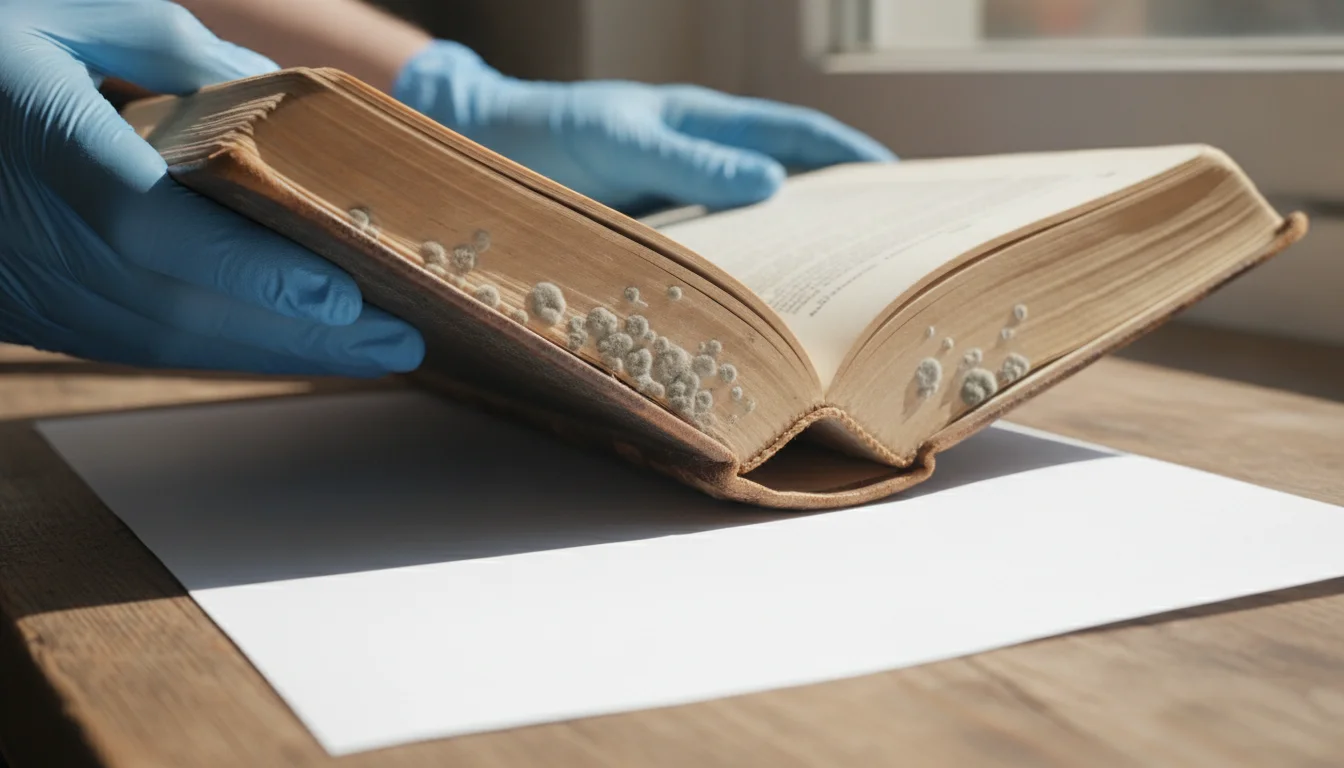
Do this first, because it decides everything after it. Put on nitrile gloves, an N95 mask and goggles, open the book over a sheet of paper, and look at the covers, the page edges, the gutters and inside the spine.
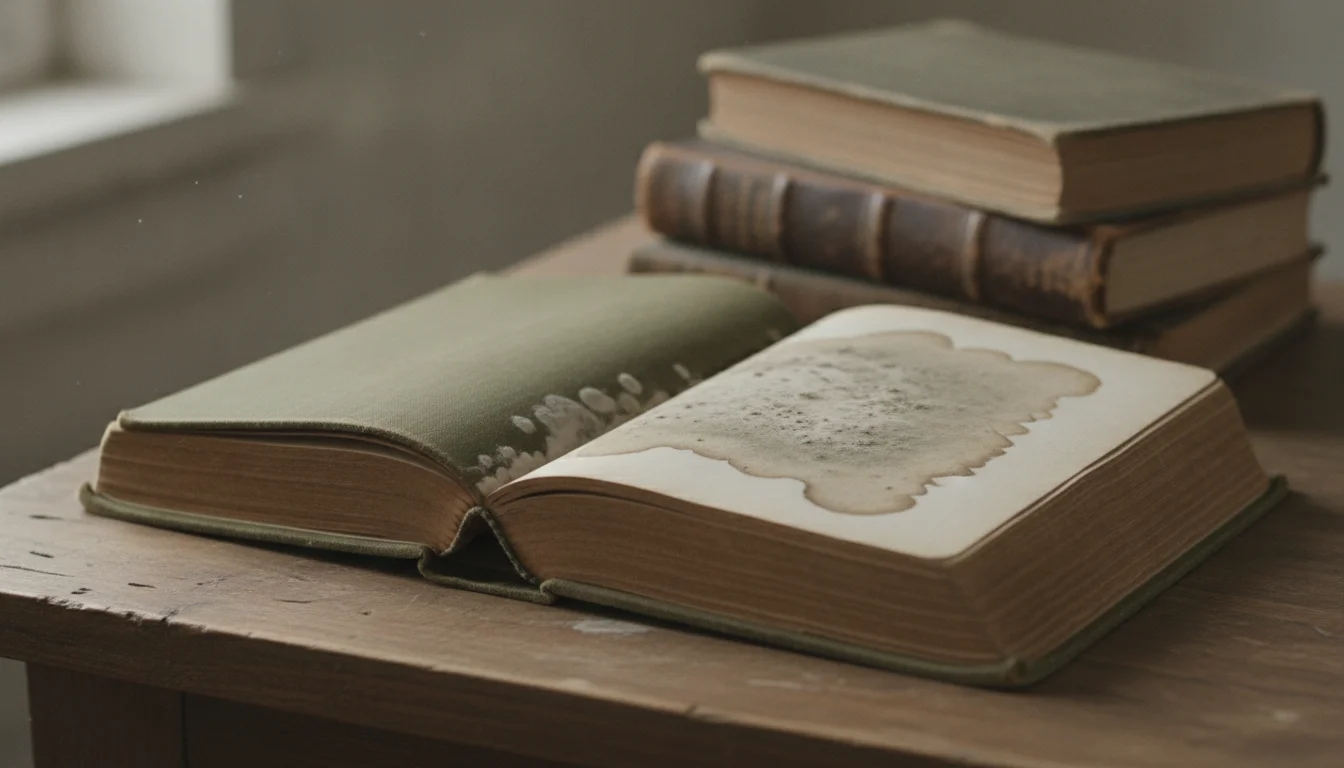
Active mold feels damp, smears when you touch it, and spreads from a point with white, hairy edges. Dormant mold is dry and powdery. Reddish-brown freckles in the paper are foxing, not mold, and harmless.
Found active mold? Don’t clean it and don’t deodorize it. Moving spores around a live colony spreads it and can stain the paper. Get it out of the bookcase, away from other books, and go to step 2 or 3.
2. Freeze it if the mold is active
Wrap the book in freezer paper or waxed paper (or a plastic bag), label it and freeze it for at least 24 hours. That makes the mold go dormant so it stops spreading.
Take it out of any plastic before it thaws. Thawing inside a bag makes a damp little greenhouse, which is exactly what you were trying to stop. Freezing doesn’t kill mold, and it does nothing for the smell by itself.
Don’t freeze photographs, leather bindings, or vellum and parchment. And if a book is wet and you can’t dry it within 48 hours, freeze it now. Mold normally grows on wet paper within that time.
3. Air-dry it, standing open
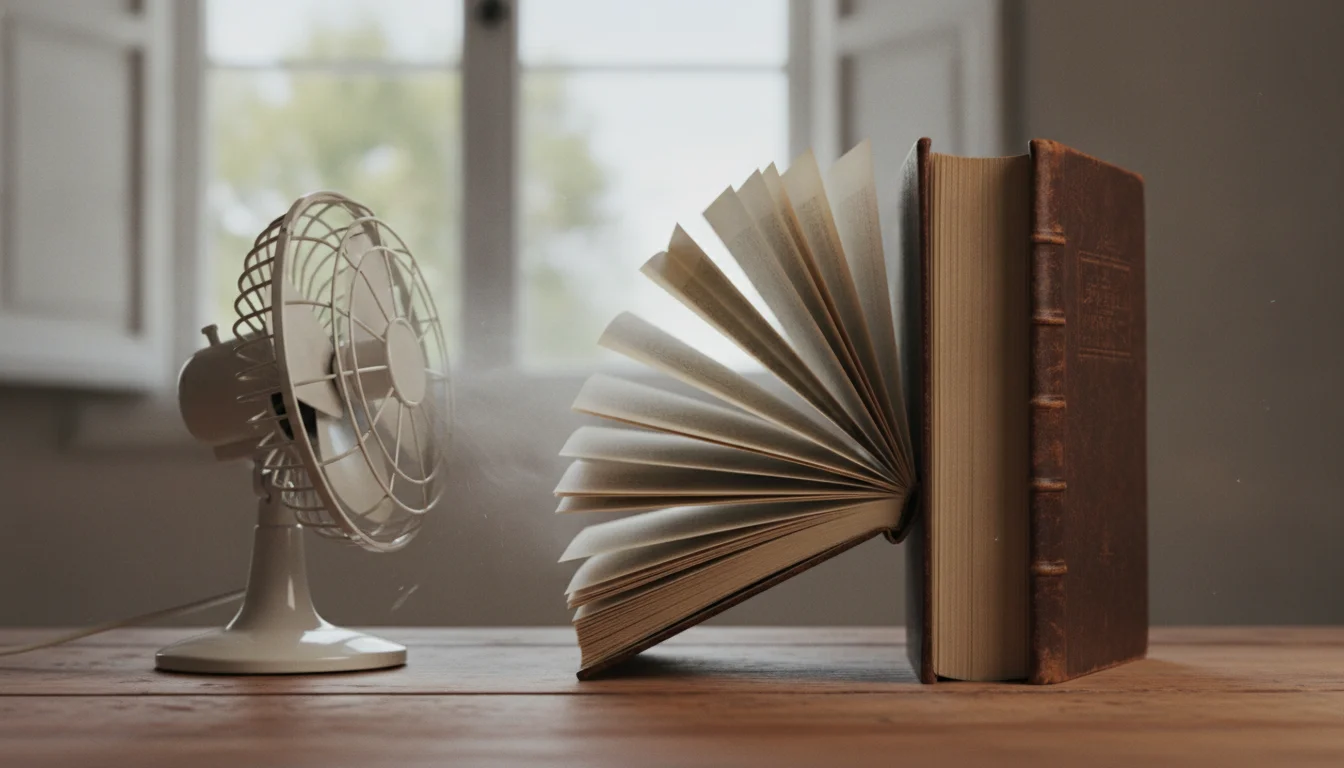
A damp book has to be bone dry before anything else works. Stand it upright on a table with the pages fanned open, in a dry room, and let a fan blow across it. Open a window if the air outside is drier than inside.
No hair dryer, radiator or sunny windowsill. Heat and direct sun damage paper.
4. Brush the dormant mold off outdoors
Once the mold is dry and powdery, take the book outside, still in your mask and gloves. Brush the mold off gently with a soft brush into the open air, working outward from the spine so you don’t catch page edges. A HEPA vacuum on low, held just above the paper rather than touching it, is better if you have one. An ordinary vacuum blows the spores straight back into your room.
Expect a stain to stay behind. Mold stains on paper are usually permanent, but the stain isn’t what smells.
5. Get any spill off before you deodorize
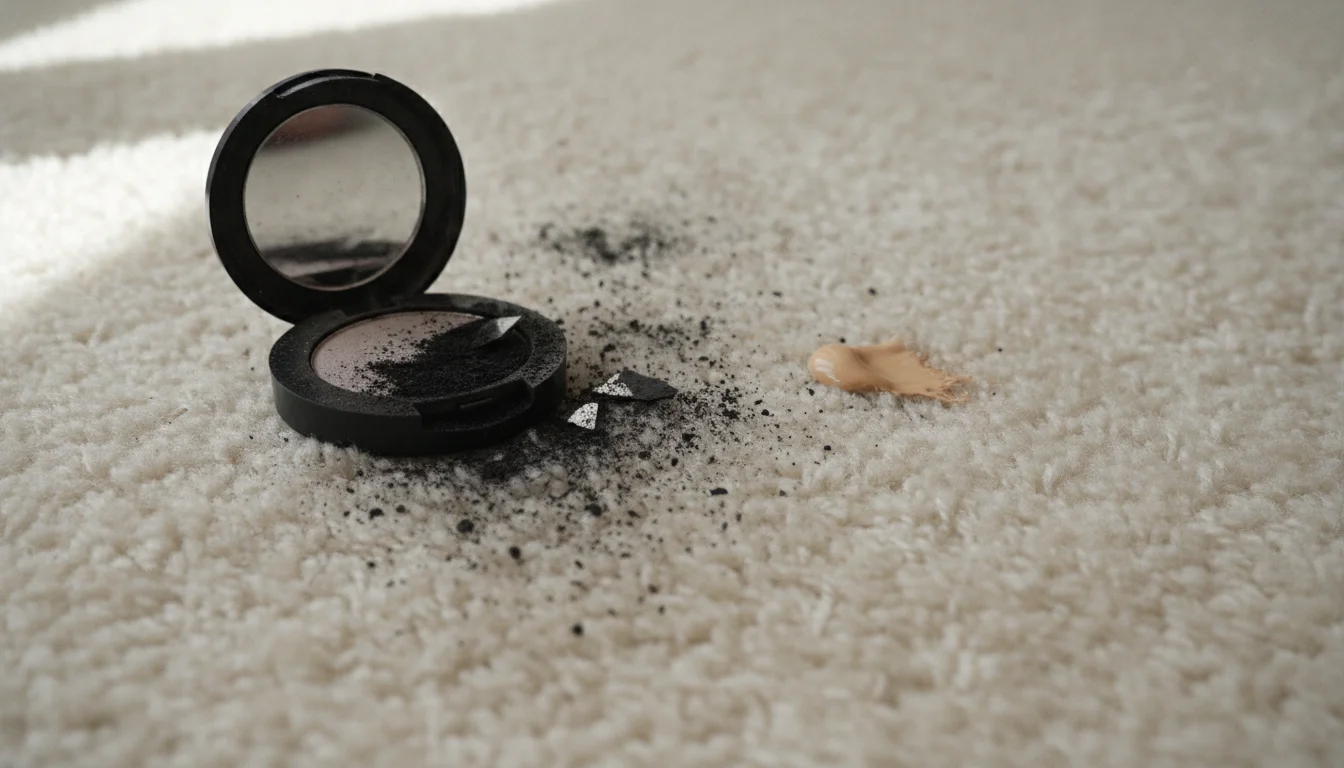
This is the banana step. Freeze the book for 24 hours so the residue hardens, then lift it off the page with a steel knife, working carefully so you don’t tear the paper. Sticky or mushy food is the kind that needs the freezer.
Get off as much as you can. A little staining is fine. Residue isn’t.
6. Seal it in a two-bin chamber with an absorber
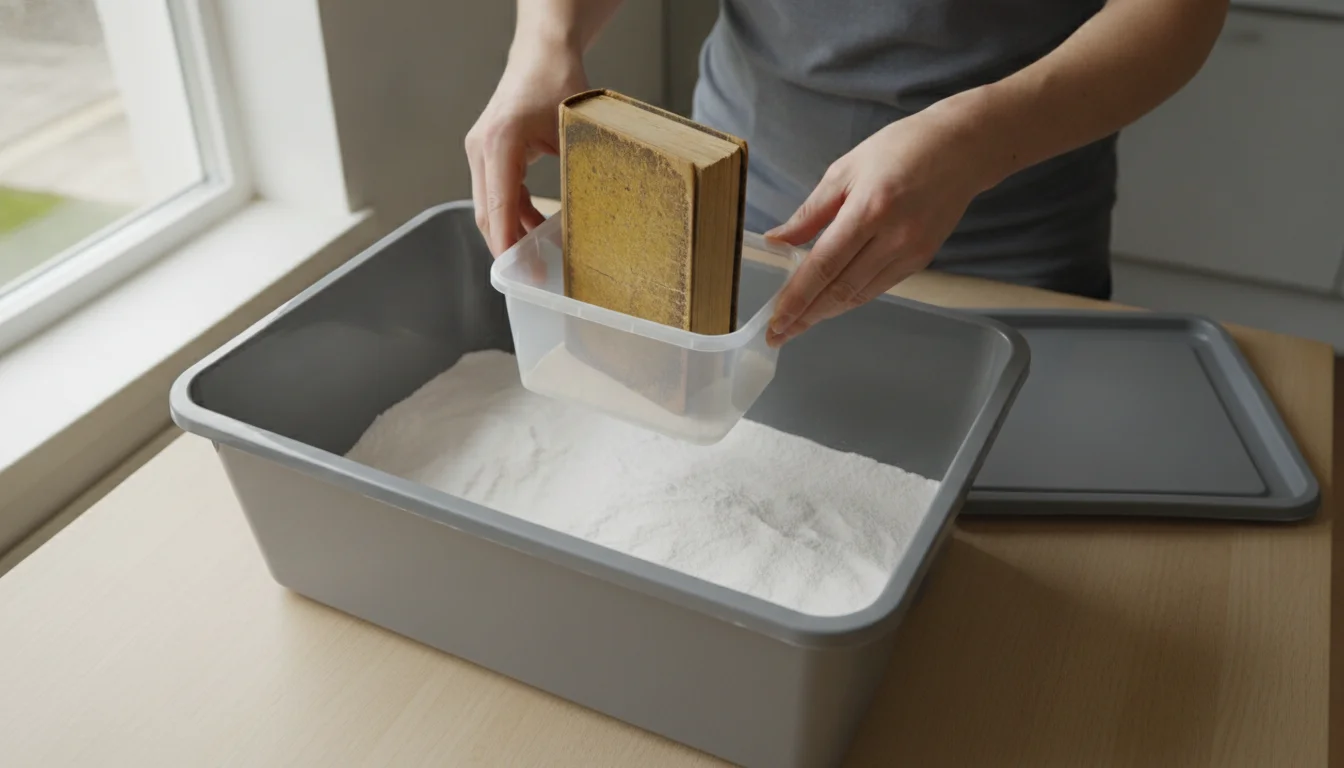
This is the main event, and NEDCC’s own method. You need two containers, one small enough to fit inside the other with the lid still closing. Put a layer of baking soda, charcoal briquettes (without lighter fluid), unscented clay cat litter or zeolite in the bottom of the big one. Stand the book in the small one, set it inside, and close the lid.
The absorber never touches the book. One librarian who swears by the cat litter version says that’s the whole trick, and people who’ve wiped baking soda off a soft cover say it scratches. Skip the cornstarch-between-the-pages tip for the same reason.
Then wait, and sniff every few days. One contributor to a conservation mailing list found baking soda this way worked about half the time over a couple of weeks, and better on rough paper than on glossy coated stuff. If one absorber stalls, try another.
7. Interleave zeolite paper through the book
For a book you care about, zeolite interleaving tissue (MicroChamber is the brand NEDCC names) works from inside. Put a sheet between the front cover and the first page, then one every 20 to 50 pages depending on how big and fragile the book is, and one at the back.
Close it and leave it. Swap the sheets several times, putting the new ones in different places each round. NEDCC rates these papers as very effective. Used dryer sheets are not a substitute: they leave oil spots.
8. Keep the shelf below 55% humidity
If the bookcase is still damp, the smell comes back. NEDCC keeps collections below 55% relative humidity and under 70°F (21°C). A $10 to $50 hygrometer from a hardware store tells you where you stand. Over that line, bring the humidity down: run a dehumidifier or the air conditioning, and fix any leak.
How to get rid of musty smell from books for good
Keep books out of basements, attics and boxes against outside walls. Keep shelves off outside walls and keep the air moving. Dust regularly, since dust feeds mold. Any book that arrives smelling musty sits apart until you’ve checked it, and check the gutters and spines of the rest now and then. You can read more on getting rid of musty smell in the house if the room itself smells.
When to call a conservator
A valuable or much-loved book is worth a conservator’s look. So is anything you shouldn’t freeze (leather, vellum, photographs), glossy pages that have stuck together after getting wet, or more than about 100 books at once. NEDCC is frank that treatment is slow and expensive, so it makes most sense for books with real money or real meaning behind them.
And if you have a weakened immune system, don’t handle moldy books at all. Get someone else to do it.
FAQ
How do you get a smell out of a book?
Dry it, clear any mold or spill, then close it in a container next to (not touching) baking soda, charcoal or zeolite for a couple of weeks.
How do you clean books after mold exposure?
Freeze any active mold for 24 hours, let the book dry, then brush or HEPA-vacuum the dry mold off outdoors in a mask and gloves.
How do you remove musty smell from stored items?
The same order works for most stored paper: dry it, check for mold, then deodorize in a closed container away from the absorber.
Does freezing a book kill the mold?
No. It makes it dormant, and it can grow back if the book gets damp again.