Table of Contents
The scuff is rarely what ruins the wall. The scrubbing is. Learning how to get rid of scuff marks on walls is mostly learning when to stop: a black streak of shoe rubber comes off in a minute, but the shiny patch you polish into flat paint chasing it stays until you repaint.
So answer two questions before you touch anything. What sheen is the paint? And is the mark sitting on the paint, or is it the paint itself that’s damaged? After that it’s a ladder: dry friction first, then water, soap, a mild abrasive, the melamine sponge, and paint. Start at the bottom and stop at the first rung that works.
1. Read the paint sheen first
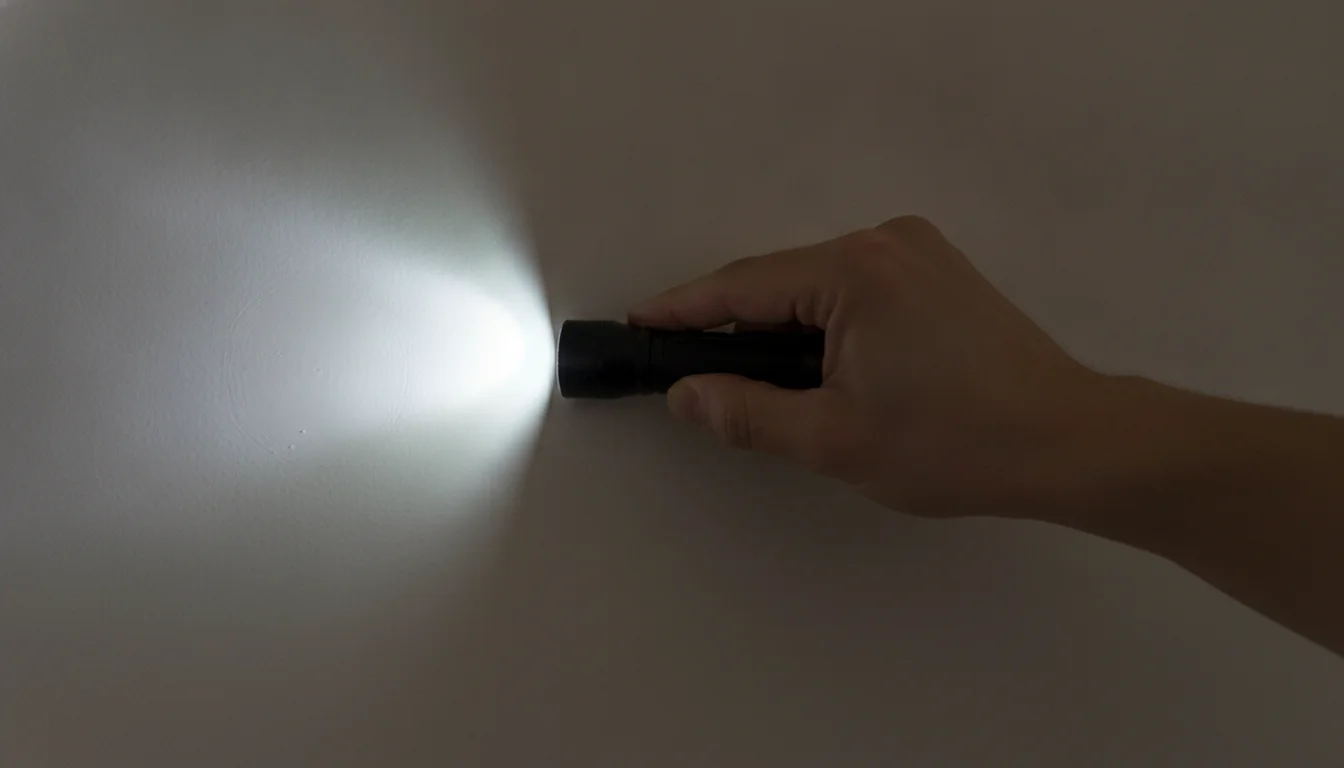
Look along the wall with a window or lamp off to one side. No reflection at all, even at a low angle, means flat or matte. A soft glow is eggshell. A clear pearly shine is satin. Mirror-like is semi-gloss or gloss, which is mostly on trim, doors and baseboards.
This decides how hard you can go. Flat is the most fragile and easiest to touch up. Gloss is the toughest and hardest to touch up invisibly. Eggshell and satin, the everyday interior finishes, sit in the middle: they wash fine, but scrubbing one spot can still polish it shiny. A dark color in a low sheen shows every rubbed patch, so treat it as fragile.
2. Find out if the mark is on the paint or in it
Transferred material (rubber off a sole, dirt off a bag, finish off a chair leg) sits on top and cleans off. Damage (a worn, scratched or polished patch) is the paint itself, and no cleaner removes it.
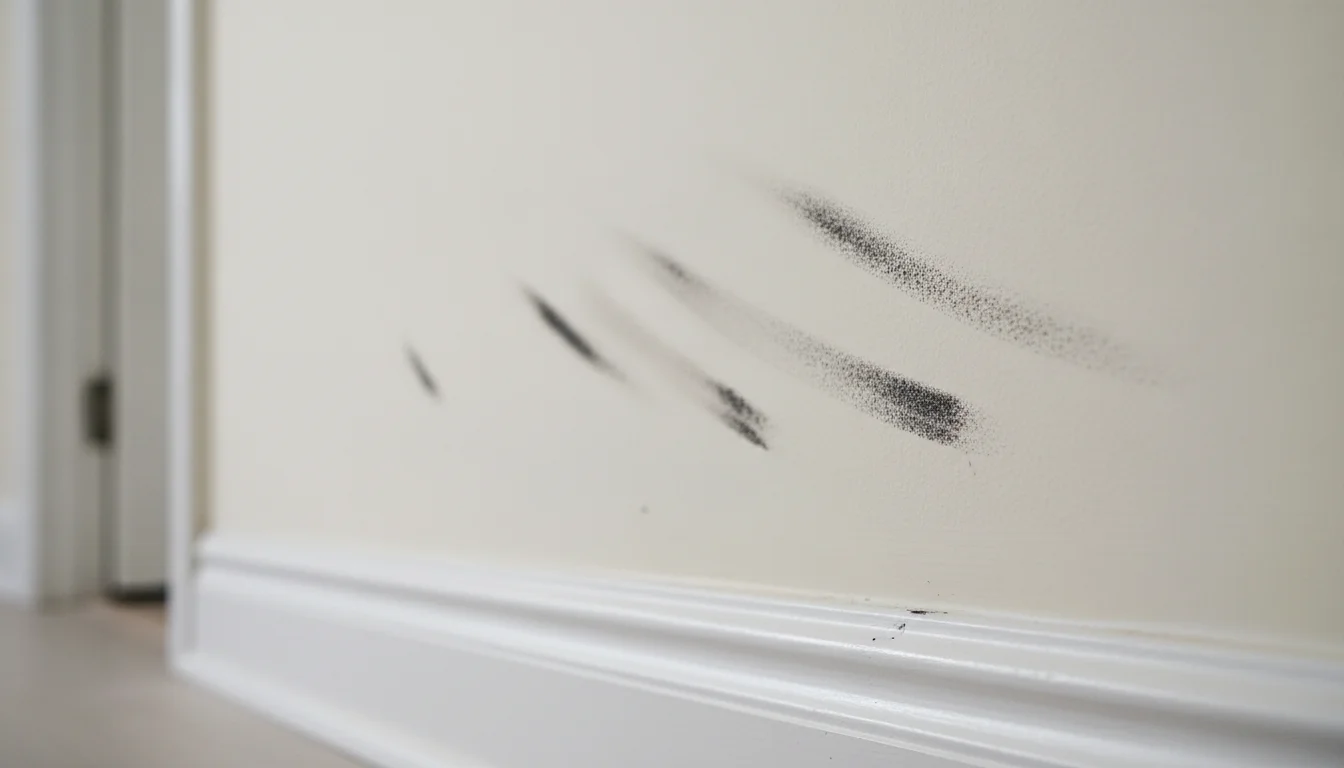
Look closely. A dark streak is usually transfer. A mark that’s paler than the wall, has an edge or groove you can feel, shows the layer underneath, or looks shinier than its surroundings is damage. Then rub a small part of it with a barely damp cloth, a few strokes only. Gray on the cloth or a fading mark? Keep going down this list. Nothing changes? Skip to touch-up.
3. Buff it with a clean tennis ball
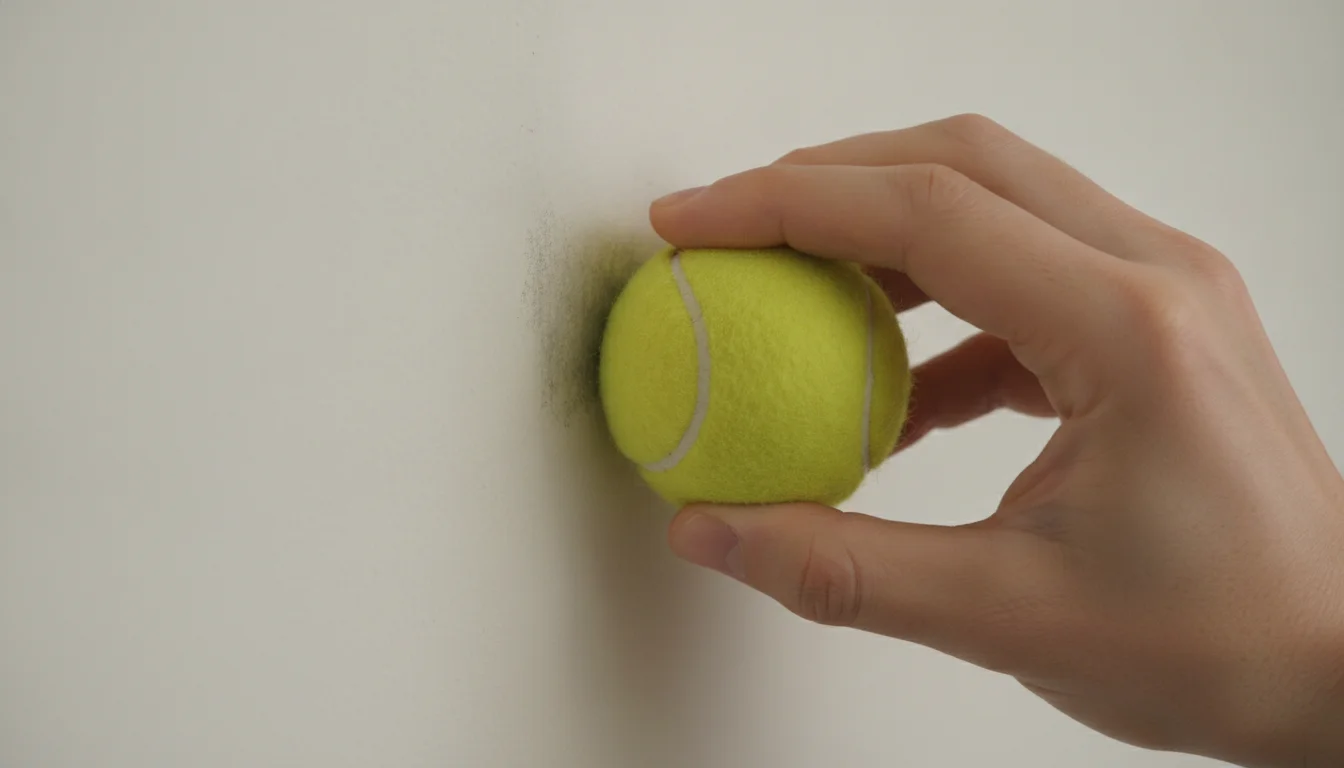
The best first move. Rub a clean, dry tennis ball back and forth over the mark with light pressure. The felt works like a soft-bristled eraser, gripping the rubber and lifting it with no water and no cleaner. If the mark moves onto the felt, it’s working.
Use a new or indoor ball. A yard ball carries grit, and grit scratches paint. For a stubborn mark, wet the ball slightly. For scuffs along the baseboard or high on a stairwell, cut a small X in the ball with a utility knife and push it onto a broom handle. Dust off any felt fuzz when you’re done.
4. Rub with a pencil eraser
Same idea, smaller tool. A clean pink eraser grips a light scuff and rolls it off in crumbs. Use the big handheld kind for anything wider than a pencil line, and brush the crumbs away after. It’s the same trick that lifts tape residue. Go lightly on flat paint, which polishes if you rub one spot.
5. Wipe with water, then mild soap
Dampen a microfiber cloth with plain water, wring it out until it’s barely damp, and wipe the mark in small circles. Dampen the cloth, never spray the wall.
If not, add soap. Maid2Match’s ratio is about half a teaspoon of dish soap in two cups (500 ml) of warm water. Dip, wring hard, wipe the mark gently, then go over it with a second cloth wrung out in clean water. Skip the rinse and leftover soap grabs dust. On flat paint, dab more than you wipe.
6. Try a baking soda paste on tougher marks
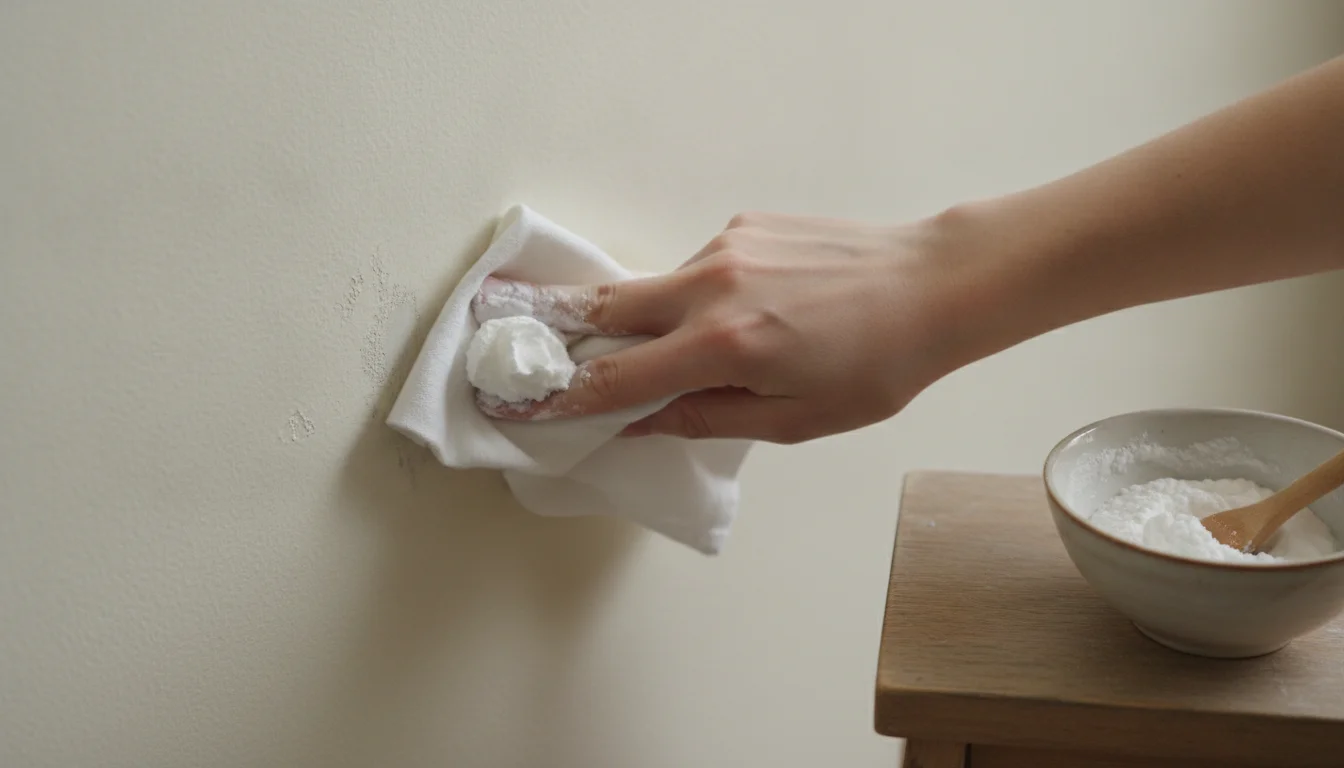
Baking soda is a mild abrasive, a step up from soap. Mix a little with water into a thick paste, put a small amount on a damp cloth, and rub the mark gently. Wipe it all off with a damp cloth and dry the spot. On flat paint, test it somewhere hidden first. Abrasion is abrasion, however natural.
7. Use a melamine sponge last, and lightly
The straight answer on the Magic Eraser and its generic cousins: it works because it’s an abrasive. The hard foam behaves like ultra-fine sandpaper. It wears the mark off, and it wears the paint under it at the same rate.
No sheen is safe from it. Benjamin Moore’s guide to cleaning painted walls says to avoid abrasive sponges like Magic Erasers, and makes no exception for gloss. So it’s the last cleaning step on any finish. Test it in a hidden spot first, then use it damp, use a corner, press lightly and stop the moment the mark lifts. On flat paint, expect a shiny patch anyway. Cleanipedia’s advice is blunt: only use one if you’re ready to touch up the spot. One r/HomeImprovement poster found out on fresh eggshell walls: the scuffs came off, the spots went shiny under the light, and the next purchase was a mini roller.
That shine is burnishing. Dulux explains that rubbing rounds off the tiny rough pigment particles that make a low-sheen finish look flat, so the rubbed patch reflects light differently. It calls those patches permanent scars that need repainting.
8. Touch up with matching paint
When a mark won’t clean off, or cleaning left a shiny or dull spot, paint it. Use the original can if you have it (and when it’s finally used up, old paint has its own disposal rules). If not, take a small chip to a paint store for a match, and ask for the same sheen. Fill any dent, let it dry, sand it level and prime the filled spot.
Then go thin: a light coat with the same tool the wall was painted with (roller for a rolled wall, brush for a brushed one), kept to the damaged area, edges feathered out.
The catch is flashing, a touch-up that’s the right color but the wrong shine. Diamond Vogel puts it down to a different applicator, a surface that absorbs differently, or painting at a different temperature (it suggests staying within about 5°F (3°C) of the original job), and notes eggshell, satin and semigloss show it more than flat. Sherwin-Williams suggests thinning the touch-up and spot-priming patches. If it still flashes once dry, repaint that wall from corner to corner.
How to prevent scuff marks on walls
Scuffs collect where something keeps hitting the same spot: furniture pushed against the wall, hallways where bags, shoes and toys brush past. Stick felt pads or wall bumpers on the backs of furniture so it can’t sit right against the paint, and take care moving things through doorways. In a high-traffic hallway, repaint in eggshell or satin rather than flat, because a wipeable finish is the one that survives cleaning.
Frequently asked questions
Is a magic eraser safe on painted walls?
Not reliably, whatever the sheen. Benjamin Moore says to avoid abrasive sponges like Magic Erasers on painted surfaces. If you try one anyway, test a hidden spot first, keep it damp and the pressure light, and be ready to touch up. On flat paint, it often leaves a shiny patch that looks worse than the scuff.
Can a shiny spot on a painted wall be fixed?
Not with cleaning. It’s polished paint, not dirt. Touch it up, and if the touch-up flashes, repaint the wall section.
How do you clean flat paint walls without damaging them?
Plain water on a barely damp cloth, then weak soapy water, dabbed rather than scrubbed. Skip abrasives unless you’ll touch up afterwards.
What removes black scuff marks from walls?
A clean tennis ball or a pencil eraser, because black scuffs are mostly shoe rubber sitting on the paint. Then soap and water. Black spots that spread rather than streak are a different problem: see mold on walls.