Table of Contents
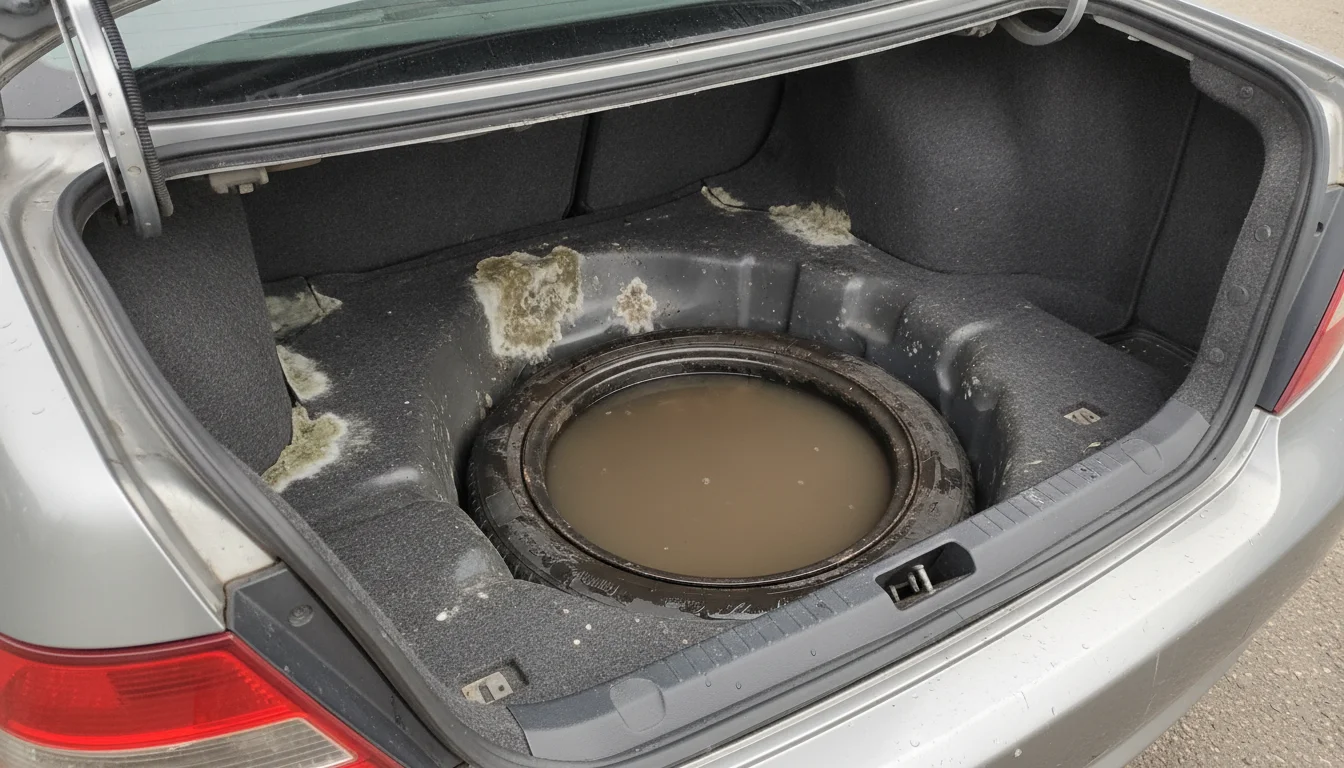
You lift the trunk floor and there it is: gray-green fuzz on the carpet, a damp smell, maybe a puddle sitting in the spare tire well. Or the vents smell like an old gym bag. Either way, the mold is the symptom. The problem is water, and it’s getting in somewhere you haven’t looked. So here’s how to get rid of mold in car interiors and trunks for good: find that water first.
Most guides tell you to air the car out, spray vinegar and pat it dry. That works until the next rain. Then the hidden leak tops up the foam padding under the carpet, and the fuzz comes back. So this list runs in the order that ends it: find the leak, close it, dry what’s underneath, clean, then treat the air system.
1. Water-test the car to find the leak
Start here, because the wet spot lies. Water inside a car runs along braces, wiring and trim, then pools at the lowest point, usually the spare tire well, a long way from where it got in.
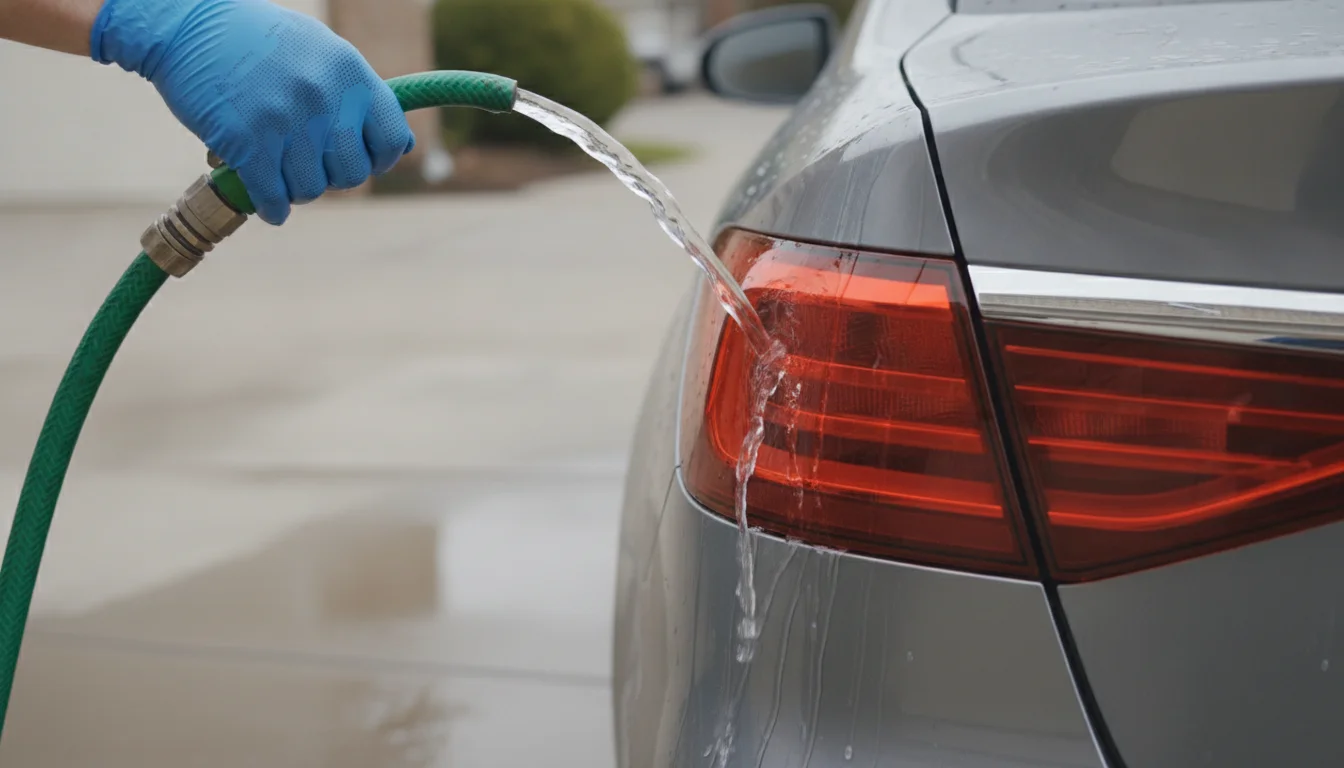
Empty the trunk, pull up the carpet, and let it dry completely first, or you can’t tell old water from new. Then close up, put a helper inside with a flashlight, and run a garden hose on a gentle flow over one area at a time for a few minutes each: the trunk lid, each tail light, the rear window, the seams around the trunk opening. Start low and work up. Dry paper towels along the seams make a fresh drip easy to spot.
One shortcut: clear water usually came in from above (seals, lights, rear glass). Muddy or gritty water came from below, thrown up off the road. And don’t use a pressure washer. It forces water past seals that keep rain out just fine.
2. Check the trunk seal
Run your fingers along the whole rubber weatherstrip around the trunk opening, feeling for hard, cracked or squashed-flat sections, tears, and any stretch that has pulled out of its channel.
For spots that look fine but aren’t, close a sheet of paper in the trunk lid and pull. If it slides out easily, the seal isn’t pressing there. Work all the way around. A seal that’s torn or flattened needs replacing (the new one usually just pushes on), and a shop will typically charge somewhere around $100 to $300 to do a seal or tail light gaskets.
3. Reseal the tail light gaskets
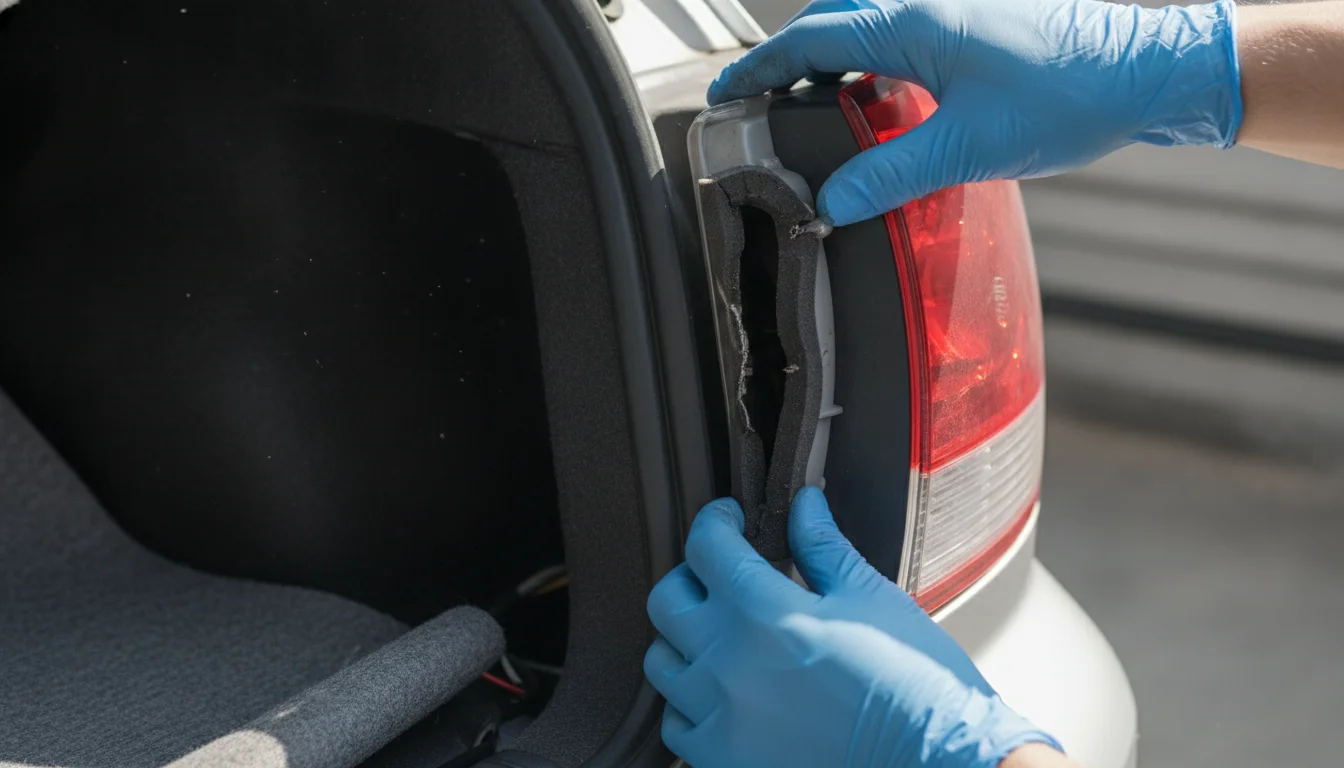
On some cars, this is the whole problem. Each tail light sits over a hole in the body with a foam or rubber gasket between them, and when that gasket dries out, water runs behind the light, down inside the body, and into the trunk.
The lights usually come off from inside the trunk. Pull back the trim, undo the nuts, and ease the light out without snapping its clips. If the gasket is cracked, missing chunks or flattened, buy one made for your model, press it in firmly and refit the light. Then hose that light alone for five to ten minutes with someone watching inside before the trim goes back.
4. Refit missing body plugs
Muddy water in the spare tire well? Look down. The floor has factory holes closed with rubber plugs, and missing ones are common on used cars. Lift out the spare and look for any open hole, and any split grommet where wiring passes through.
Many cars also have pressure relief vents with rubber flaps behind the rear bumper. A damaged or missing flap lets road spray into the trunk. Replace the plug, grommet or vent assembly with the right part. Tape over the hole rarely holds.
5. Clear blocked body and sunroof drains
Sunroof trays, the cowl under the windshield and the bottoms of the doors all have drains. Block one with leaves and grit, and the water goes into the headliner, the footwells or the trunk instead.
Pour a little water into each corner of the sunroof tray and watch it come out under the car. If it backs up, clear the tube with a flexible, blunt line. Never a coat hanger, which can puncture the tube or knock it off its fitting. Scoop the leaves out of the cowl and check the door drain slots are open.
A front passenger carpet that’s wet after running the AC in dry weather isn’t rain. That’s a blocked evaporator drain (see method 12).
6. Lift the carpet and dry the padding
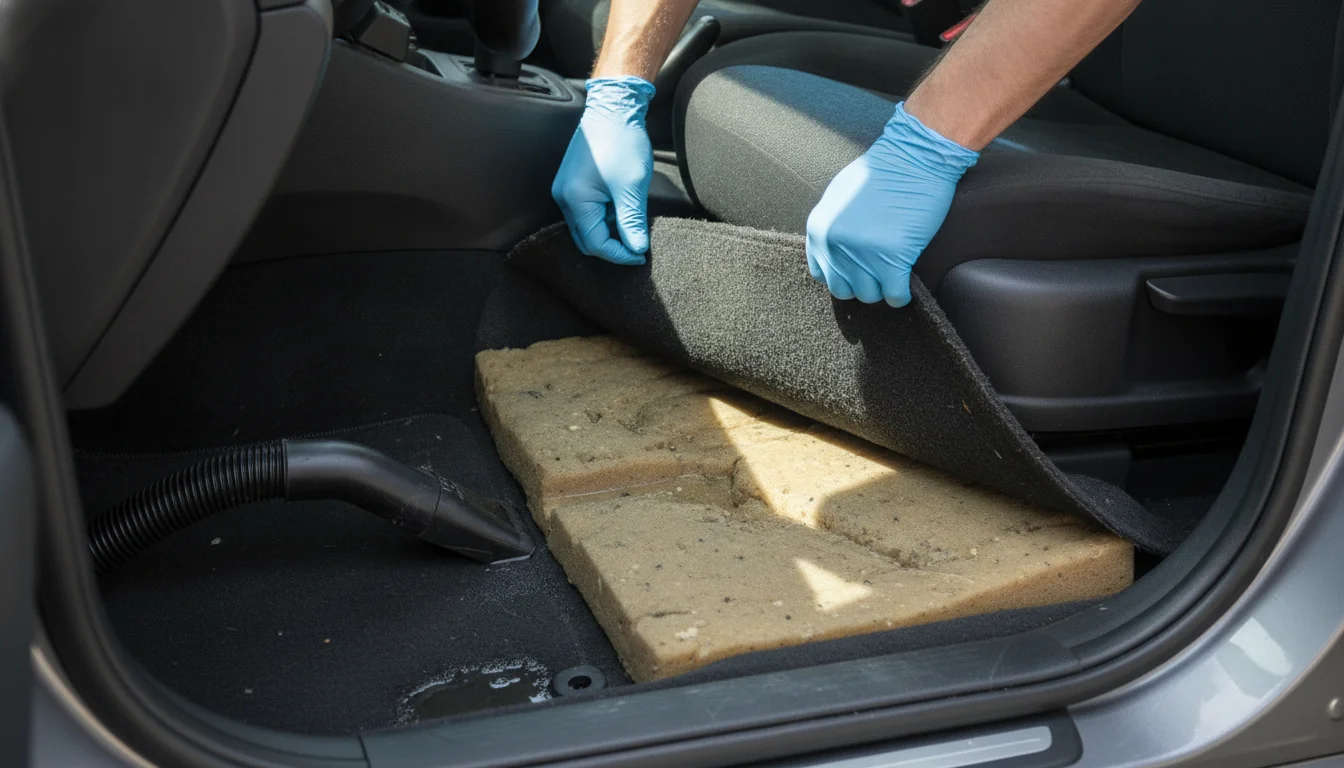
This is the step everyone skips. Car carpet sits on a thick foam pad that holds water like a sponge. The top can feel bone dry while the pad underneath stays soaked for days.
Pull out the mats. Towel up standing water, then suck out the rest with a wet/dry vacuum. Pull back the carpet edges (or lift the carpet out) so you can reach the padding, and dry both sides with the doors open and fans running. Soaked padding takes several days unless you lift it. Press a dry towel hard into the lowest spots. Any damp on the towel and you’re not done.
If connectors or wiring under the seats or carpet got wet, don’t unplug or move them yourself. Seat and airbag modules often live down there, so leave them to a technician working from the service manual for your car, and have any wet module checked before you rely on it.
7. Run a dehumidifier in the car
Fans move air. A dehumidifier pulls the water out of it, which matters on a damp week when the air coming through the open doors is wet too. Set one up inside the car while the padding dries, and keep moisture absorber bags in there for a few days after the repair. Absorbers hold far less water than a soaked carpet, so they finish the job. They don’t do it.
8. Vacuum loose mold with a HEPA vacuum
Now you clean. Gloves, goggles and an N95 mask first, because you’re about to disturb spores in a small, enclosed space. Then vacuum the loose growth off seats, carpet and panels with a shop vac that has a HEPA filter, going slowly over seams and crevices. A vacuum with a torn or missing filter just blows spores out the back. Empty and clean it outside when you’re done.
9. Spray a vinegar solution
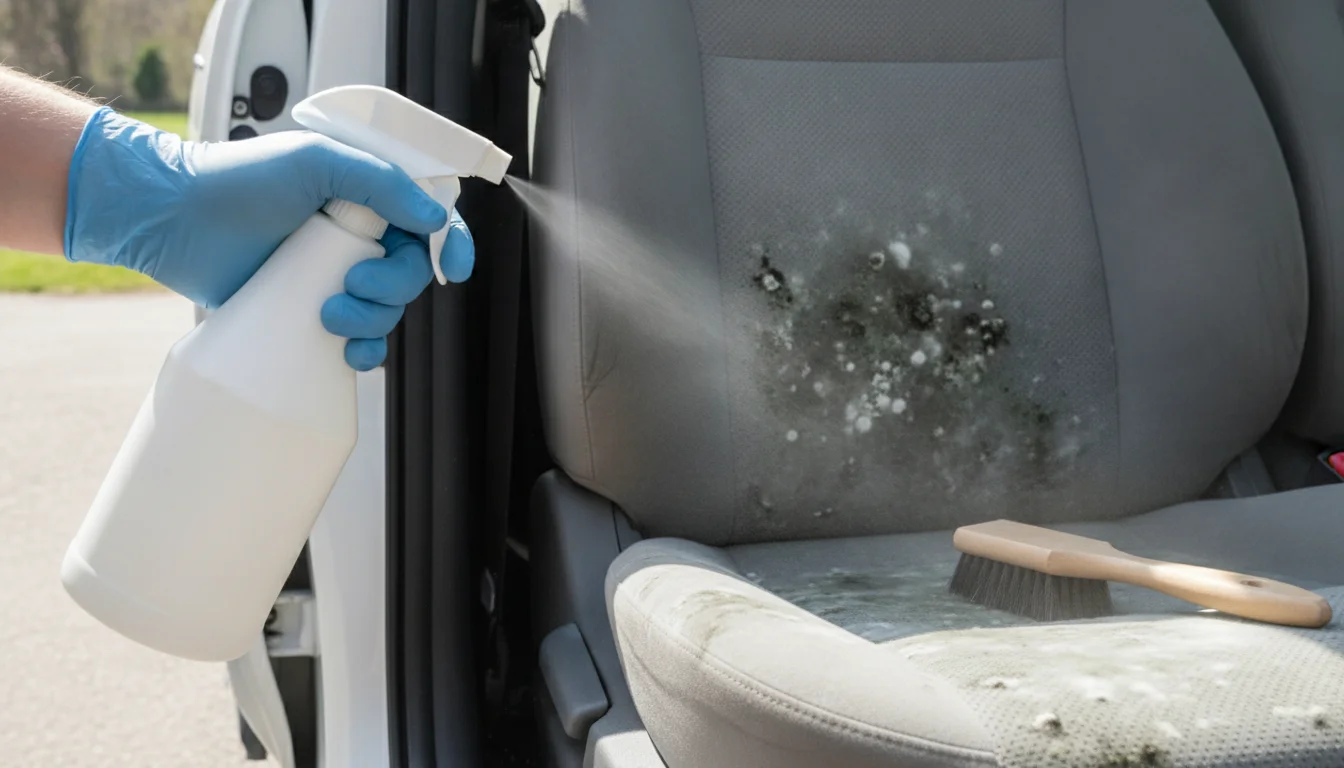
Mix equal parts white vinegar and water in a spray bottle. One owner who restored a car that had been leaking into the spare tire area sprayed the 1:1 mix on every surface, saturating the worst cloth areas, and found the growth visibly reduced within 30 minutes. Then they vacuumed off what had loosened. After that, scrub with a soft brush, wipe, and dry the surface straight away. On hard plastic, scrubbing with detergent and water works too. The vinegar smell goes as it dries.
10. Steam clean and extract the upholstery
Steam and a carpet extractor get into the fibers. The same owner used a cheap home steamer with a brush attachment to break up the thick spots, scrubbed, then pulled everything out with an old secondhand carpet extractor. The whole job came to about $200 in materials and used tools.
Keep the steamer moving: linger on plastic and it can warp. Skip the brush on soft-touch panels. On the headliner, blot with a clean cloth as you go and don’t stay in one place, because the glue behind it can let go. Then dry everything again.
11. Replace the cabin air filter
If the musty smell blasts out when you turn the fan on, check the filter before anything else. It usually sits behind the glovebox (your owner’s manual shows where). A damp, gray or spotted filter can’t be cleaned. Note which way the old one faced and fit the new one the same way. It’s cheap, it takes minutes, and sometimes it’s the entire fix.
12. How to get rid of mold in car vents: have the evaporator cleaned
The evaporator inside the dash gets cold and wet when the AC runs. That water should drip out under the car. When some stays, mold and bacteria grow there, and the vents blow a sweaty-sock smell.
Start with a new cabin filter (method 11), because sometimes that’s the whole fix. If the vents still smell after that, the growth is probably in the evaporator housing, and that’s a job for a mechanic. On many cars reaching the evaporator means taking the dash apart, which makes it an expensive one.
If you see less water dripping under the car than usual when the AC runs, the drain is probably clogged, and the smell will keep coming back until it’s cleared.
What causes mold in a car
Mold needs water and food, and a car interior is full of food: fabric, carpet, crumbs, spilled coffee. Spills and wet shoes are the easy causes. The stubborn ones are leaks: a tired trunk seal, a dried-out tail light gasket, a missing floor plug, a sunroof drain full of leaves. They top up the padding every time it rains, and since the spare tire well hides under a cover, the first sign is often just a musty smell.
Speed matters. Materials that dry within 24 to 48 hours of getting wet usually don’t grow mold, which is why padding that sits wet under the carpet is such good ground for it.
How to prevent mold in a car
Fix the leak and retest it before the trim goes back on. Then: run the fan without the air conditioning for the last few minutes of a drive so the evaporator dries before you park. Use recirculate sparingly, since it keeps humid air trapped in the cabin. Shake out wet mats and mop up spills the same day. And if you find water in the spare tire well again, don’t just mop it. Find out where it came from.
When to call a professional
Get help if water has reached the modules under the carpet, if the leak comes from the windshield or rear glass bond (that glass is structural, and silicone smeared on the outside makes the proper repair harder), or if rust has eaten through the floor or seams. A body shop can find a leak your hose test missed using smoke or dye.
If the vents still smell after a new filter, the growth is in the evaporator housing, and a mechanic needs to clean it (method 12).
If you have mold allergies, asthma, COPD or another lung disease, or a weakened immune system, don’t do this cleanup yourself. The  CDC says people in those groups shouldn’t take part in mold cleanup or stay in the space while it’s being cleaned. Have someone without those conditions do it, and talk to your doctor if you’re unsure whether being near it is safe for you.
More on mold and mold in the house, or dog odor in car if the smell is more animal than damp.
Frequently asked questions
Can a car with mold be saved?
Usually, yes. Once the leak is fixed and the padding is dried or replaced, the rest is cleaning. A flood-soaked car with wet electronics needs a shop to check the wiring first.
Is mold in a car toxic?
Spores can trigger sneezing, watery eyes and asthma flare-ups, and a car is a small closed space. Wear gloves, goggles and an N95 mask for the cleanup, and talk to a health professional if you have concerns.
Can car detailers get rid of mold?
Yes. They have steam cleaners and extractors for heavy growth. But a detailer doesn’t fix your leak, so find it first or you’ll pay twice.
What should I do if my car is full of mold?
Open it up, find and fix the water source, and pull the carpet and padding out to dry or replace. Then vacuum, clean and steam the rest. If it’s everywhere, including the headliner and vents, that’s a job for a detailer.