Table of Contents
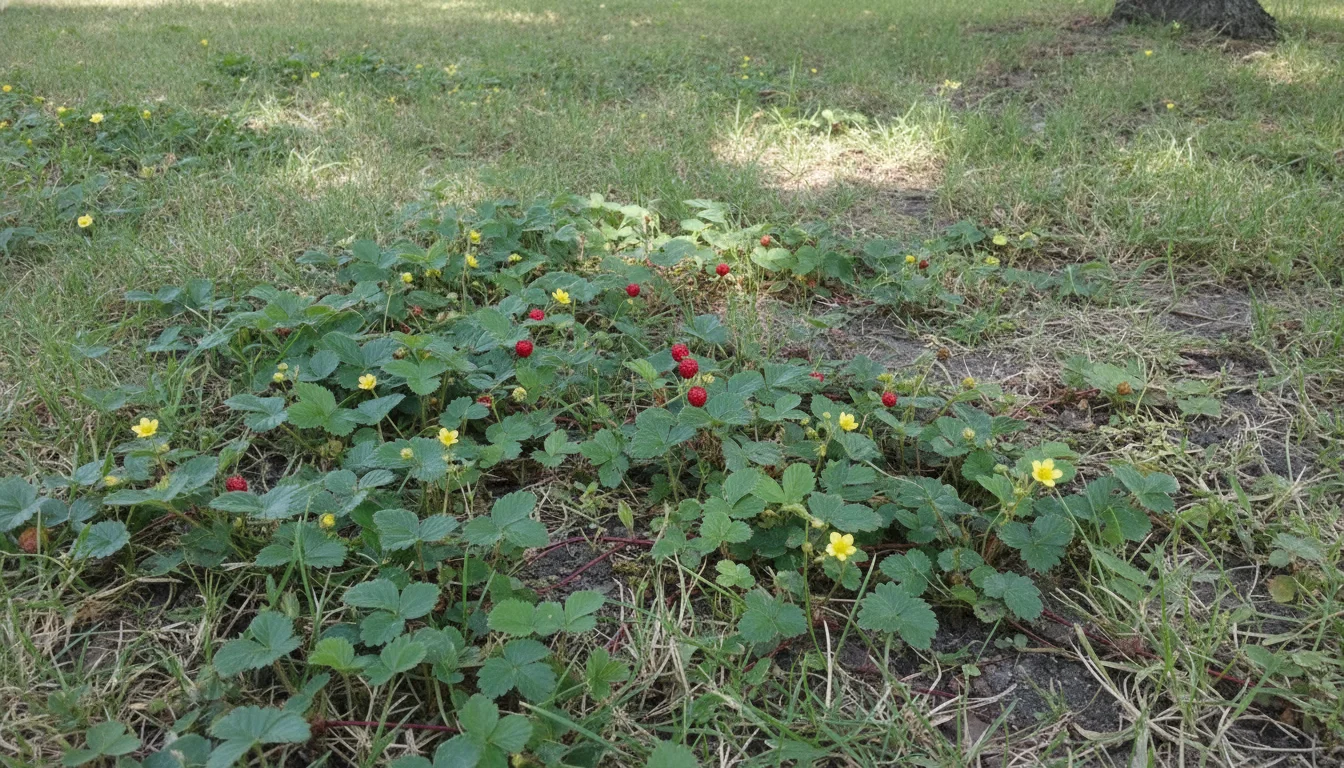
Little red berries in the lawn, pointing up at the sky, on a low plant with yellow flowers. They look like strawberries. They taste like nothing. That’s mock strawberry (Potentilla indica, also called Indian strawberry), a non-native perennial that creeps across shady, damp ground on runners and roots wherever a runner touches down. Here’s how to get rid of mock strawberry, and why your mower isn’t the answer.
Mowing won’t stop it. It tolerates close mowing just fine and keeps spreading underneath the blades. To get rid of it you have to deal with every crown and every runner, either by pulling them or by getting a herbicide down into the roots. Then you have to fix the thin, wet, shady turf that let it in, or it moves straight back.
Budget two or three seasons for a big patch.
What causes this problem
First, make sure it’s actually mock strawberry. Wild strawberry has white flowers, fruit that hangs down under the leaves, and sharper teeth on the leaf edges. Mock strawberry has yellow five-petaled flowers, rounder leaf teeth, and fruit held upright where you can see it. Common cinquefoil also has yellow flowers and runners, but its leaves have five leaflets instead of three and it never makes a red berry. If the leaves won’t settle it, wait for flowers.
Mock strawberry spreads two ways. Runners root at the nodes and build a chain of new plants, and seeds travel in the fruit (one gardener blames the rabbits for new patches all over the yard). It likes moist soil and shade, and it moves into turf that’s thin, in moderately shady spots where grass struggles anyway. It also loves loose organic debris. Pile fall leaves on it and, as one gardener put it, it loves that rich top layer and flies through the loose debris.
1. Hand pull when the soil is wet
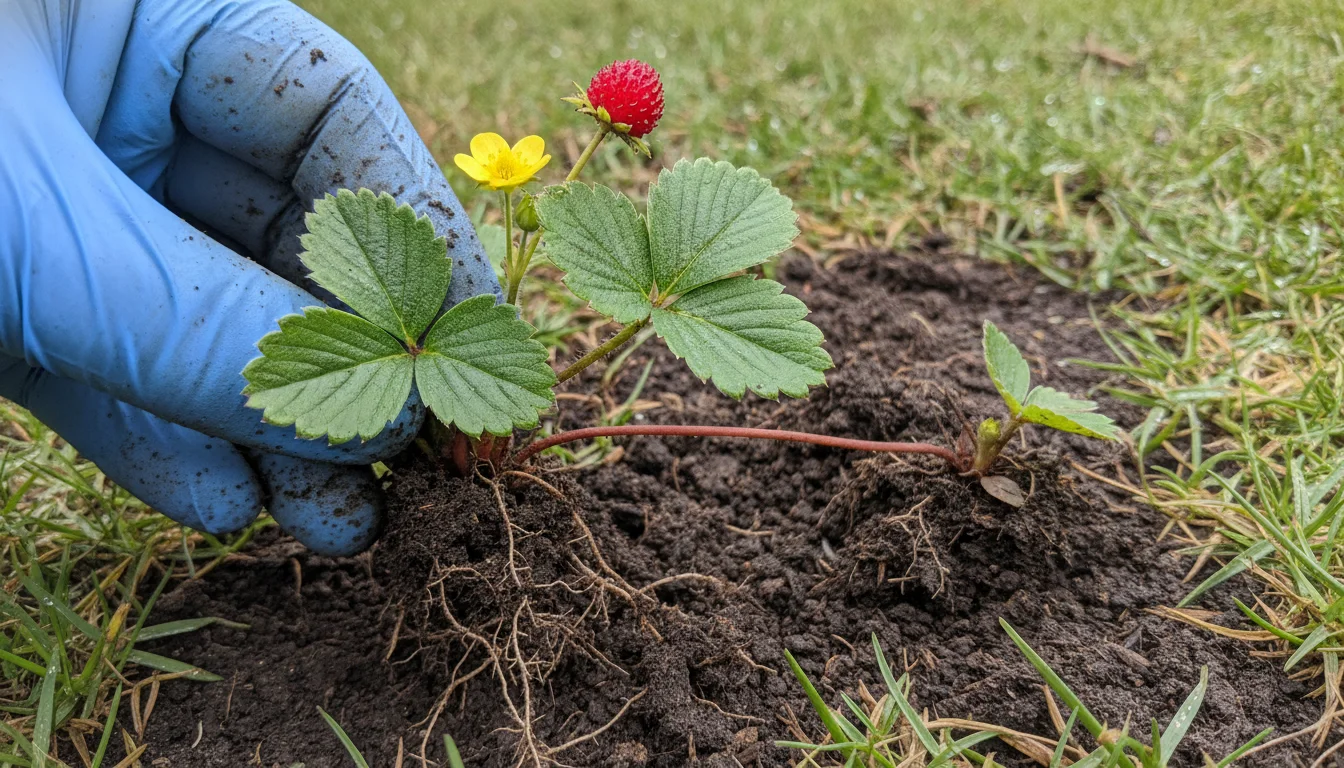
The best method for anything smaller than a big patch, and the one that works in garden beds where you can’t spray. Water the area or wait for a rainy day. Moisture is the whole trick: in moist soil the plant comes up easily, roots and all. Leave roots behind and it regrows.
Grab a runner and follow it back to the mother plant, then pull that. Bag what you pull instead of composting it. You will miss some runners, so go back every week or two. The leaves are easy to spot once you know them, and one gardener who pulls three or four handfuls a week keeps a bed clear that way.
2. Apply a broadleaf herbicide in fall
For a lawn that’s too far gone to pull, a selective broadleaf weed killer kills mock strawberry and leaves the grass alone. Look for one with 2,4-D, MCPP (mecoprop), dicamba or triclopyr on the label, and spot-treat the patches rather than blanket-spraying the yard.
Timing is what makes it work. From mid-September through October, perennial weeds are moving sugars down into their roots for winter, and the herbicide rides along with them. Spray in spring and most of it stays in the leaves. It’s the same timing that finally beats wild violets in a lawn.
- Don’t mow for 2 to 3 days before, and wait 3 to 4 days after.
- Spray when no rain is forecast for 24 hours and wind is under 5 mph (8 km/h).
- Aim for daytime highs above 60°F (16°C). Several hard freezes in a row cut how much the plant pulls down to its roots.
- Plan on a second pass 2 to 3 weeks later. One application rarely finishes a tough perennial.
Never spray a dicamba product over the root zone of trees or shrubs. The roots absorb it.
3. Smother with cardboard and mulch
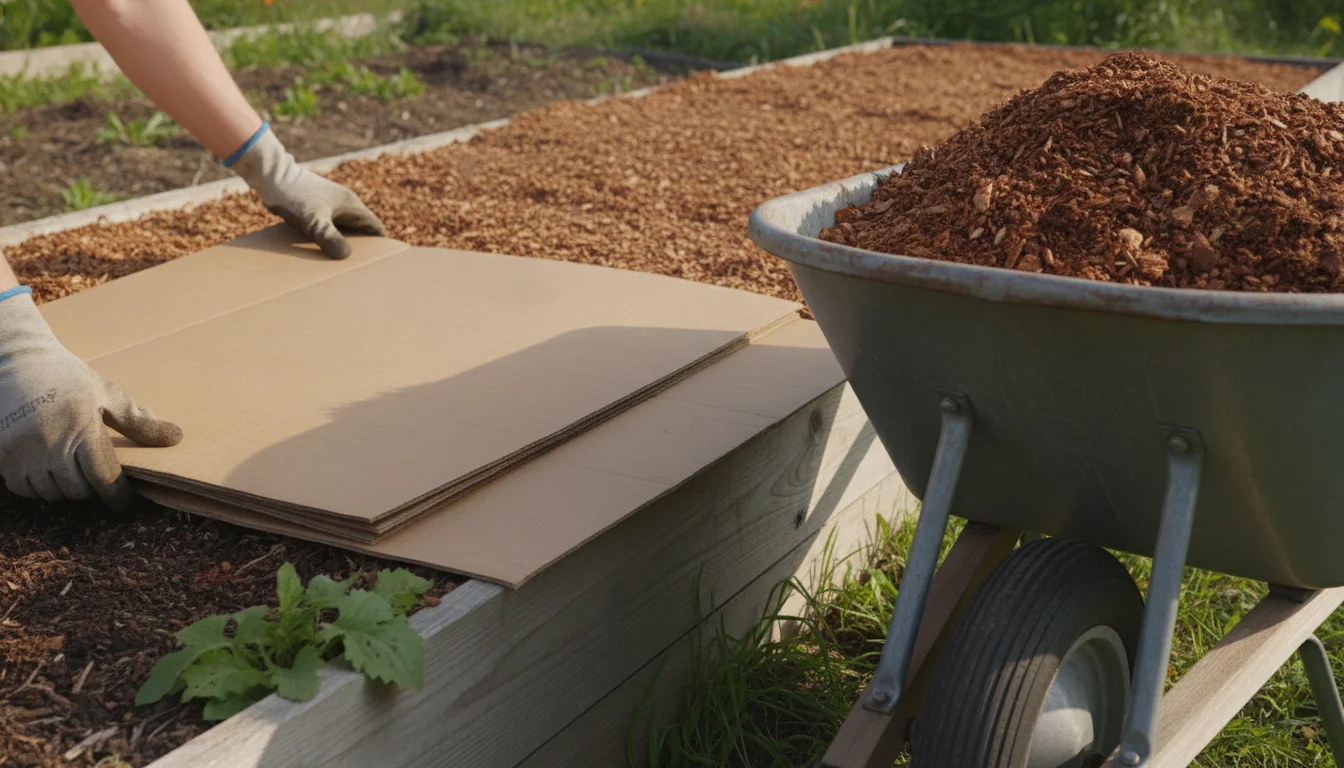
For a bed you’re clearing completely. Cut everything to the ground, lay plain cardboard in overlapping sheets, and cover it with 4 to 6 inches (10 to 15 cm) of wood chips. Leave it for a full growing season.
The catch: mock strawberry comes up through mulch, and one gardener who smothered an untouched patch watched it come back “with a vengeance.” Pull or spot-treat the patch first so the cardboard is finishing off a weakened plant, and check the edges, where runners slip in from outside.
4. Solarize the soil with clear plastic
In a hot summer, clear plastic (not black) stretched tight over the soil traps enough heat to cook the plants and runners in the top layer. Leave it for four to six weeks in peak summer. Done well, it kills the existing plants under the sheet along with many weed seeds and soil pests in the top layer of soil. A cool or cloudy spell weakens it, and it will not clear everything, so use it only on ground you plan to replant and pull whatever survives.
5. Improve drainage and water less often
Mock strawberry likes moist soil, and constantly damp turf is where it wins. Water the lawn deeply and less often rather than a little every day. Fix surface drainage where water sits: regrade low spots or run a French drain. Core-aerate compacted areas in spring or fall so water soaks in instead of pooling.
6. Aerate and overseed thin turf
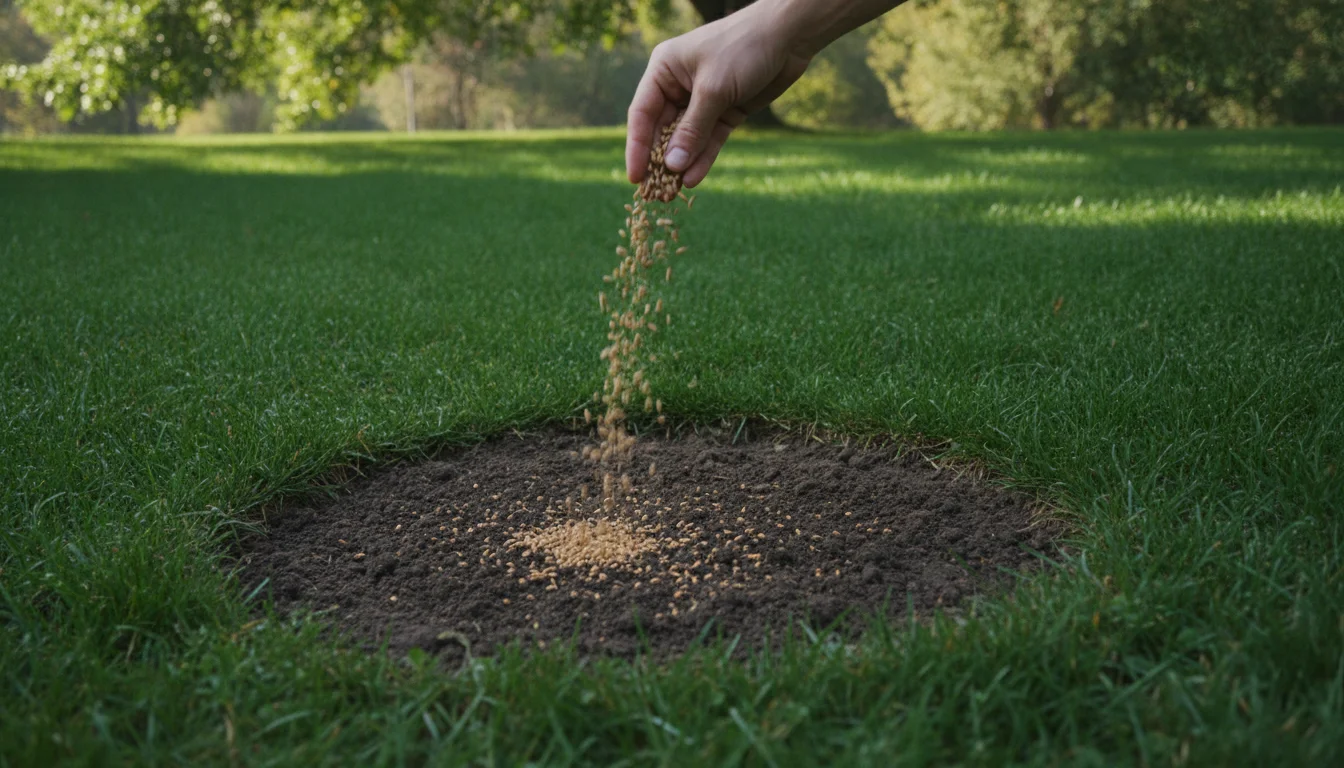
Mock strawberry takes over where grass is thin, and thick grass is the long-term defense against it and most other lawn weeds. Rake bare patches to loosen the top half-inch (1 cm), spread seed at the label rate, top-dress lightly with compost, and keep it moist for two weeks. Overseed cool-season grass (fescue, bluegrass, ryegrass) in early fall, right after your fall herbicide pass has cleared the bad patches. Check the herbicide label for how long to wait before seeding. Warm-season lawns get repaired in late spring.
7. Plant groundcovers where grass won’t grow
Under a big tree, grass will never get thick enough to keep mock strawberry out (it’s the same shade that grows moss in a lawn). Clear the area, then plant a dense shade groundcover that actually holds the ground: wild ginger, sedges or violets work in part shade. Native wild strawberry (Fragaria virginiana) grows bigger and tends to outcompete it, but plant it only once the mock strawberry is completely gone, or you’ll never tell which one to pull.
FAQ
What is the difference between mock strawberry and wild strawberry?
Flower color is the surest check: yellow is mock strawberry, white is wild strawberry. Mock strawberry fruit points up and tastes bland; wild strawberry fruit hangs down and tastes like a strawberry.
Are mock strawberries poisonous?
No. The fruit isn’t poisonous, but it’s bland and dry, and about the size of a fingernail.
Will mowing kill mock strawberry?
No. It tolerates close mowing and keeps spreading by runners under the mower deck.
Does vinegar kill mock strawberry?
Only the top growth. It burns the leaves, the roots survive, and it regrows. Vinegar also kills the grass around it.
How long does it take to get rid of mock strawberry?
Small patches can be cleared in a year if you pull on sight. A yard full of it usually takes two to three seasons of pulling, a fall herbicide pass or two, and fixing the turf so it doesn’t come back.