Table of Contents
Pharaoh ants are the ants that get worse when you fight them, so how to get rid of pharaoh ants starts with what not to do. You spray the trail by the sink, and next you find them in the bathroom too. That isn’t bad luck. A pharaoh ant colony has several queens, and when it feels threatened it doesn’t die, it splits, and each piece sets up a new nest somewhere warm inside your walls.
So the usual reflexes (spray, vinegar, cinnamon) are what spread them. What works is slow and boring: find out which bait this colony wants right now, put it everywhere they walk, stop repelling them, and if you rent, get the whole building treated. One apartment can’t clear a colony that lives in the shared walls.
What causes pharaoh ants
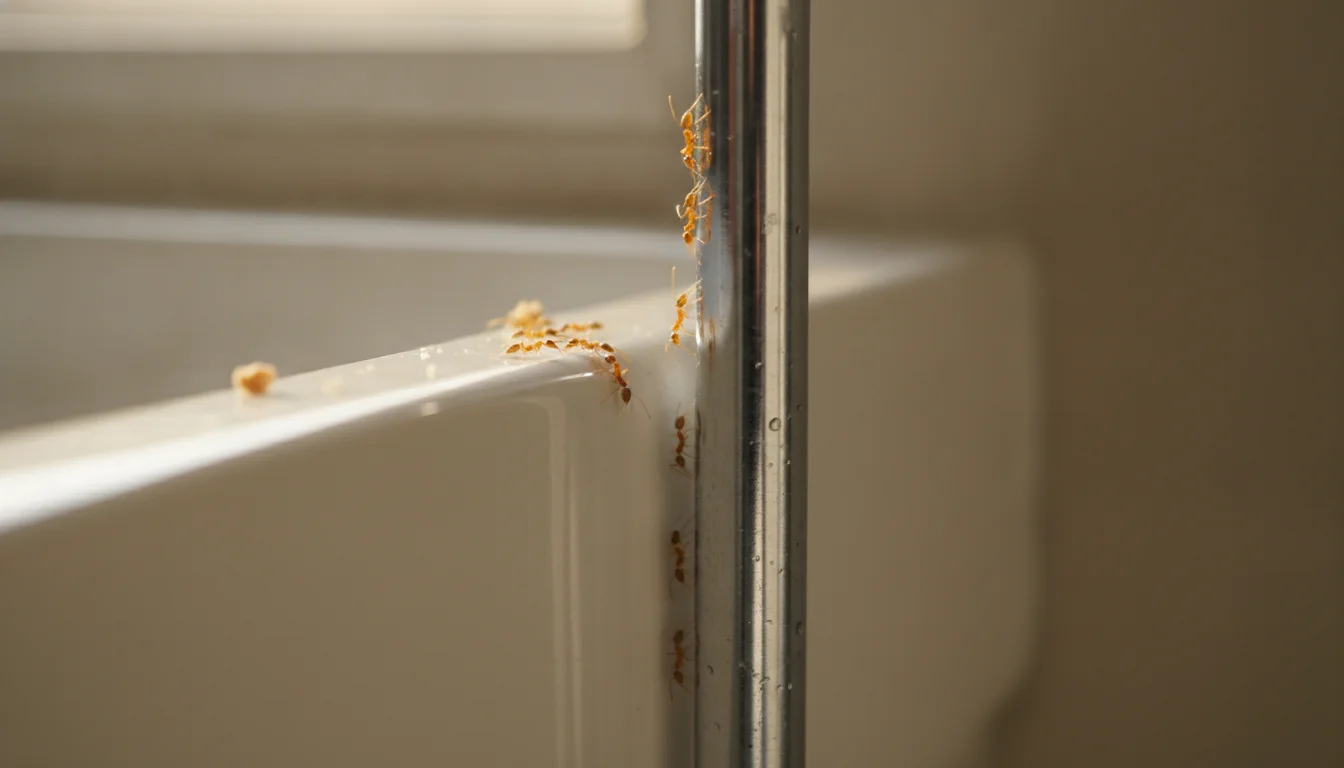
They’re tiny, about 1/16 inch (1.5 mm), yellow or orange with a darker abdomen. They nest in warm, humid, hidden spots near food and water: wall voids, behind baseboards and switch plates, around hot water pipes, inside appliances. They travel along wiring and plumbing, which is how they get from one apartment to the next.
They don’t swarm the way most ants do. A colony grows to as many as 300,000 ants with several queens, and when it’s crowded, when the temperature shifts or when it meets a repellent, a queen walks off with some workers and brood and starts a new nest. That’s budding, and it’s the whole reason this species has a reputation.
1. Make sure they’re actually pharaoh ants
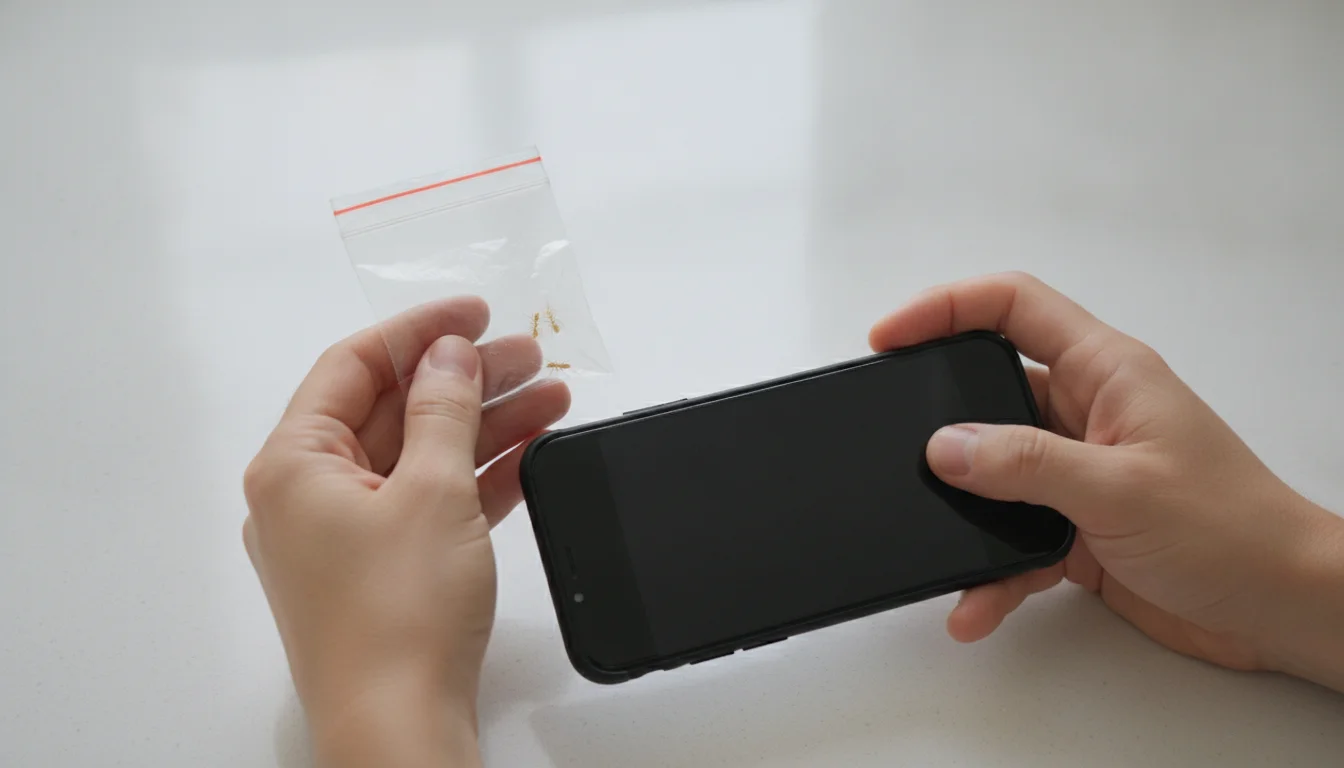
Thief ants look almost the same (tiny, pale, in the kitchen), and they’re much harder to control with bait. Before you buy anything, catch a few in a sealed bag or take a sharp close-up photo for your local extension service. Getting this wrong means weeks of treating the wrong ant (our guide to ants in the house covers the other common species).
2. Run a bait test before you commit
This is the step nobody does, and it’s why people post things like “I tried Terro but they just ignored it.” Most store ant baits are sweet, and pharaoh ants eat sweets but prefer greasy, fatty food.
So test it. Cut a few index cards in half and set them side by side on an active trail: a dab of honey diluted with a little water on one, a smear of peanut butter on the next, a little bacon grease or other cooking fat on the third. Come back later and look. Whichever card is crowded is the bait type to buy: a sweet gel, a protein gel or a mixed sweet and fat bait. University extension guides recommend exactly this before you start the real program.
Then keep watching. If the ants stop feeding on the bait while you still see them on the trail, run the test again and switch to whatever they take now.
3. Put slow-acting bait everywhere they walk
Bait wins because the workers carry it home and feed it to the queens and larvae. It has to be slow-acting, so the worker lives long enough to deliver it. Fast-kill bait just clears the trail you can see.
Look for a bait whose label lists pharaoh ants. Active ingredients university guides name for them include hydramethylnon, fipronil, sulfuramid and boric acid at under 1%. Put stations or small spots of gel along every trail and wherever you see activity: cabinet and pantry edges, window sills, under sinks, around toilet bases, behind the stove. Outlets and switch plates are a favorite route, but keep any bait on the outside of the cover plate, never in the slots (more on that in ants in electrical outlets).
Check the stations regularly and replace empty ones. A busier trail around the bait at first is the colony finding it, not a failure. Professionals also use baits with an insect growth regulator. One pest controller on Reddit describes a bait that sterilizes the queens first, so they can’t raise new ones while the colony dies off.
Keep stations where children and pets can’t reach them.
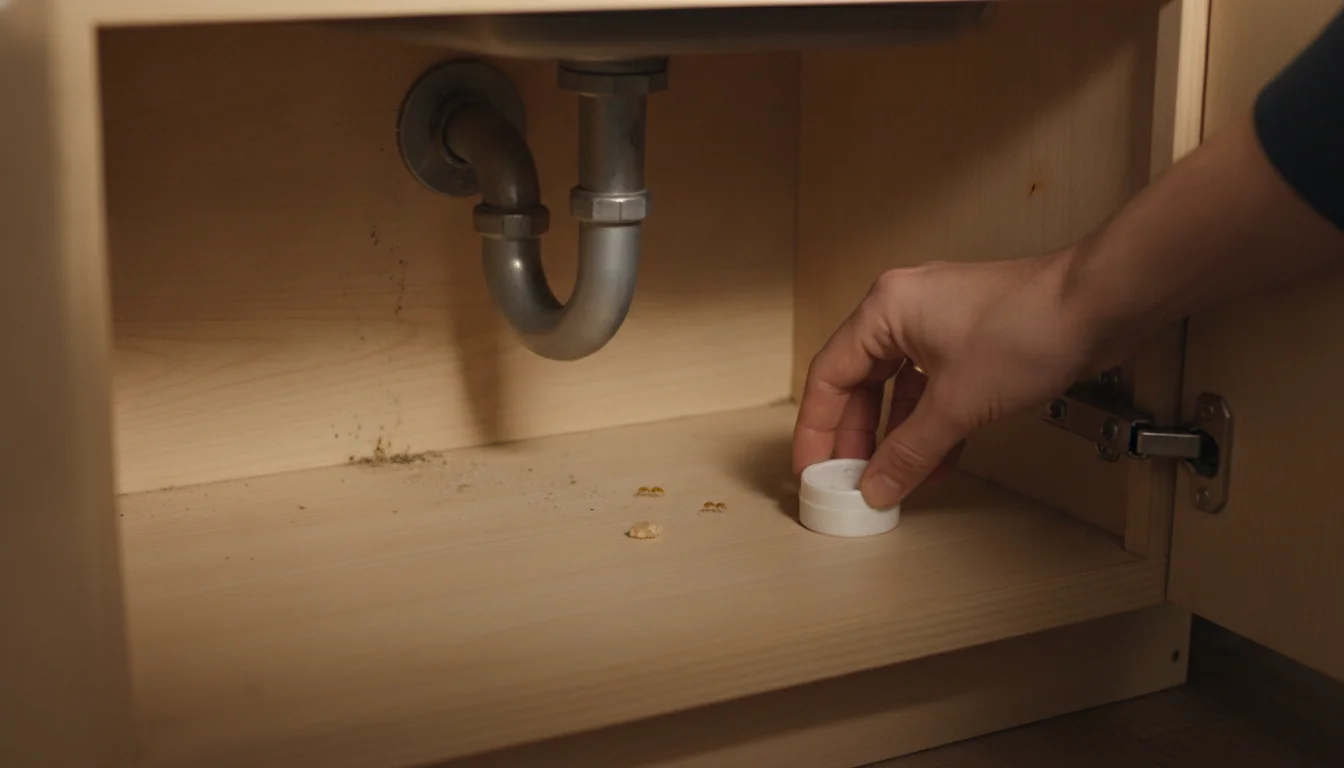
4. Stop spraying, and put the vinegar away
Anything that repels them can set off budding. That includes ordinary household ant sprays, anything with a pyrethroid (ingredients ending in “-thrin”), bug bombs and insecticide dusts. And it includes the kitchen remedies: vinegar, peppermint oil and cinnamon all work by scrambling the scent trail and driving ants off. Which is exactly the signal that sends a colony into the walls in several pieces.
So does diatomaceous earth, which pest professionals warn can repel a budding colony.
While you’re baiting, nothing goes on the trail. Ants on a counter you need? Wipe them up with soapy water.
5. Take away the food that competes with your bait
Bait has to be the best meal in the house, or they’ll ignore it. The routine is the one for any ants in the kitchen. Put sugar, cereal, pet food and anything greasy into sealed containers. Wipe counters, the stovetop and spills (grease counts). Rinse cans and bottles before they go in the recycling, take the trash out daily and pick up the pet bowl at night. You’re not starving them out. You’re leaving them one choice.
6. Seal what you can
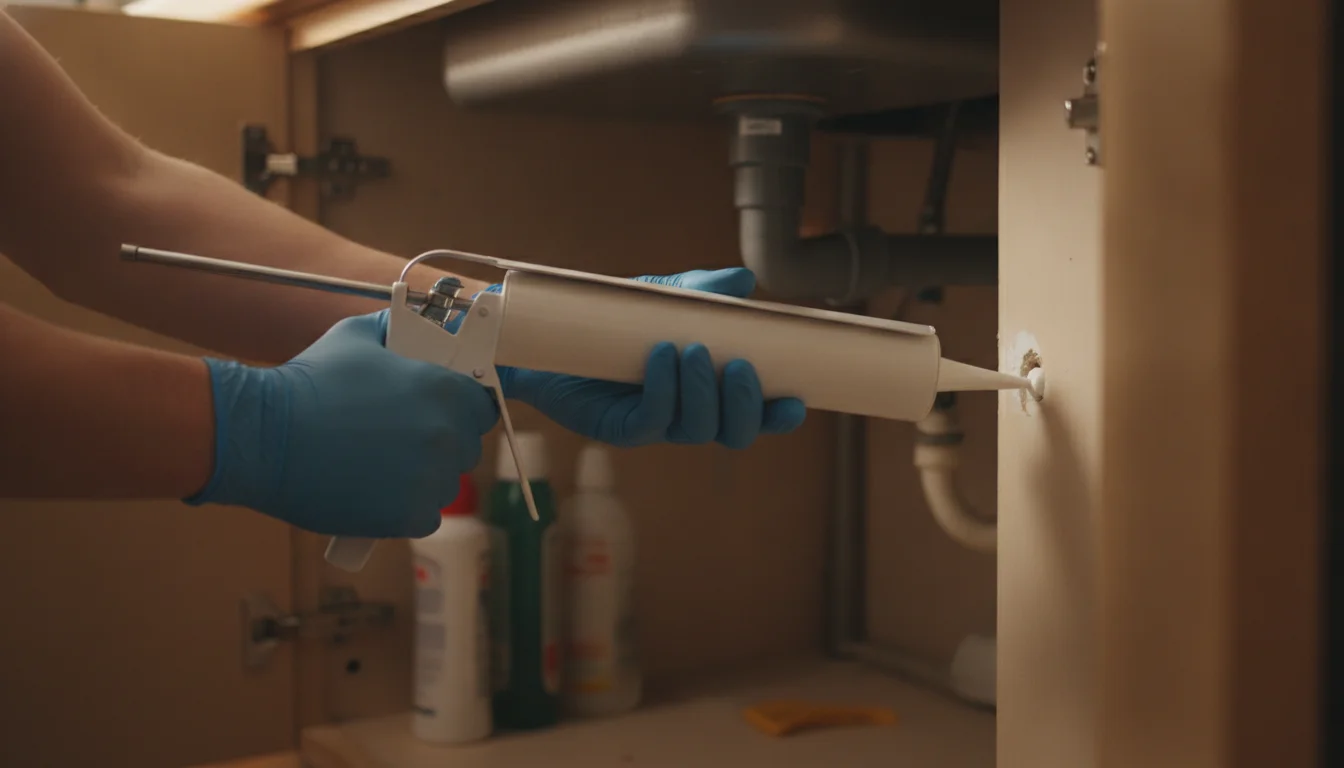
Caulk gaps around pipes under sinks and along baseboards, especially near food storage. Be realistic, though. These ants get through tiny cracks and travel along wires and plumbing, so you won’t seal them out completely. Sealing helps steer them toward the bait. It doesn’t replace it.
7. If you rent, get the building baited
In an apartment building, a pharaoh ant colony runs through the shared walls, pipes and wiring, so the ants in your kitchen may be nesting next door. You can bait your unit perfectly and they’ll come straight back from the neighbor’s. University guidance says the same thing plainly: complete cooperation from the property manager and residents is essential for a successful control program.
Report it to your landlord in writing and keep a copy. Ask for three things: a pest professional who will bait for pharaoh ants (not spray), treatment of the units around yours, above and below included, and a request that nobody in the building sprays while the baiting runs. A spray in the next apartment can split the colony all over again.
8. Be patient and keep the bait going
Pharaoh ant baiting takes several weeks before you see a real drop, and a full program can run from several months to a year, depending on how big the infestation is. Colonies rebound if a few nests are missed, so stopping early is how you end up starting over.
Keep a log of each station, the date and whether it’s being fed. If one room clears and another gets worse, that’s a nest you haven’t reached yet. Bait there.
When to call a professional
Call one if you’re in an apartment building, a hospital, a school or a food business, if months of baiting haven’t cut the numbers, or if the ants keep turning up in new rooms. Pharaoh ant nests are hard to find and there are often several in one building. A professional can bait the whole structure, treat wall voids with boric acid dust through cracks, and use growth regulator baits. University extension guides recommend leaving building-wide programs to applicators who understand baiting. Ask whoever you hire how they’ll avoid splitting the colony. If the answer is a spray, find someone else.
FAQ
What do pharaoh ants hate?
Strong scents that scramble their trails: vinegar, peppermint oil, cinnamon. Which is exactly why you shouldn’t use them, because a repelled colony splits.
What is the best ant killer for pharaoh ants?
A slow-acting bait the colony is actually eating, with pharaoh ants on the label. Sprays are the worst choice.
Why are pharaoh ants so hard to get rid of?
Several queens, nests hidden in walls, and budding. As few as 1% of the foragers can feed the queens and larvae, so killing the workers you see does almost nothing, and repelling them spreads them.
How long does it take to get rid of pharaoh ants?
Expect several weeks before a clear drop. A full baiting program can take from several months to a year, longer in a big building.
Are pharaoh ants dangerous?
They can be. Orkin cites studies showing pharaoh ants can carry more than 12 infectious organisms, which is why they’re a serious problem in hospitals and anywhere food is handled.