Table of Contents
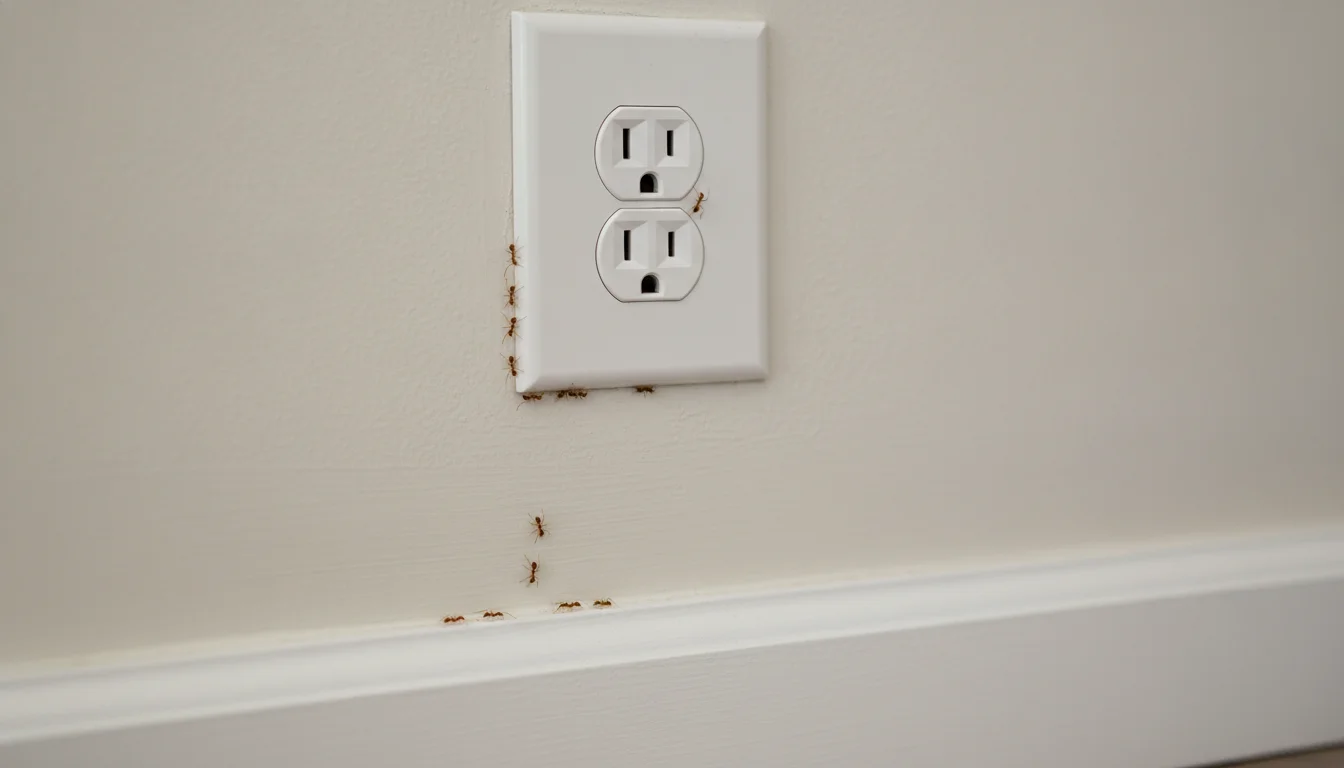
Ants walking in and out of an outlet usually aren’t living in it, and that’s the key to how to get rid of ants in electrical outlets. The outlet is a door. The colony is in the wall behind it, or in the soil outside, using the wiring runs as a hallway. You don’t need to get anything into the outlet. You need the ants to carry something out of it.
So here’s the safe order: breaker off before the cover plate comes off, nothing wet or powdered in the slots, bait on the trail where they’re already walking, and patience while it works. Then seal the gap and, if they were living in the box, get an electrician to look at it.
1. Cut the power at the breaker before you touch the outlet
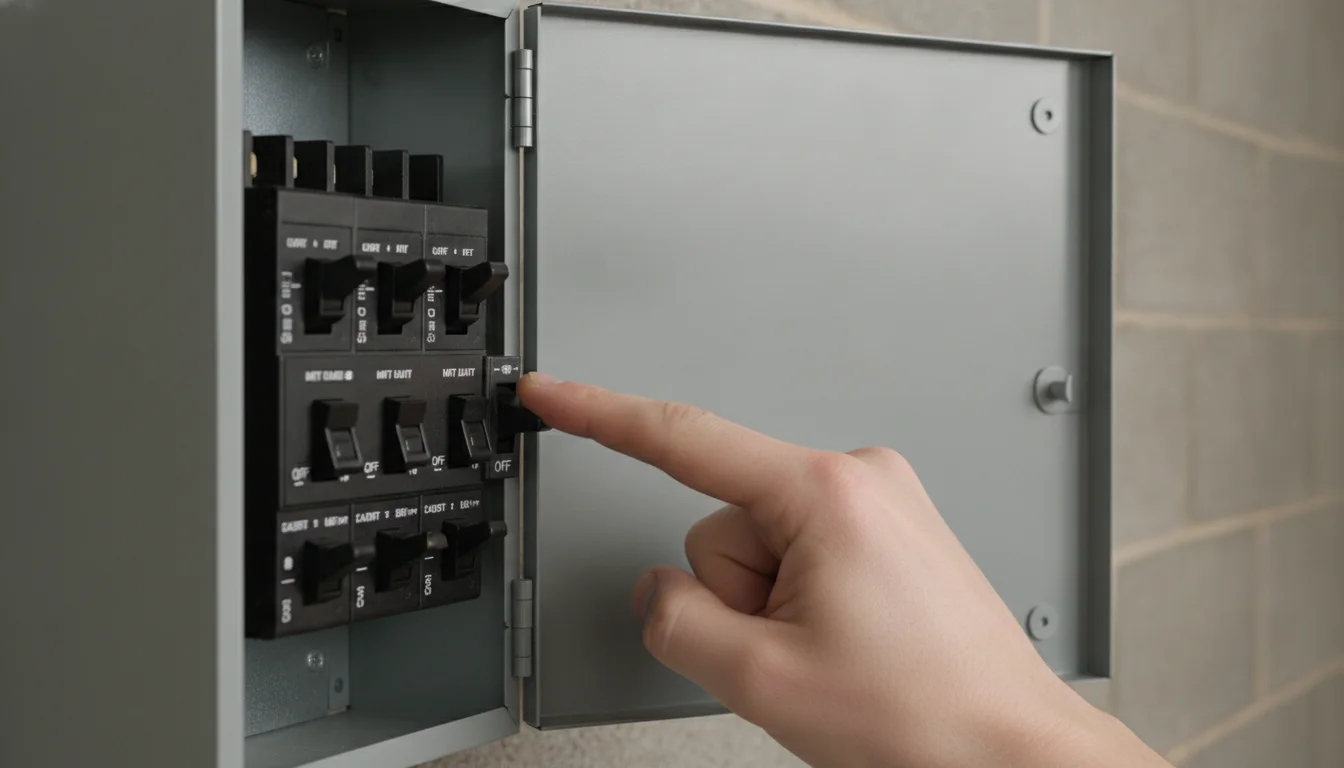
Before the cover plate comes off or a vacuum nozzle goes near the box, switch that circuit off at the breaker panel. Texas A&M AgriLife notes that ants can bridge an open switch, and the soil and debris they carry in can cause corrosion and short circuits.
Unplugging everything doesn’t count; the contacts stay live. And if you can’t tell which breaker feeds the outlet, leave the box alone and work on the wall and baseboard around it until an electrician can trace the circuit.
If the outlet smells of burning, looks scorched or keeps tripping the breaker, leave the circuit off until it’s been inspected (method 11).
2. Keep sprays, liquids and powders out of the outlet
This is the one most guides get wrong. One ranking page’s advice is to “sprinkle the crushed spices in holes where the electrical lines are.” Don’t. Spice, boric acid and diatomaceous earth are all foreign material in an electrical box, and foreign material is exactly what causes the trouble here. Texas A&M AgriLife’s guide on ants in electrical equipment says the soil and debris ants bring in cause corrosion and short circuits, and that it should be cleared out once the ants are gone (method 9), not added to.
Sprays are worse: a shock hazard in a live outlet, residue on the contacts, and only the ants they hit die. AgriLife says flatly: no liquid drenches or sprays around electrical fixtures, and nothing that may damage insulation. Inside electrical equipment it allows only products labeled for that use, and for safety it says to let an electrician or a licensed pest management provider do that treatment.
Gel bait doesn’t go in the box either: one r/pestcontrol commenter warned that gels separate and leave “a bit of very drippy and sticky liquid at the top of the syringe.”
3. Identify the ant species
Pharaoh ants are tiny (about 1/16 inch, or 1.5 mm) and yellow to honey-orange. UC IPM calls them the main indoor-nesting ant in California, in wall voids and behind baseboards. Repellent sprays backfire on them. A Purdue lab study (Buczkowski and colleagues, 2005) found that cypermethrin, a repellent pyrethroid, made pharaoh ant colonies bud: a reproductive fragment of the colony moved out and set up a new nest. Spray the outlet and you can turn one colony into several.
Fire ants are reddish with a darker abdomen and they sting. They’re the ones that get into the electrical equipment itself (method 7).
Bait preference matters too. UC IPM says pharaoh and thief ants prefer protein or greasy bait, fire ants oils, and Argentine ants sweets. Not sure? Put out a little of each and watch.
4. Bait the outside of the outlet, not the inside
This is the method that ends it. Bait is slow on purpose: workers carry it back to the nest and feed it to the larvae and the queen, which no spray will do.
Put it where they’re already walking, on the trail leading to the outlet, and never in the box. UC IPM says to place bait stations where ants find them easily but pets and small children can’t reach them, and to bait mainly outdoors, since indoor bait can draw more ants in. If the colony is outside, bait the trail outside. Whatever product you use, follow its label for where it may go and how to keep it away from children and pets. Use the bait type from method 3.
Then leave everything alone. No sprays anywhere near the bait, or you’ll kill the couriers before they deliver. Check the bait and refresh it when it’s gone or dried out.
5. Wait out the busy days
Expect more ants, not fewer, at first. That’s the bait working. One r/CleaningTips user described “an insane line for a couple of days” at the bait, then a massive drop. UC IPM says bait control isn’t immediate and may take several weeks or more to be complete, depending on the species, the bait and what other food the ants can find.
Don’t “help” by spraying the trail or moving the bait. If they ignore it, offer a different type alongside it: UC IPM notes that ant preferences change through the year and suggests giving them a choice.
6. Wipe the trail away from the outlet
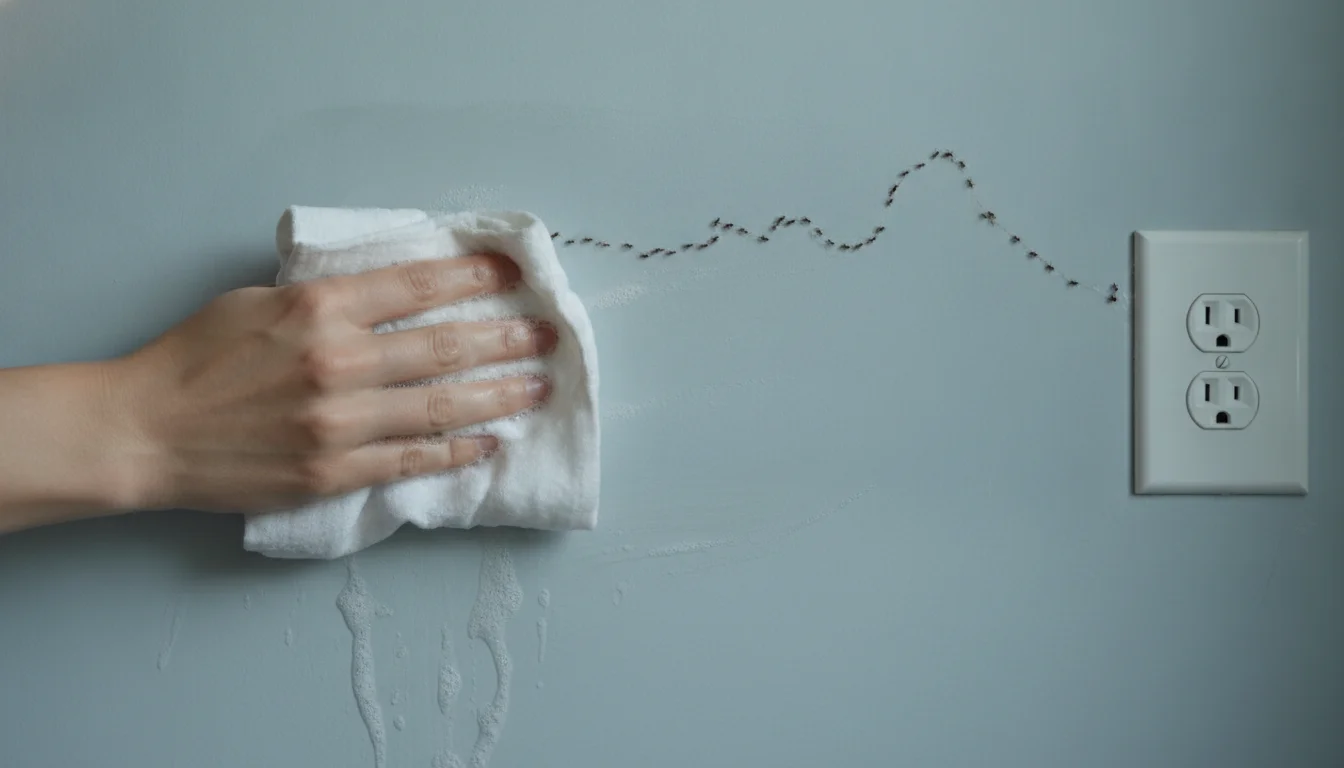
Ants follow scent trails. Wipe the ants on the wall with a damp, soapy cloth, well clear of the outlet itself. UC IPM says soapy water removes the scent trail and clears foragers for a while about as well as an insecticide spray.
Just don’t wipe out the trail between the outlet and the bait. That’s the one you want them using.
7. Bait fire ant mounds near the house
If it’s fire ants, the trouble often starts outside. Texas A&M AgriLife says electrical boxes give them warmth in winter, a dry nest in heavy rain and no disturbance. Worse, workers that bridge an open switch get electrocuted and release signals that bring more workers, until the switch is packed with dead ants and fails. They also chew insulation, which can short the circuit.
Find the mounds along the foundation and by outdoor electrical boxes and bait them. AgriLife says hydramethylnon, indoxacarb, metaflumizone or spinosad baits on individual mounds usually give control in about a week. Follow the label.
8. Fix the leak near the outlet
Outlets near sinks, bathrooms and laundry areas get more ant traffic. Ants need water, and Mister Sparky, an electrical contractor, notes damp also speeds up corrosion of the contacts. Check under the nearest sink and fix drips. Outside, pull mulch back from the foundation.
9. Vacuum the box once the ants are gone
Dead ants, dirt and nest debris left in the box keep corroding the contacts. With the circuit off at the breaker, take the cover plate off and vacuum out what you can reach at the front of the box with a nozzle attachment. Don’t poke the nozzle into the wiring.
Wait until the bait has finished.
10. Fit foam gaskets behind the cover plates
A foam gasket sits between the cover plate and the wall and closes the gap around the box, the door between the wall cavity and your room. With the breaker off: plate off, gasket on, plate back on. Mister Sparky describes them as inexpensive and widely available.
Do every outlet on that wall. Fit them after the colony is dead, or you cut the ants off from the bait. Caulk any visible gap around the outside of the plate, and keep sealant out of the box.
11. Have an electrician check the outlet afterwards
Two kinds of outlet need an electrician, and if you can’t tell which kind you have, treat it as one of them.
The first is an outlet they were living in (dead ants and dirt behind the plate). AgriLife says infested electrical equipment should be handled by an electrician or a licensed pest provider. Leave the circuit off until an electrician decides whether the outlet can stay.
The second is any outlet with warning signs: burning smell, scorch marks, warmth, humming, flickering lights on the circuit, or a breaker or GFCI that keeps tripping.
What causes ants in electrical outlets
Mostly, the outlet is on the way somewhere. LaJaunie’s Pest Control explains that outlets open into the wall cavities around wiring and plumbing, which ants use as hidden routes. Steady traffic at one outlet usually means a nest nearby, often in the walls or foundation.
The box is warm, dark and undisturbed. And some species are drawn to electricity itself: Texas A&M AgriLife says carpenter ants, acrobat ants and crazy ants have an affinity for the oscillating magnetic fields around electrical equipment.
How to prevent ants in outlets
Keep crumbs and grease off the counters around kitchen outlets (see the kitchen ants guide). Fix leaks near outlets fast. Seal the gaps where utility lines and pipes enter the house from outside, since that’s where the wall-cavity traffic often starts. Fit gaskets behind the cover plates. And if ants are turning up in other rooms too, the ants guide covers the whole house.
When to call a professional
Call a pest control company if the traffic persists after several weeks of baiting, if ants are coming out of several outlets, if you can see a nest in the box, or if it’s fire ants inside the house.
Call an electrician for any outlet that housed a colony or shows warning signs. Get the order right: Mister Sparky says pest control comes first, so the infestation is over before anyone repairs the wiring, then the electrician inspects and replaces what’s damaged.
Frequently asked questions
Can you put diatomaceous earth in electrical outlets?
No. Diatomaceous earth is foreign material in an electrical box, and debris in the box is what corrodes and shorts outlets. Texas A&M AgriLife says only products labeled for electrical equipment belong inside it, applied by an electrician or a licensed pest provider. Bait on the trail works better anyway.
Is it safe to use an outlet after ants were in it?
Not something you can confirm by looking. Keep the circuit off and have an electrician check it if the ants were nesting in it (dead ants or dirt behind the plate), or if it smells of burning, looks scorched, feels warm, hums, flickers or trips the breaker. If you’re unsure how long they were in there, get it checked before you plug anything back in.
Can ants live in walls?
Yes. Pharaoh ants, odorous house ants and fire ants can all nest in wall voids, and an ant-busy outlet is often the first sign of a nest behind it.
Will spraying the outlet kill the colony?
No. It kills the foragers it hits, and on pharaoh ants a repellent spray can split the colony. Bait outside the plate reaches the queen.