Table of Contents
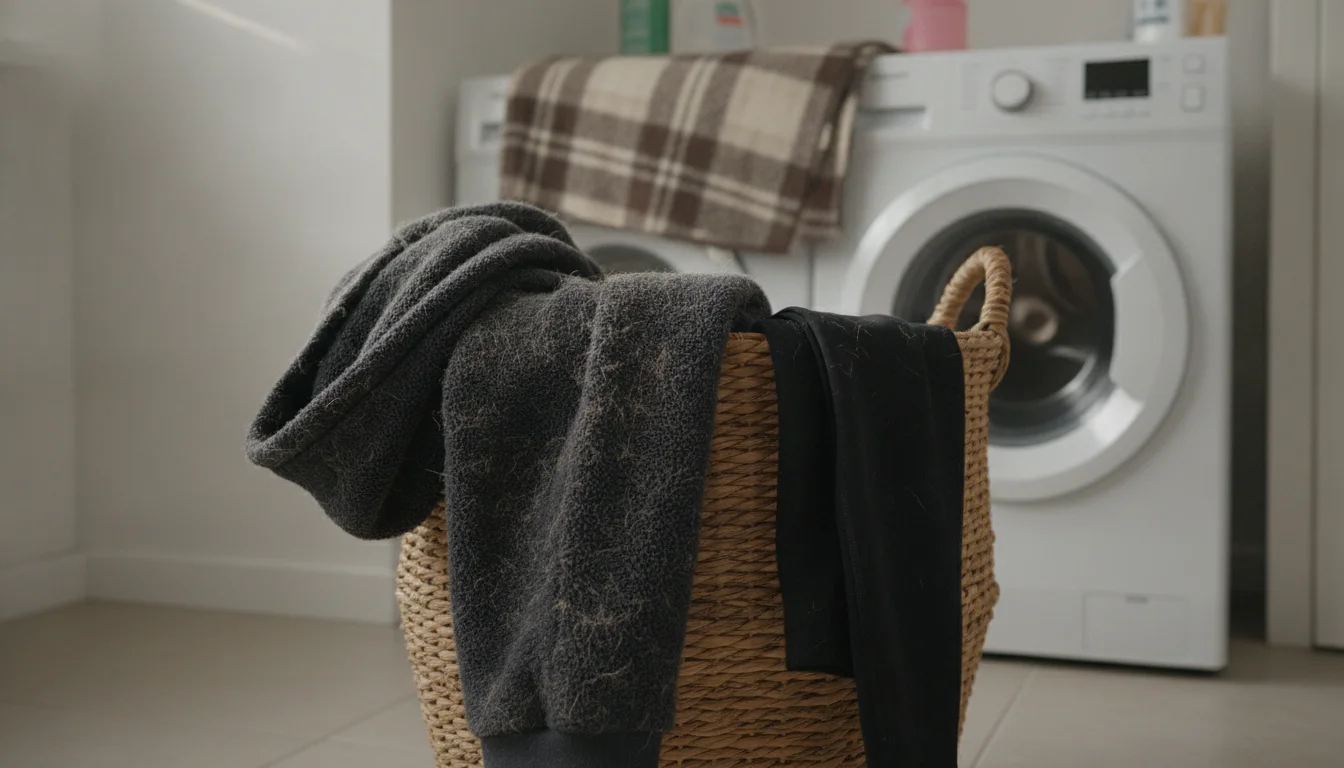
You washed it. It still smells like the dog. Washing it a third time the same way won’t change that, so how to get rid of dog odor in clothes comes down to changing the routine, not repeating it. The smell isn’t really the hair. It’s the skin oil, saliva and dander the hair brought with it, and a normal wash isn’t built for that.
So: hair off first, a detergent that breaks the oils down instead of perfuming them, a soak for what survives, no softener, a clean machine, and a smell check before anything goes near a hot dryer. The steps run in the order you do laundry.
1. Tumble the clothes in the dryer before you wash them
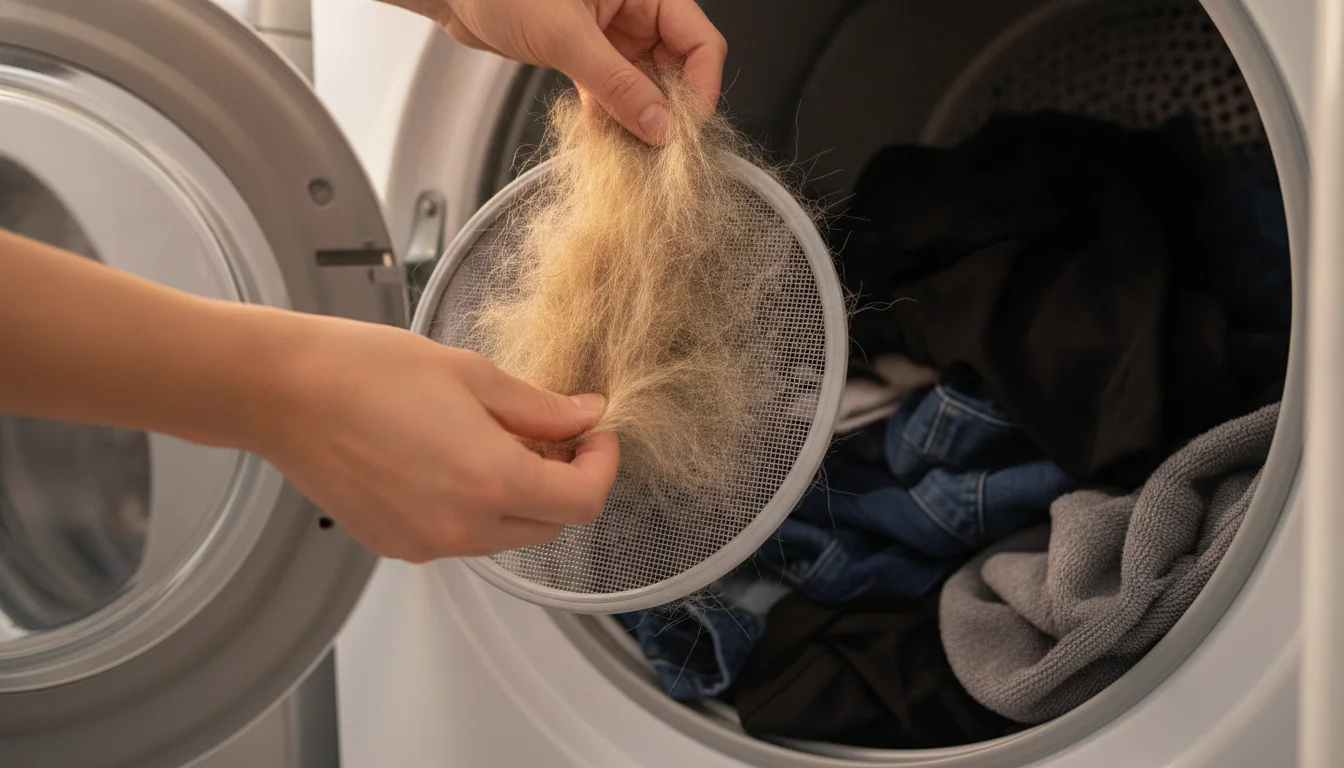
Yes, before. Put the hairy clothes in the dryer on no heat or low heat for about 10 minutes. The tumbling loosens the hair and the lint trap catches it. Still furry? Another 5 minutes. Shake each piece out, then wash.
Empty the lint trap first, because a full one catches less. For a single sweater, or anything the label says can’t tumble, a lint roller does the same job by hand.
2. How to get rid of dog odor in clothes: use an enzyme detergent
This is the fix that matters most. Dog smell is proteins and oils, and enzymes are what break proteins and fats into pieces the wash can rinse away. Look for “enzymatic” or “bio” on the label. Most “pet” detergents are ordinary enzyme detergents with a dog on the bottle, so the one under your sink may already do it.
What doesn’t work is fragrance. A heavily scented detergent or a scent booster adds a smell on top of the dog. It reads as clean for a day or two, then the dog comes back.
Use the warmest water the care label allows. The exception is anything with urine or drool soaked into it: rinse that in cold water first, because hot water sets protein.
3. Soak what still smells in oxygen bleach
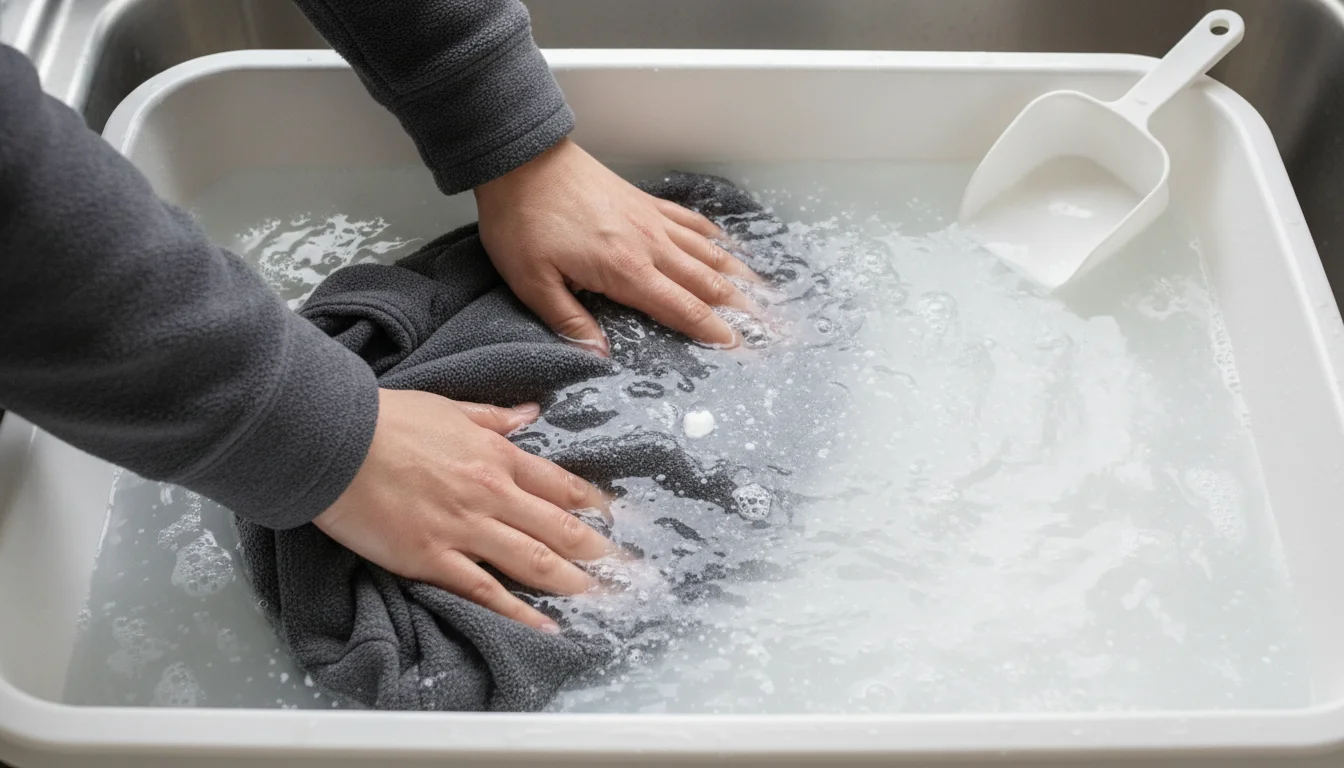
For clothes that still smell after a wash, a soak does what another wash won’t. Dissolve powdered oxygen bleach (sodium percarbonate) in warm water at the dose on the tub, then put the clothes in. Never pour the powder straight onto wet fabric. Leave them 1 to 4 hours, then wash as normal.
Stubborn stuff gets longer. One r/CleaningTips regular soaks for 6 to 8 hours or overnight in the hottest water the fabric can take, and puts it bluntly: washing 30 times doesn’t help much because the smell is sitting in the fibers, and a long soak reaches it.
4. Add white vinegar to the rinse, if your washer allows it
Check the manual first. Some washer makers advise against vinegar in the machine, because the acid can wear on the rubber seals and hoses. If yours allows it, put half a cup in the fabric softener compartment. It helps release what’s clinging to the fibers, and the clothes won’t smell of vinegar once dry. If the manual says no, or nothing, skip this step.
Even then, not every wash: frequent vinegar wears out elastic and vinyl prints. Never mix it with chlorine bleach.
5. Stop using fabric softener
Softener coats the fibers, which is the point of it, and that coating can hold odor in. Skip it until the smell is gone, including detergents with softener built in. Your towels get a bit scratchier. The smell actually leaves.
6. Wash smaller loads
A packed drum doesn’t give clothes room to move through the water. One owner on Reddit checks that one to two hands fit vertically above the clothes before starting.
7. Clean the washing machine
If your clothes smell like wet dog and the dog has never been near them, look at the machine before you blame anything else. Bacteria survive washing and drying. A peer-reviewed study of smelly household laundry traced the “wet and dirty dustcloth” smell to one of them, and it’s a problem people report most with laundry dried indoors.
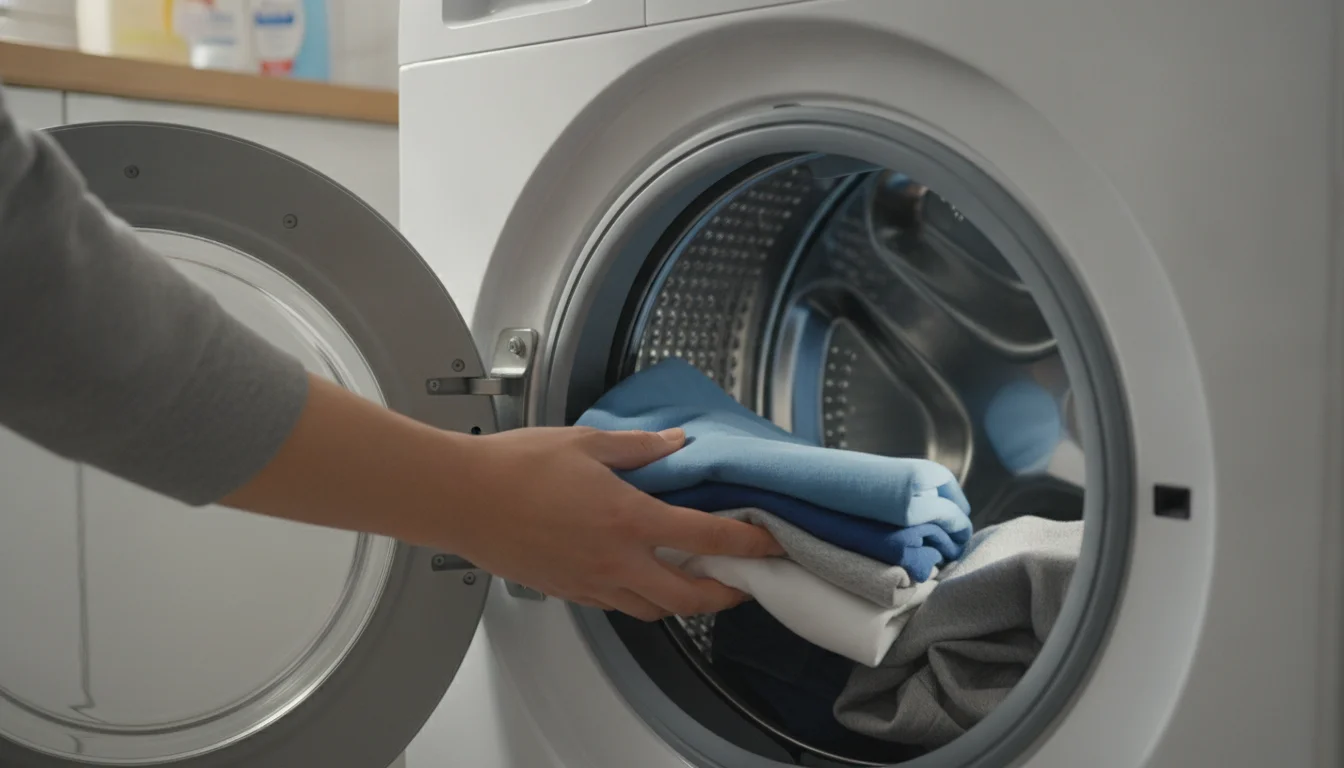
Run an empty cycle with a washing-machine cleaner, exactly as the packet says, or the tub-clean cycle if your machine has one. Your manual names the cleaners it approves. Then do the parts the cycle never reaches. On a front loader, pull back the rubber door seal and wipe out the folds. If your machine has a filter you can reach, the manual shows where it is and how to clean it. Leave the door open afterwards until the drum is dry. For the full job, see our guide to washing machine smell.
8. Smell it before the dryer, then air dry outside
The one rule people break most: don’t put anything in a hot dryer until you’ve smelled it and it smells clean. Dryer heat sets whatever’s left. A second wash on a damp shirt is nothing. A second wash on one that’s been baked is a project.
Hang it outside on a sunny, breezy day instead, for a few hours, not 20 minutes. Sun and moving air finish what the wash started. No yard? An open window. A sweatshirt that still smells faintly after one wash usually comes out of a second one fine.
9. Wash the dog’s bedding apart, every week
The dog’s bed and blankets soak up skin oil and drool all week, and every load they share with your clothes, they share that too. So wash them on their own, weekly or every two weeks, with enzyme detergent and no softener. For urine-soaked bedding, warm water beats hot because heat sets the protein. Dry it thoroughly, outside if you can, so it doesn’t go musty.
What causes dog odor in clothes
Dog smell is mostly skin oil, saliva and dander, plus urine on accident days. Those are proteins and oils that soak into fibers and keep releasing smell after the fabric looks clean. Ordinary detergent is built for dust, food and sweat, and perfume removes none of it.
Synthetic fabrics are worse. Researchers at the University of Alberta soiled polyester and cotton with odor compounds from sweat and washed them repeatedly. Laundering got more of it out of cotton than polyester, because polyester repels water and attracts oil. That study was about human sweat, but dog smell is oil-based too, which is why your fleece and gym leggings hold onto the dog longer than your cotton T-shirts.
Add heat (which sets protein smells), softener and a dirty washer, and the smell has three more places to hide. For the dog itself and the rest of the house, see our guides to dog odor and pet smell in the house.
How to prevent dog odor in your clothes
Brush the dog regularly, so less hair and dander ends up on you. Bathe it with dog shampoo and dry it completely, because a damp dog smells worse than a dirty one.
Keep the dog’s blankets and towels in their own basket. Wash doggy clothes within a day rather than leaving them damp in the hamper, leave the washer door open between washes, and empty the lint trap every load.
FAQ
What is the best laundry detergent for cleaning dog bedding?
An enzyme detergent with little or no fragrance and no softener built in. The brand matters much less than the enzymes and skipping the perfume.
Will dog pee smell eventually go away?
Not in fabric, not on its own. Wash a fresh accident right away. For one that has dried, rinse it in cold water, put an enzyme cleaner on it and leave it for the contact time on the label, then wash warm with enzyme detergent. Smell it before it goes in the dryer. For the cat version, see our guide to cat urine smell.
How do I get dog pee out of towels?
The same way. Cold rinse first, then enzyme pretreatment and a warm wash, and no dryer until the smell is gone.
How can I make my dog smell better?
Many healthy dogs do well with a bath every 4 to 12 weeks, depending on coat type and lifestyle. Add regular brushing and a full dry afterwards. Then wash its bedding, or the clean dog lies straight back down in the old smell.