Table of Contents
A raccoon problem is almost always a food problem with a shelter problem attached. Something easy to eat pulled them in, and a dark, quiet spot convinced them to stay, so most of how to get rid of raccoons is taking away the food and closing the shelter. Before you buy a trap or a sonic gadget off the internet, do two things: confirm you’re actually dealing with a raccoon and not a squirrel or a skunk, and take away whatever is feeding them. That order matters. Trap first and you’ll catch one while the next moves into the same spot by the weekend. The steps below run in the order that actually clears raccoons, and flag where the law and the spring breeding season change your options.
1. Confirm it’s actually a raccoon
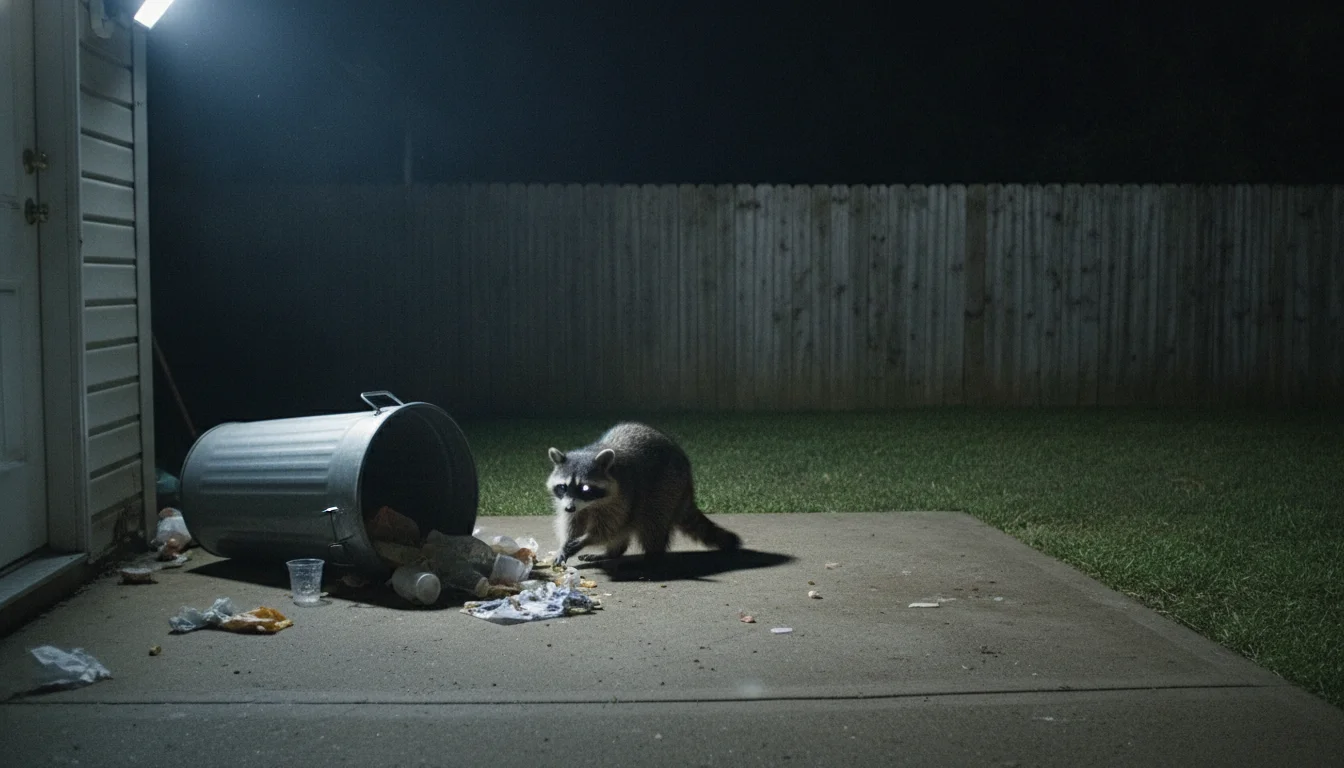
Raccoons are nocturnal. If the trash is only ever hit after dark and you’re finding five-toed, hand-like prints and dark, tube-shaped droppings, that fits. Daytime raiders are usually squirrels or birds, and a sharp chemical stink points to a skunk instead. A nighttime visitor that waddles off and plays dead when cornered is an opossum, not a raccoon. Set a cheap trail camera near the overturned can or the den entrance for a night or two and look at the footage before you spend a dollar on hardware. Guess wrong and you’ll buy the wrong fix. A raccoon seen staggering around in broad daylight is a different situation: back off and call animal control, because that can mean rabies or distemper.
2. Lock down the trash cans
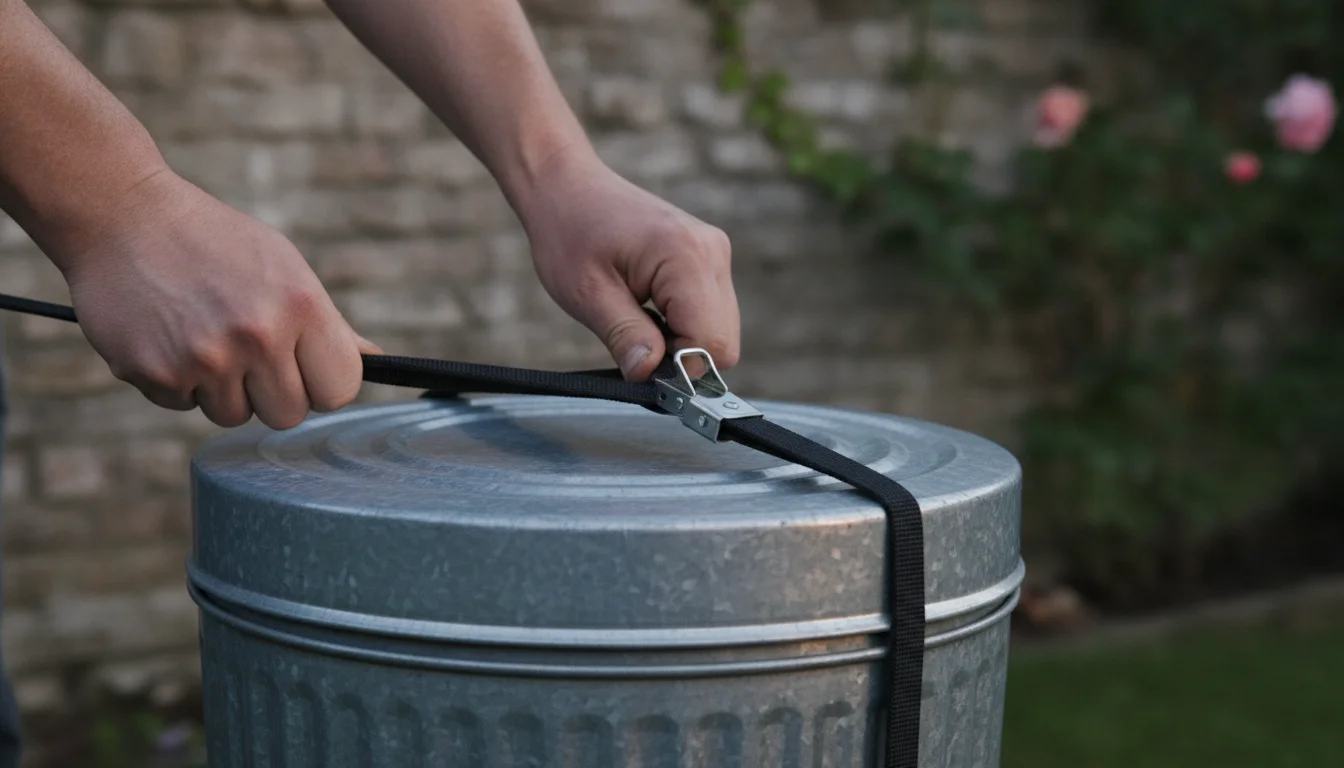
This is the single biggest draw, and fixing it does more than every repellent combined. Raccoons have hands, patience, and real strength, so a loose lid is just a puzzle they solve in thirty seconds. Switch to metal or heavy-duty cans with tight lids, strap the lids down with a bungee or a locking clip, and anchor the can to a rack or post so they can’t tip it and pop the lid on impact. Better yet, keep cans in a garage or shed until the morning of collection. A yard with nothing to eat is a yard raccoons stop visiting.
3. Take away pet food and other feed
Bring pet food and water bowls indoors before nightfall. An outdoor bowl after dark is a standing invitation. Store kibble and birdseed in metal cans with tight lids, not in the paper bags they came in sitting on a shed floor. Clear fallen fruit under trees, and know that a lawn full of grubs is its own buffet, which is why some raccoons tear up turf at night. Cut the food and most of the motivation to find a way into your house goes with it.
4. Fix the bird feeder, or pull it
A bird feeder is often the exact thing that drew a climbing animal into the yard. Two feeder designs actually help: a weight-triggered feeder that closes the seed ports when something heavier than a songbird lands, and a caged feeder that lets small birds through a wire shell while keeping larger animals off the food. Pair either with a smooth pole baffle and open siting, away from fences and low branches. If raccoon pressure is heavy, the simplest move is to take the feeder down for a couple of weeks and let them lose interest.
5. Set up a motion-activated sprinkler
A motion-activated sprinkler hits them with a sudden burst of water when they cross the detection zone, and most raccoons decide the yard isn’t worth it. Aim it at the perimeter, a known crossing, or the bed they keep hitting. One honest caveat: this is a discouragement for newcomers, not an eviction for a raccoon that already lives under your deck. And they learn. Reposition the unit every week or so, because a device that never changes becomes background scenery within about a week. No repellent spray, ammonia dish, or predator-urine granule holds up anywhere near as well, and none of them is actually registered for raccoon control.
6. Run a hot wire around the garden
A plain fence barely slows a raccoon down. They climb it, dig under it, or pry a weak corner open. What works is electricity. Add a single electrified strand about 8 inches (20 cm) off the ground on the outside of an existing fence, run off a low-impedance charger, and an ordinary fence turns raccoon-resistant overnight. The charger only needs to run from dusk to dawn, when raccoons are active. For a sweet corn or melon patch, a single or double hot wire 6 to 10 inches (15 to 25 cm) above the ground is the standard fix for the few weeks the crop is ripening. One contact is usually all it takes.

7. Evict with a one-way door
When a raccoon is already denning in an attic, a chimney, or under a deck, a one-way door is the humane way out. It mounts over the main opening and lets the animal push out to forage at night but blocks it from getting back in. Install it only after you’ve sealed every other gap, or they’ll just use the next one. Leave it in place at least seven days to be sure the resident has gone, longer in cool or rainy weather when a raccoon forages less, then close the opening for good.
Here’s the part the junk pages skip. From spring into summer, that “resident” is very often a mother with kits. The young can’t push through a one-way door, and a sealed-out mother leaves them to starve inside your wall or chimney. If there’s any chance of a litter, wait until the young are mobile and leaving on their own, or hand this step to a pro who will check first.
8. Seal the gaps under decks and sheds
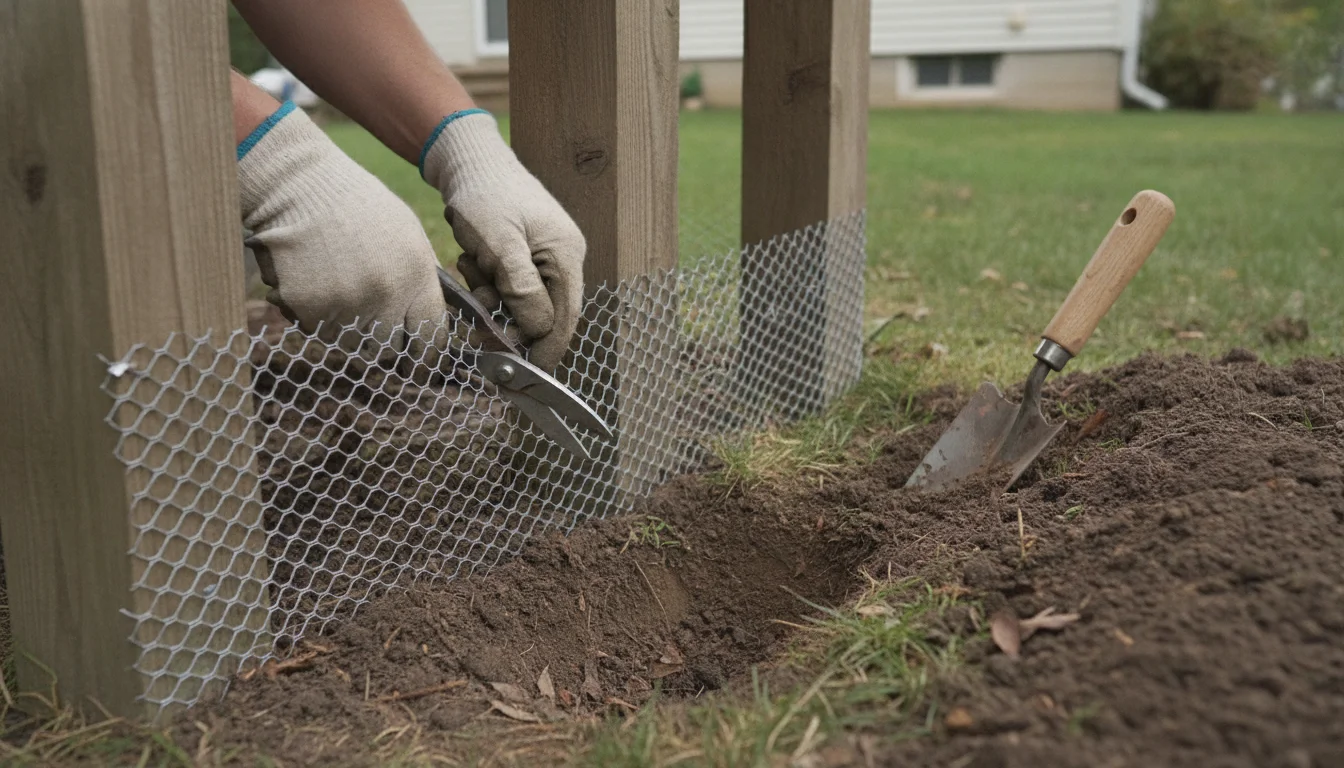
Once they’re out, permanent exclusion is what keeps them out. Screen the openings under decks, porches, and sheds with quarter-inch (6 mm) hardware cloth, not chicken wire. Bury the bottom edge at least 6 inches (15 cm) down and bend it 12 inches (30 cm) outward into an L, because raccoons dig and a flush barrier just gets undermined. Before you close anything, prove the den is empty: dust a light line of talcum powder across the entrance at dusk and read the tracks over several nights, or simply watch the opening at dusk to confirm the animal has left and not come back. Prints or sightings heading out but never back in means it’s clear. Skip flour for this – it can draw a hungry animal back to the hole. Seal a raccoon in and you’ve traded a wildlife problem for a very bad smell inside your structure.
9. Cap the chimney
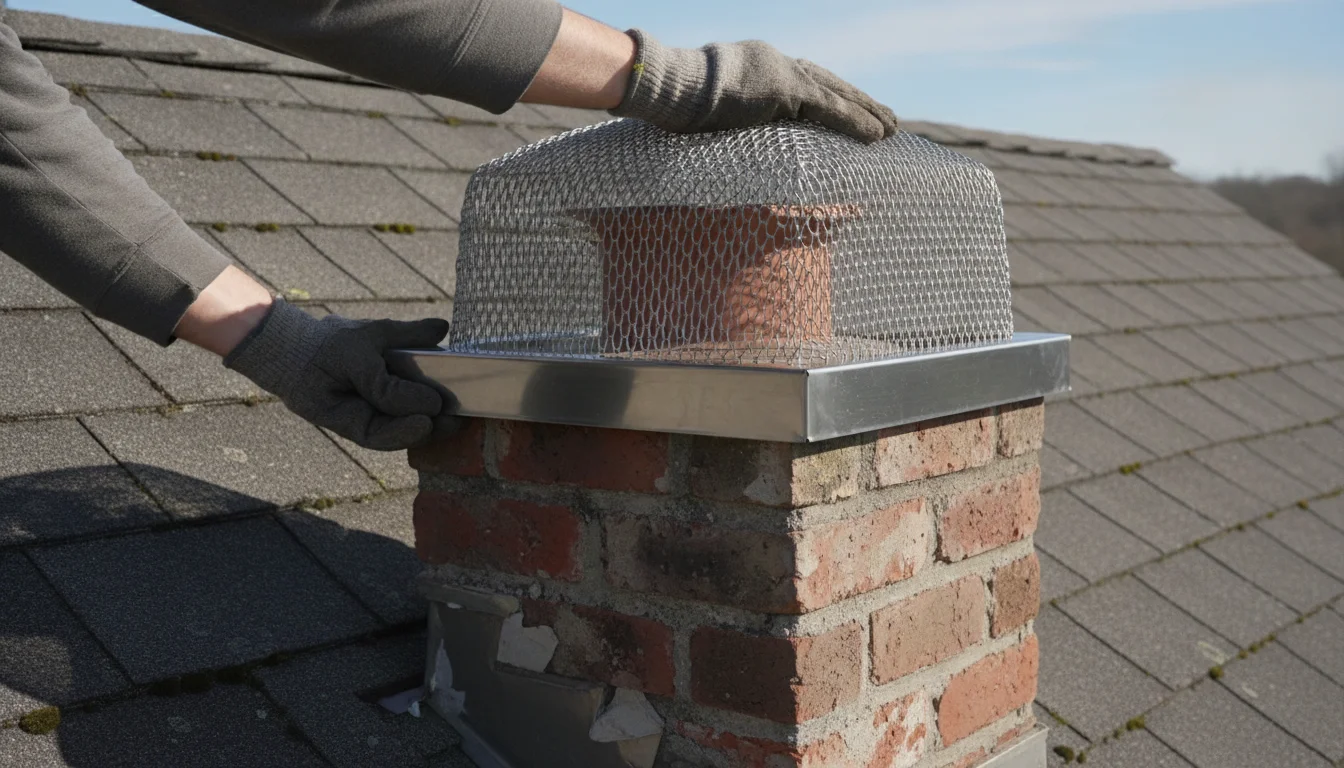
An open chimney is prime raccoon real estate, and a favorite nursery, since a mother can raise a litter on the smoke shelf until they’re weaned. A metal chimney cap with mesh screening is inexpensive at any hardware store and goes on quickly, and it keeps rain and birds out as a bonus. The one rule: confirm nothing is living in there before you cap it, kits included, using the same talcum-powder or watch-and-wait check. Keep the fireplace damper closed when it’s not in use, because a raccoon in the flue can climb straight down into the firebox.
10. Live-trap only if the law lets you
Trapping sounds like the obvious answer and it’s the most regulated step here. Raccoons are a rabies-vector species, so a lot of states ban relocating them outright, and some require a permit just to set a trap. Check your state wildlife agency before you buy a cage. If it’s allowed, use a sturdy live trap, bait it with wet food or sardines at the back, place it where they travel, and check it every few hours so nothing sits trapped in heat or cold. Two hard truths. In spring and early summer, when most litters arrive (usually April or May), a trapped female may have dependent young hidden nearby, so have a pro confirm she isn’t nursing before you remove her. And relocated raccoons mostly die. For most people this is a last resort, often better left to a licensed operator.
11. Call a licensed wildlife operator
If a raccoon is in your attic, chimney, or a wall, if there’s any sign of young, if there’s structural damage, or if two rounds of your own effort haven’t worked, hire a licensed nuisance wildlife control operator. They trap and remove legally, check for a litter, find the entry points you missed, and do the exclusion properly. Expect to pay a few hundred dollars for most jobs, more where there’s structural damage or a litter to handle. One homeowner on r/pestcontrol was quoted $1,049 for a company to set bait and traps, check them daily, and cover entry points with a one-year guarantee. For a den inside your house, that’s money well spent.
What attracts raccoons
Two things, in this order: food and shelter. The food is unsecured trash, pet bowls left out, birdseed, grubs in the lawn, fallen fruit, and standing water. The shelter is any dark, undisturbed cavity, uncapped chimneys and the space under decks and sheds being the classics, with attics a close third. Season sharpens both. In spring, females hunt hard for a safe den to raise kits, which is exactly when they move into chimneys and wall voids. In fall, they’re fattening up for winter and will push harder to reach an easy meal. Remove the food and close the cavities and you’ve removed both reasons they’re interested.
Keeping them from coming back
Everything that got rid of them is also what keeps them gone, so treat the attractant control as permanent, not a one-time push. Keep trash and feed locked down year-round. Walk your home’s exterior once a year, after storm season, and look for new gaps where wood has aged or shifted. Trim any tree limbs that overhang the roof, since that’s the raccoon’s ladder up to the eaves and chimney. And keep your chimney caps and vent screens in good repair, because a torn screen is an open door by the next spring.
When to call a professional
Call a licensed wildlife operator the moment a raccoon is inside a living space, attic, chimney, or wall, especially from spring through summer when a litter is likely. Structural damage, a den you can’t safely reach, or two failed DIY attempts are all signals to hand it over. Keep well clear of any raccoon that’s active in daylight, moving strangely, or looks sick, and call animal control instead of approaching it, because rabies and distemper are real risks. And whatever you do, check your local wildlife law before setting a trap. Getting that wrong can be illegal.
Frequently asked questions
What smell or repellent keeps raccoons away? None reliably. No repellent is registered for raccoons, and the ammonia, hot pepper, and predator-urine tricks fade within days. Removing the food and sealing the entry points is the only thing that actually sticks.
Will a raccoon leave on its own? Often, once the food is gone and you’ve made the den unpleasant with light and noise. The exception is a mother with young in spring and summer. Don’t count on her leaving on her own: evicting or sealing a den can separate her from dependent young, and a disturbed mother may leave some or all of them behind. Wait until there are no kits present, or have a qualified wildlife operator handle it.
Is it legal to trap and relocate a raccoon? It depends entirely on where you live, and in many states relocation is banned because raccoons carry rabies. Some states require a permit even to trap one on your own property. Check your state wildlife agency before you set anything.
When do raccoons have babies? Mostly in spring, with the young denning through summer. Don’t seal a den or run a one-way door in that window without first confirming there are no kits inside.
What attracts raccoons to my yard? Easy food and a place to sleep. Unsecured trash, pet food, birdseed, grubs, and fallen fruit bring them in; uncapped chimneys and the space under decks and sheds convince them to stay.