Table of Contents
You moved a stack of firewood or tipped up a flowerpot, and there it was: a glossy black spider with a red hourglass on its belly, sitting in a messy tangle of web. Deep breath. Black widows are genuinely venomous, but bites are uncommon, the spiders are not aggressive, and a healthy adult almost never ends up in serious trouble.
Getting rid of them is less dramatic than you’d think. It’s mostly about taking away the dark, undisturbed clutter they shelter in, doing it with gloves on, and skipping the peppermint sprays and plug-in gadgets that do nothing. Here’s the whole plan, plus a straight answer on what a bite means.
What causes this problem
Black widows want three things: a dark, dry, undisturbed cavity to hide in, a tangle of web anchored low to the ground, and a steady supply of insects to eat. Give them all three and they’ll settle in. Take one away and they move on.
That’s why they turn up where they do: woodpiles, rock piles, the underside of patio furniture, meter boxes, the corners of a garage or shed, crawl spaces, and cluttered storage. Outdoors, bright lights draw the insects they feed on, so a well-lit porch is really a dinner bell. They’re active at night and mostly dormant through winter, which is why a garage infestation feels like it vanishes in January and roars back every summer.
1. Identify them correctly
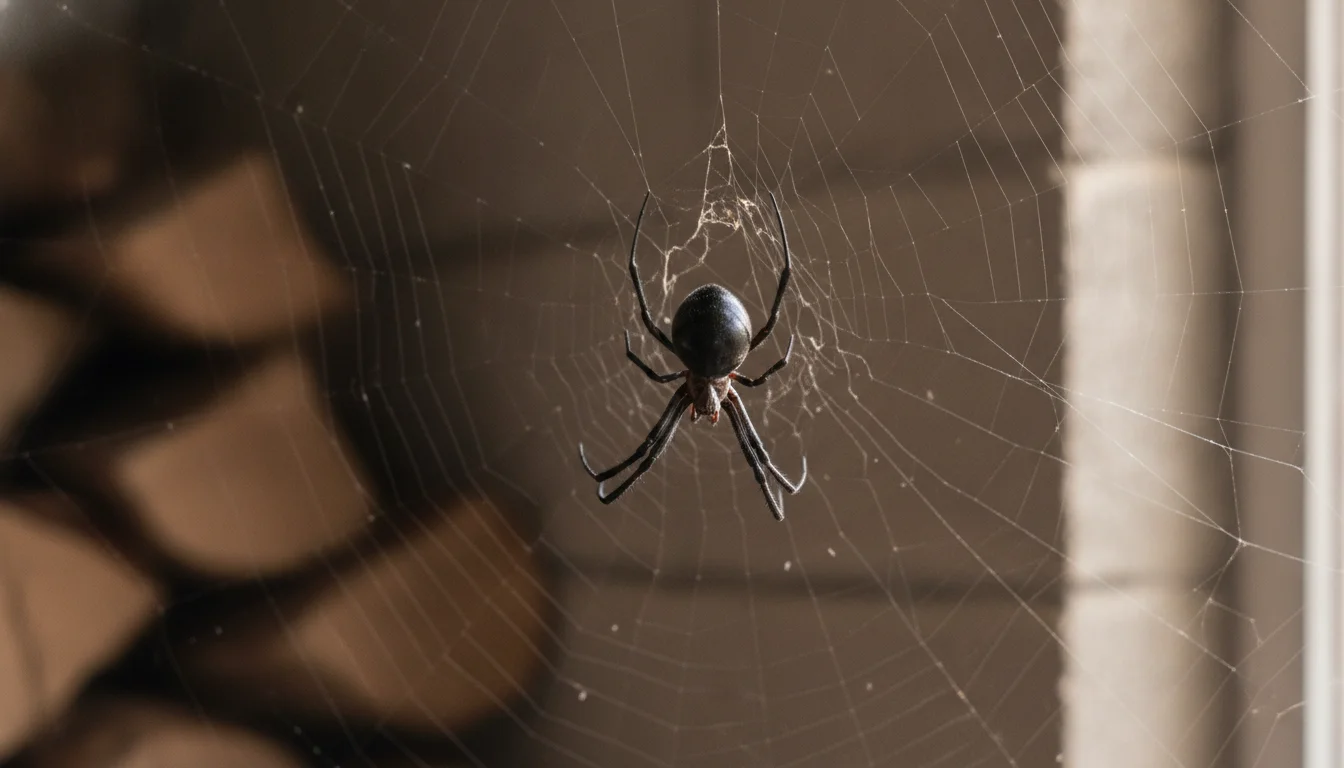
Before you panic, make sure it’s actually a black widow. The adult female (the one that matters) is glossy jet black with a rounded, almost bead-like abdomen and a red hourglass mark on the underside. Some widows show a row of red or orange spots on top instead, and immature females can look brown or tan. Males are much smaller, lighter, and not a medical concern.
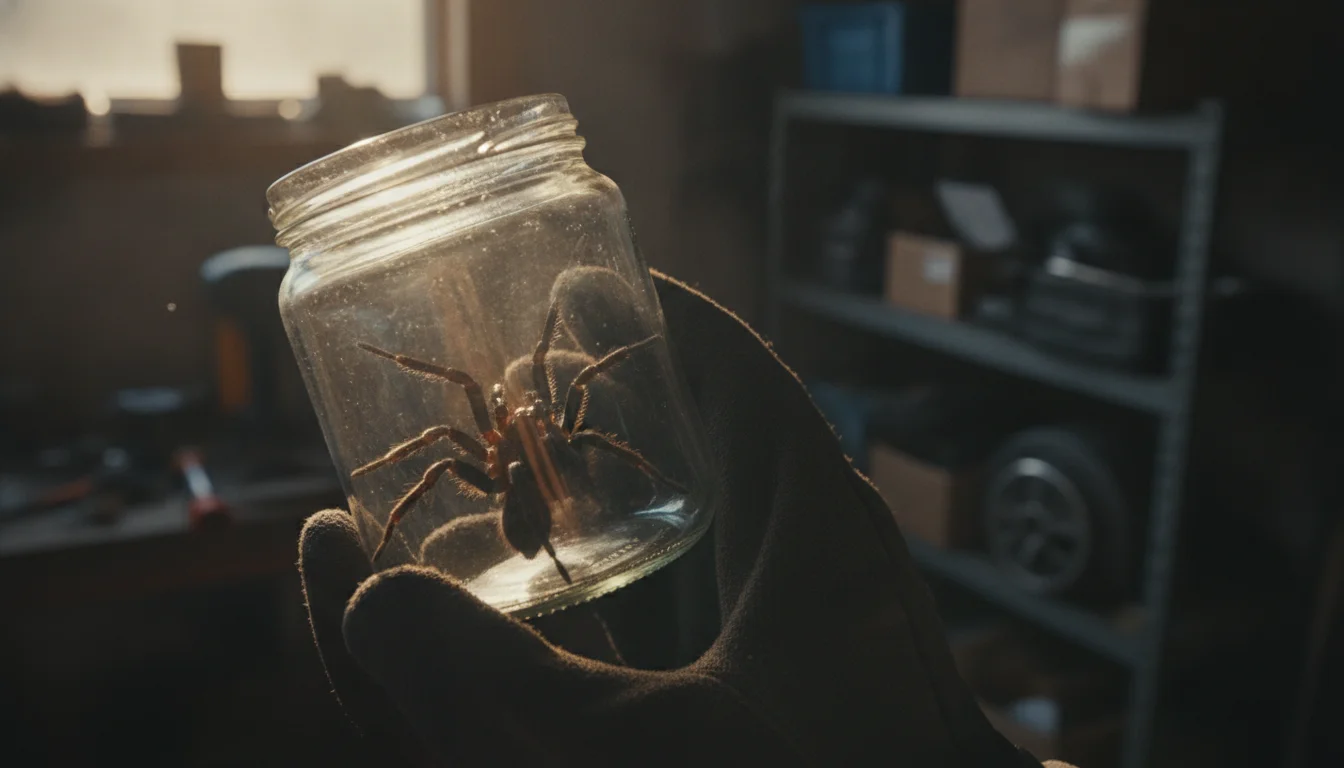
Plenty of harmless spiders get mistaken for widows. The false widow and the common cellar and house spiders have similar body shapes but no clean red hourglass. If you’re not sure, trap the spider under a jar and compare it against verified photos from your state extension service, or send them a picture. For the other medically significant US spider, see our brown recluse guide. Getting the ID right tells you whether to be careful or relax.
2. Wear protective clothing before you touch anything
This is the step people skip, and it’s the one that keeps you from getting bitten. Black widows aren’t out to get you. Almost every bite happens when the spider gets pressed against skin: you reach bare-handed into a woodpile, or pull on a boot one has crawled into. Adult females guarding an egg sac are the most likely to bite when cornered.
So before you clear any harborage, put on leather or heavy garden gloves, long sleeves, long pants, and closed shoes, and shake out gloves and shoes before you put them on. It’s thirty seconds that turns the whole job from risky to routine.
3. Clear yard debris and harborage
This is the heart of the job. Black widows live in the junk, not in your house. Woodpiles, rock and brick piles, stacked lumber, cardboard, old tires, tarps over equipment, and anything leaning against the wall all give them the dark, sheltered gaps they want.
Working in gloves, break up the piles. Haul off debris, store lumber and tools in a sealed shed instead of open stacks, pull everything back from the foundation, and rake up leaf litter next to the house. The goal is simple: no dark, undisturbed cavity within striking distance of the walls. Do this and you’ve removed most of the population without spraying a thing.
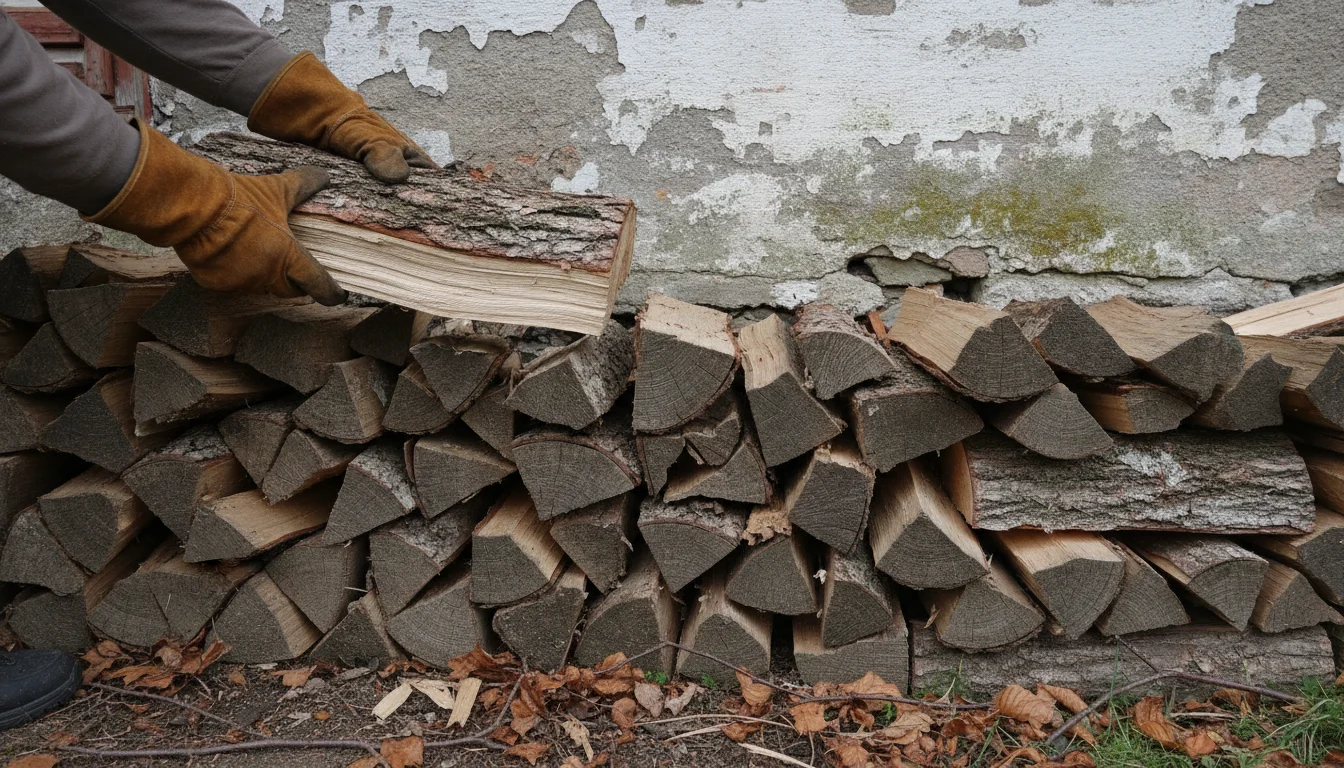
4. Relocate and elevate firewood
Firewood deserves its own step because it’s the classic black widow hideout, and because bringing it indoors is how they get inside. Stack it at least 20 ft (6 m) from the house and up off the ground on a metal rack, so air moves through it and the underside stops being prime real estate.
Only carry in what you’ll burn that day. A log from the pile can have a spider or an egg sac tucked under the bark, and a warm room wakes a dormant one up, so knock each piece against another outside before it comes in.
5. Trim vegetation away from the house
Tall grass, weeds, and shrubs pressed against the foundation are ground-level harborage, and dense plantings hold the damp, shaded cover widows and their prey like. People report a jump in sightings right after overgrown shrubs get hacked back, because the spiders living in them get pushed toward the house.
Keep a clear gap between foundation plantings and the wall, mow the strip along the foundation, and cut back anything touching the siding. A tidy band around the house is territory widows won’t set up in.
6. Declutter storage areas
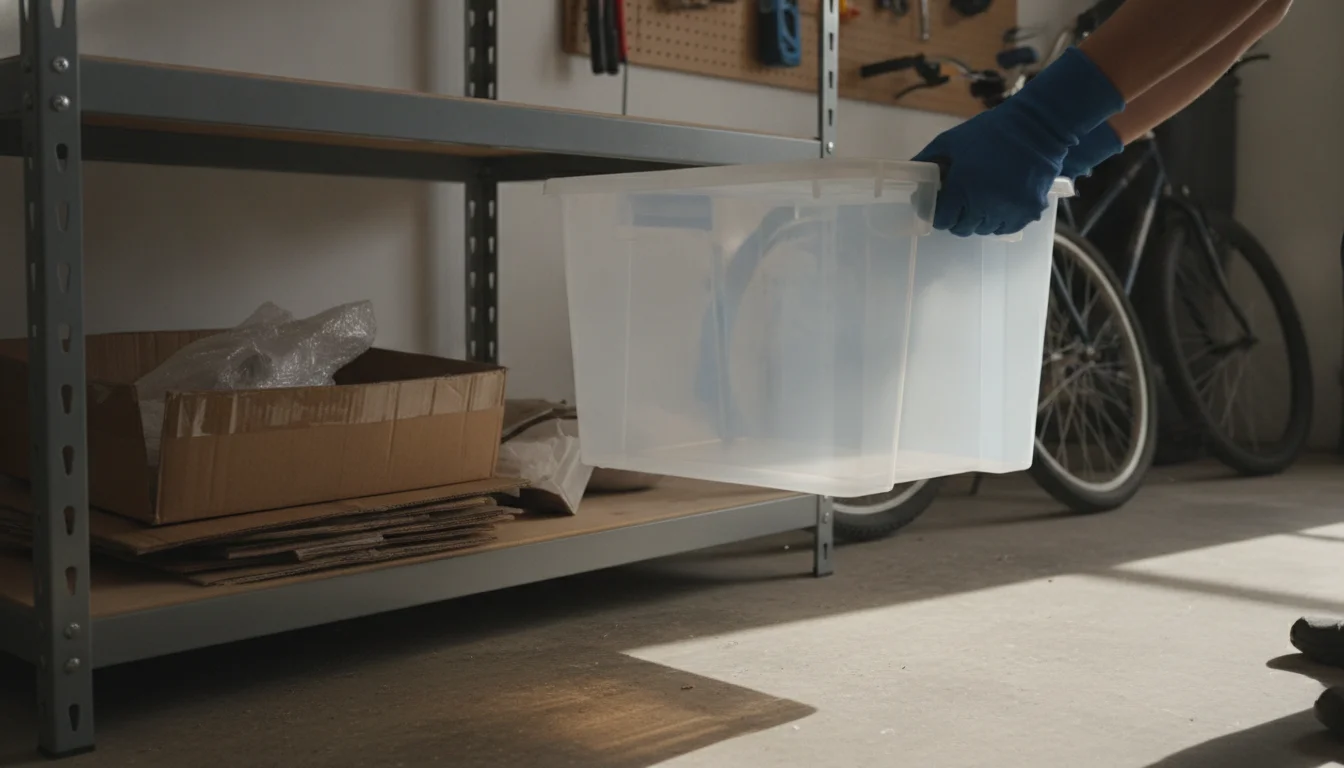
Indoors, garages, basements, sheds, and closets are where they move in, especially corners nobody touches for months. Swap cardboard boxes for sealed plastic bins (cardboard is both a hiding spot and, as it breaks down, food for the insects spiders eat). Get stored items up off the floor and pull them a few inches back from the walls so there’s nowhere dark and still to anchor a web.
The other half of this is disturbance. Regularly moving and cleaning stored items breaks up the quiet they depend on, and a storage area that gets handled every few weeks never becomes a colony.
7. Vacuum spiders, webs, and egg sacs
A vacuum is the fastest way to deal with what’s already there. The hose knocks down webs and pulls in the spiders, whose soft bodies usually don’t survive the trip. Work the corners, ceiling junctions, window frames, behind furniture, and the garage and basement.
Egg sacs are the priority. A single black widow sac is a papery tan ball that can hold a few hundred eggs, so leaving one is how a small problem becomes a big one. If you vacuum up a sac, take the bag or canister straight outside, seal it in plastic, and bin it.
8. Reduce outdoor lighting
Bright lights by the doors and windows pull in clouds of insects, and the spiders follow the food. You don’t have to live in the dark. Move fixtures away from entry points where you can, switch white bulbs for yellow bug lights or warm LEDs that draw fewer insects, and put security lighting on motion sensors. Fewer bugs at the door means fewer reasons for a widow to build there.
9. Seal cracks and entry points
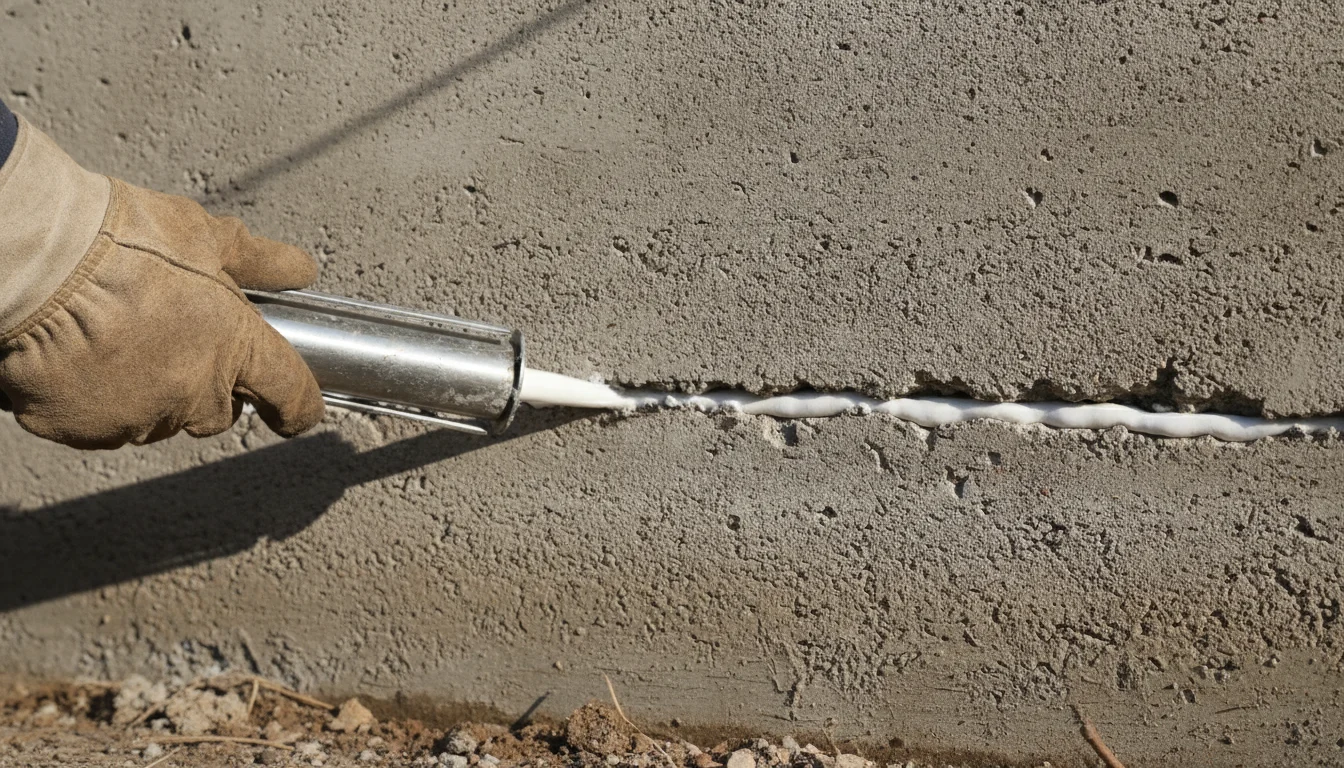
Exclusion keeps the outdoor population outdoors. Walk the foundation and seal cracks with concrete patch or caulk, close the gaps where pipes and utility lines pass through the wall, and make sure vents and window screens are intact. Back-fill anything too wide with steel wool or hardware cloth before you seal over it. Every gap you close is one fewer route in.
10. Install door sweeps and weatherstripping
Doors are the gap people forget. Stand inside at night with the lights on, and if you can see daylight under an exterior door, a spider can walk under it. Fit rubber-blade sweeps on every exterior door, checking they make full contact across the whole threshold, and add foam weatherstripping where doors and windows don’t seat tightly. Pay special attention to the door between the garage and the house: the garage is prime widow habitat, and that interior door is often the leakiest one you own.
11. Use sticky traps to monitor
Glue boards won’t clear an infestation, but they tell you where the problem is and catch strays along the way. Set them flat against walls, in closet corners, under furniture, and along garage and basement baseboards, because spiders travel the edges, not the open floor, and keep them where kids and pets can’t reach. Wherever you catch the most is where to focus your sealing and cleanup.
12. Apply a targeted perimeter treatment, last
Save the insecticide for last, and keep your expectations honest. Sprays won’t give you long-term control on their own. Widows re-infest treated ground, a spray mostly works only if you hit the spider directly, and egg sacs shrug it off. People who spray their garage every year will tell you it comes back every year.
If you still want the backup after doing the habitat work, pick a residual product (bifenthrin, lambda-cyhalothrin, or permethrin) whose label lists spiders, and apply it only where the label allows: a band along the foundation, around doors and windows, and the corners of storage areas, concentrated where you cleared harborage. Wear gloves, follow the label exactly, and keep kids and pets off treated surfaces until dry. Spray without the cleanup and you’ve just killed the current tenants; new ones move into the woodpile you didn’t shift.
Prevention
Keeping widows out is the same work as getting them out, done on a schedule. Keep the band around your foundation clear and mown, firewood off the ground and away from the house, and storage handled often enough that nothing sits undisturbed. Store off-season gear in sealed bins, keep screens and door sweeps in good repair, and knock down any new tangle webs in the garage or eaves before they establish. A little upkeep beats an annual infestation.
When to call a professional
Call a pest control company if you’re finding widows regularly across multiple rooms or outbuildings, turning up several egg sacs, or dealing with populations in wall voids you can’t reach. Pros have the restricted dusts and can treat structural spaces a homeowner can’t. And if someone’s been bitten, that’s the priority: deal with the person first (see below), then the spider.
Frequently asked questions
How dangerous is a black widow bite, really? The venom is a neurotoxin, and a bite often brings immediate pain followed by muscle cramps and rigidity (classically in the abdomen and back), sweating, and nausea, usually within an hour. It’s unpleasant, but rarely fatal in a healthy adult, and most people recover. Young children, older adults, and seriously ill people are at higher risk and should be seen quickly.
What do I do if I get bitten? Don’t tough it out. Wash the bite with soap and water, and call Poison Control at 1-800-222-1222 for guidance, or 911 if symptoms are severe. Go to an emergency room if the pain isn’t controlled, if you have trouble breathing or swallowing, or if the bitten person is in a higher-risk group. If you can kill the spider safely, bring it along so the team can confirm the ID. This is a page about spiders, not a substitute for medical advice: when in doubt, make the call.
Do peppermint oil or dryer sheets keep black widows away? No. There’s no good evidence that peppermint oil, dryer sheets, or plug-in ultrasonic gadgets get rid of black widows. Colorado State University is blunt that repellents and ultrasonic devices are so ineffective that selling them as spider control is considered fraudulent, and the one lab study people cite tested other spider species, not widows. Spend the effort on clutter and sealing instead.
Will spraying get rid of them for good? On its own, no. Insecticide kills the spiders it touches, but widows re-colonize treated areas and egg sacs survive, so a spray without habitat removal is a yearly ritual, not a fix. Clear the harborage first; treat second, if at all.
Should I kill every spider I see? No need. Predators like wolf spiders and mud dauber wasps actually hunt black widows and their young, so if a spider isn’t a widow and isn’t in your living space, leaving it be often works in your favor.