Table of Contents
Spraying air freshener at cigarette smoke smell does nothing, because the smell mostly comes off the surfaces, not the loose air you spray. It lives in an oily film of tar and nicotine (the stuff people call thirdhand smoke) stuck to your walls, your ceiling, your curtains, and everything soft in the room, and that film keeps releasing the smell back into the air. Candles and sprays cover it for an hour, then the stink comes back, because the source never moved.
Getting rid of it for real means removing that residue where it settled, in the right order: top of the room down, hard surfaces before soft ones, sealant only when scrubbing has failed. No cabinet of gadgets required, just the right things cleaned in the right sequence.
What causes cigarette smoke smell
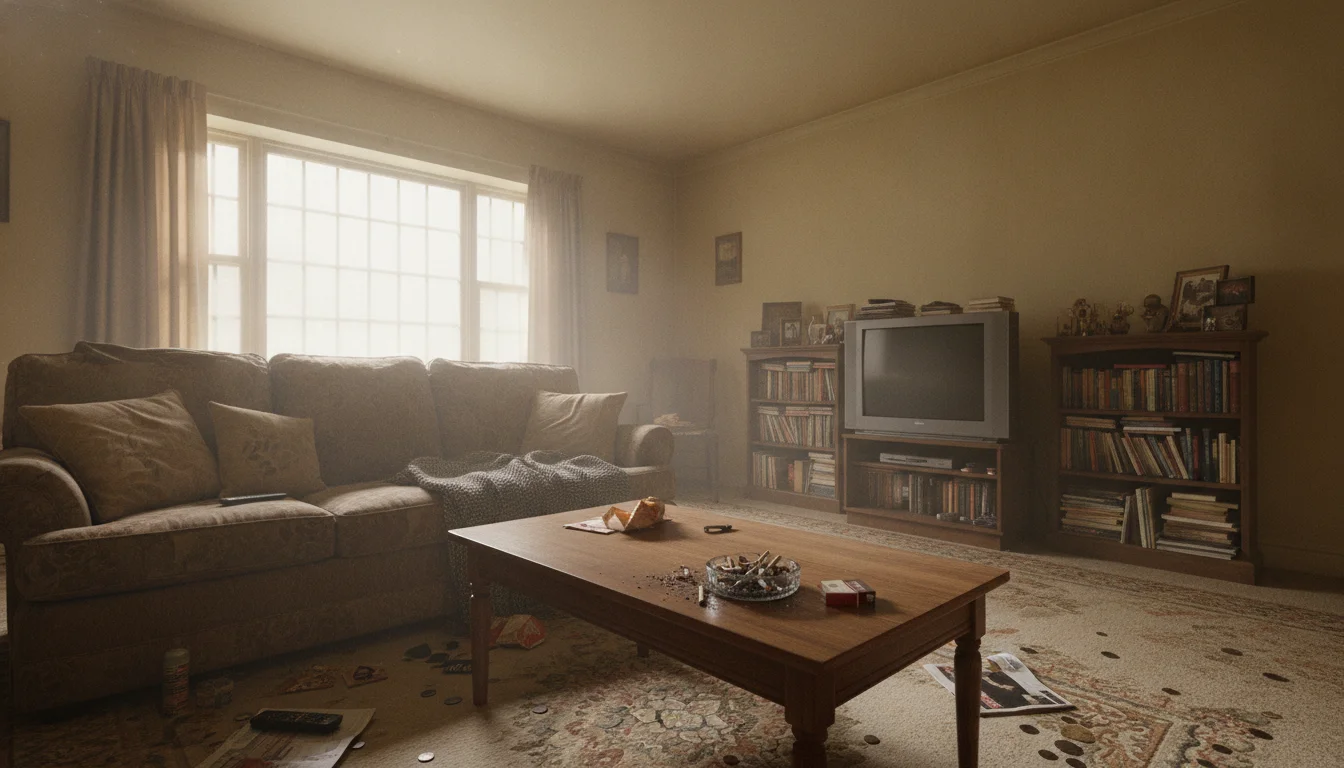
As a cigarette burns, it throws out smoke in microscopic drops of oil and tar. The oil is why they cling so hard: they coat the walls and (worst of all) the ceiling, soak into carpet and upholstery, settle inside cabinets, and get pulled into the HVAC filter.
That film keeps off-gassing for weeks, months, even years, which is why a room smoked in long-term still reeks after one cleaning. It is also why masking fails. Remove the residue and the smell has nothing to come from.
1. Open the windows and move the air
Start here, but know its limits. Open every window and put a box fan in the biggest one with the blades facing out, so it pulls stale air out of the room instead of just stirring it around. Keep it going for a full day if you can. Set anything movable (books, loose cushions, a smoke-soaked armchair) in the sun for a few hours, since UV breaks down some of the odor compounds; keep delicate or dyed fabrics in the shade so they don’t fade.
Ventilation dilutes the smell. It doesn’t remove the residue. It’s the warm-up, not the job.
2. Wash the walls and ceilings
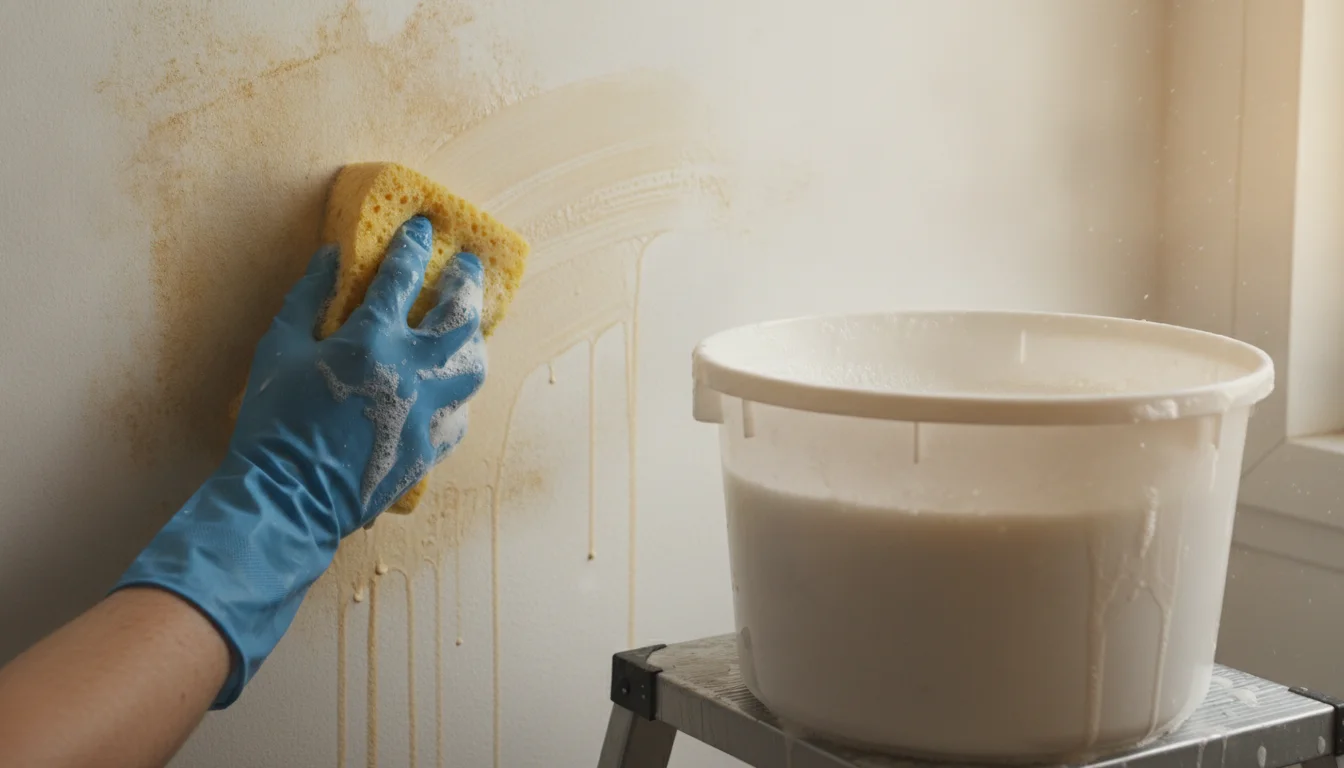
This is the method that does the heavy lifting, and the one most people skip half of. The residue is a greasy film, and it sits on every hard surface, the ceiling most of all.
Work top down: ceiling first, then walls, then trim and doors, hard floors last, so dirty runoff never drips onto something you already cleaned. A grease-cutting solution does what plain water can’t: a few drops of dish soap in a bucket of warm water handles most painted surfaces. For heavy build-up, TSP works, but keep it to about 2 tablespoons per gallon (3.8 L), because more than that dulls or strips paint. Honestly, diluted soapy water clears most of it and is gentler on the room. Change the water the second it turns gray, or you’re just smearing the film around. Don’t skip the hidden spots either: insides of cabinets and drawers, the tops of door frames, light fixtures, and switch plates all hold residue.
One safety rule, no exceptions: never mix bleach with an ammonia-based cleaner, or with vinegar or any acid. The combination gives off chlorine or chloramine gas that burns your airways. Use one product at a time, rinse between them, keep the window open, and test any cleaner on a hidden patch first.
3. Launder the removable fabrics
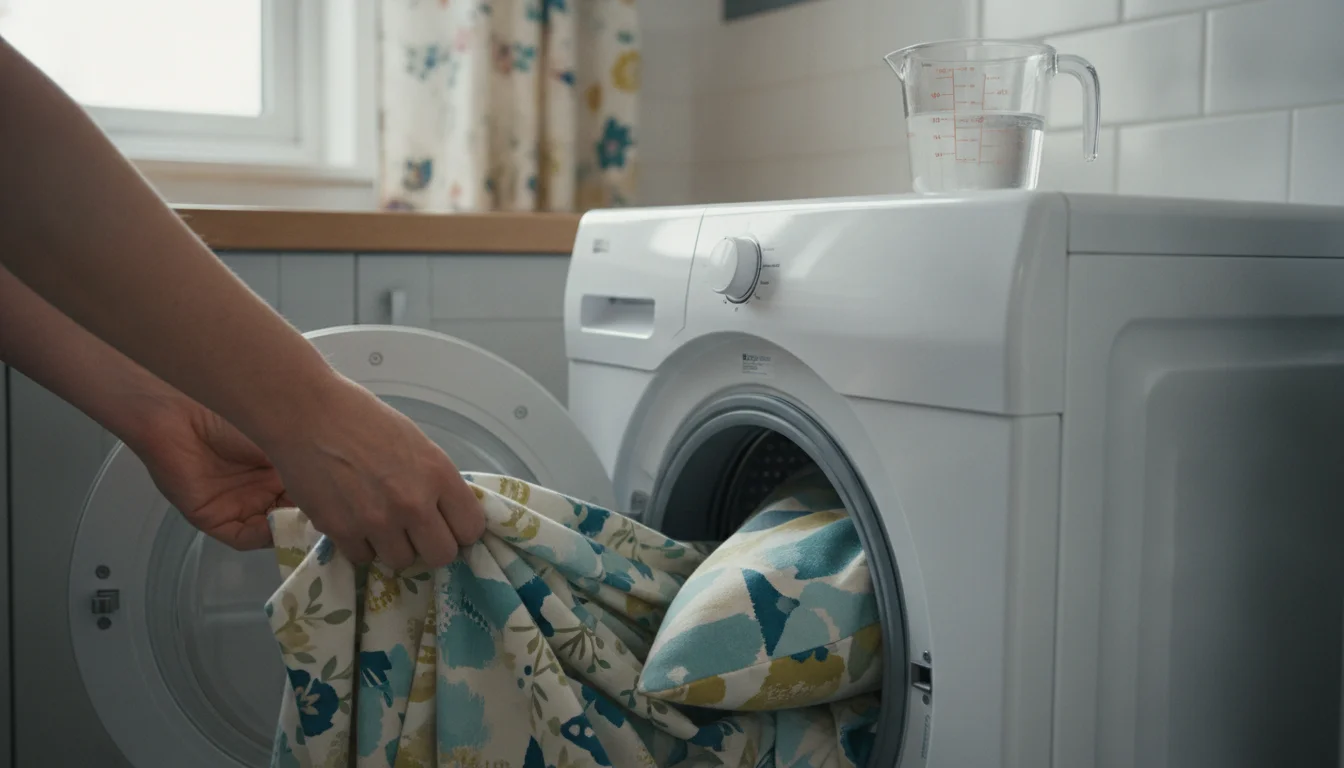
Soft furnishings soak up smoke like sponges. Strip the room of everything washable in one go: curtains, cushion and pillow covers, bedding, throws, and removable sofa or chair covers.
Add half a cup of white vinegar to the wash along with your normal detergent. Smoke residue and detergent both sit on the alkaline side, and the mild acid in vinegar is what actually neutralizes the smell rather than piling scent on top of it. Wash as warm as the care label allows. Then air-dry and smell the item before it goes anywhere near the dryer, because dryer heat sets any leftover odor into the fibers for good.
Clothes are their own job with their own routine. We cover those in getting the smoke smell out of clothes.
4. Deodorize carpet and upholstery with baking soda
Carpet and upholstery trap odor deep in the fibers, where a vacuum alone can’t reach. Baking soda pulls it out instead of covering it.
Sprinkle a light, even dusting over the carpet and let it sit at least fifteen minutes, or overnight for a bad case, then vacuum thoroughly. For a chair or sofa that shouldn’t get wet, rub the powder into the fabric, leave it about 30 minutes, and vacuum it dry. Cheap, safe, and it works better than any plug-in. The same trick clears a lot of general mustiness in a house too.
5. Set out activated charcoal
Once the surfaces are clean, activated charcoal mops up what still hangs in the air, trapping odor molecules without adding any scent of its own. Put bowls or sachets where the smell is strongest (usually wherever the ashtrays sat) and leave them for days. Recharge the charcoal about once a month in direct sun. Don’t set loose charcoal straight on fabric, though, it can stain. Bowls of baking soda or white vinegar overnight are a cheaper stand-in.
6. Run an air purifier with a carbon filter
A purifier won’t fix a smoky room on its own, but it helps hold the line after you’ve cleaned. The key detail: it needs an activated-carbon filter, not just HEPA. HEPA catches particles, and cigarette odor is largely gaseous, so carbon is the part that grabs the smell. Run it continuously in the room you use most.
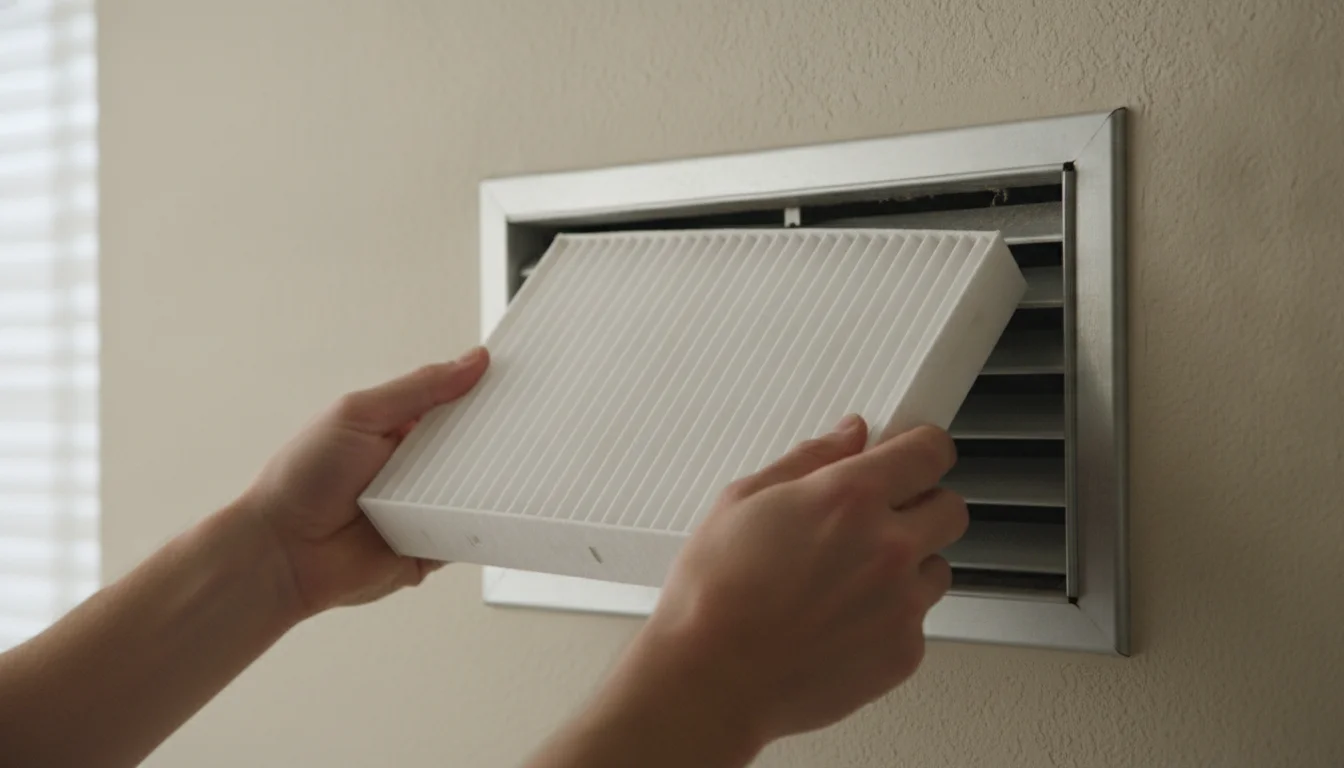
While you’re at it, change your HVAC filter. The system pulled smoke through it for as long as anyone smoked in the house. Swap it quarterly at minimum, more often when you’re actively fighting an odor.
7. Seal the surfaces with a stain-blocking primer
Last resort, for the heavy, years-deep cases where scrubbing gets you most of the way but a stubborn smell keeps bleeding back through. After the surface is clean and dry, a shellac-based stain-blocking primer forms a vapor barrier that locks the remaining residue in before you repaint.
Apply two coats, letting each dry fully (about 30 to 45 minutes), and cover the whole surface, not just the stained patches, because odor spreads sideways through porous material. Painters treat a heavily smoked home like fire damage: the smoke soaks into the wood framing, and only a sealing primer stops it off-gassing through new paint. The fumes are strong and flammable, so ventilate hard and keep it away from open flames. It’s the same sealing step that finally kills the worst of cat urine smell and a lingering burnt smell in a house.
Prevention
Nothing beats not smoking indoors. If someone still smokes, move it outside, full stop. If it has to be inside, keep it to one room with a window fan running, wash the soft furnishings in there regularly, and change the HVAC filter more often than you think you need to. Residue builds up the whole time smoke is in the air, so the longer you let it accumulate, the harder every method above becomes.
When to call a professional
Call someone in when the smell has soaked in over years, when it keeps coming back after a full cleaning, or when it’s a rental (check your lease first, the landlord often owes the cleanup). Pros bring tools you shouldn’t: ozone or thermal fogging, HVAC duct cleaning, deep sealing, and sometimes drywall or carpet replacement.
A word on ozone generators, since every forum pushes them: they work, but ozone oxidizes materials (wire insulation, adhesives, flooring) and is a real hazard to breathe. That makes it a job for someone who knows the exposure limits and clears the space first, not a weekend DIY.
Frequently asked questions
How long does it take for cigarette smoke smell to go away? A light, recent smell can clear in a few days of airing and cleaning. A home smoked in for years is a slog: people routinely spend months on it, and the smell can flare back up after a cold snap or a closed-up vacation. There is no instant fix.
What actually neutralizes the smell of cigarette smoke? Removing the residue does, by washing the surfaces and fabrics. Baking soda, white vinegar, and activated charcoal then neutralize or absorb what’s left. Air fresheners and candles do none of this.
Do I have to repaint or seal the walls? Usually no. Washing clears most cases. Sealing with a stain-blocking primer is the last resort for heavy, long-term saturation that scrubbing won’t fully shift.
What’s the best deodorizer for cigarette smoke? Baking soda for carpet, upholstery, and other fabrics; activated charcoal for the air. Both absorb the smell instead of covering it, and both are cheap.