Table of Contents
Learning how to get rid of body odor smell from pillows starts with bad news about the case: you changed it yesterday, and the pillow still smells like a gym bag. Sweat, scalp oil and drool go straight through it and settle in the fill.
Most pillows can be saved, but the wrong fix wrecks them. Enzyme detergent is the best thing for polyester and the wrong thing for down. A washing machine tears solid foam apart. Check the sewn-in label, find your fill, then follow your route.
| Fill | Machine wash? | Your route |
|---|---|---|
| Polyester or fiberfill | Yes | Methods 1, 2, 6 |
| Down or feather | If the label allows | Methods 3, 6 |
| Solid memory foam | No | Methods 4, 5 |
| Latex | No | Methods 4, 5, and keep it out of the sun |
| Shredded foam | Only if the maker says so | Label first, then 4 or 2 |
1. Pretreat the head patch with an enzyme stain remover
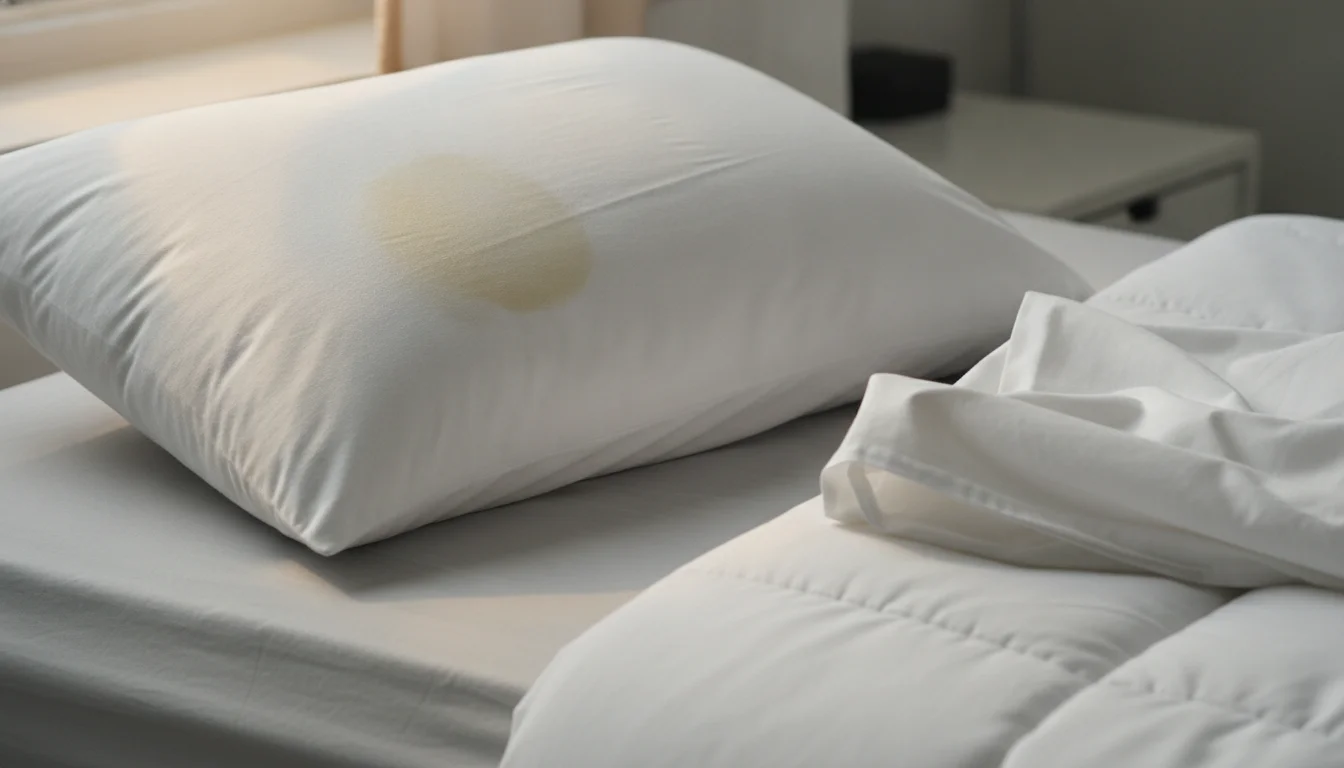
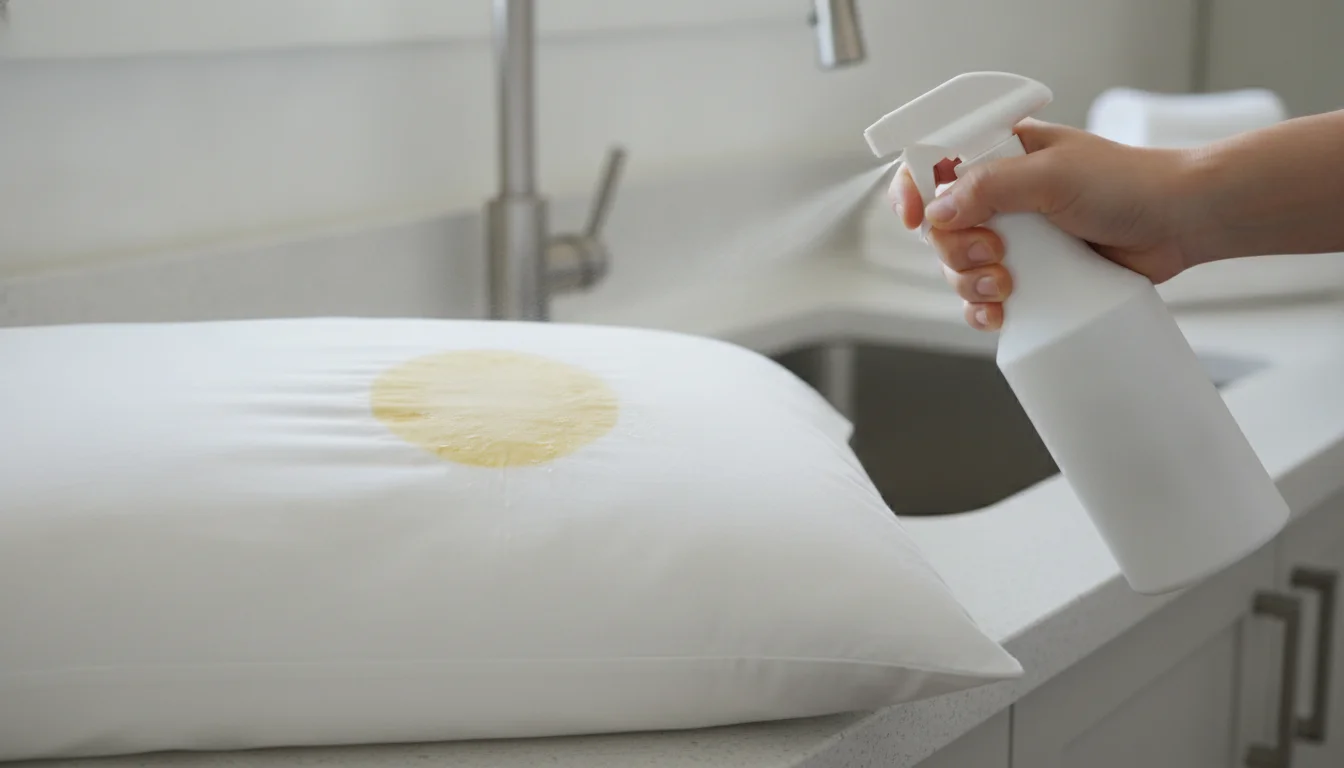
This one’s for polyester and fiberfill. The yellow patch in the middle of the pillow is where the smell is strongest, so start there. Spray or rub an enzyme stain remover on until the patch is wet through, and give it the time on the label. Keep it damp, because enzymes stop working when they dry.
Old patch? After the pretreat, soak the pillow in a clean tub of cool water for about an hour. Then wash it.
2. Wash polyester in enzyme detergent
Here’s what the baking soda crowd skips. Skin oil binds to fibers, and ordinary detergent doesn’t reliably shift it. Enzymes break it down so it can rinse away. Look for “enzymatic” or “bio” on the label, or add an enzyme booster to your usual detergent.
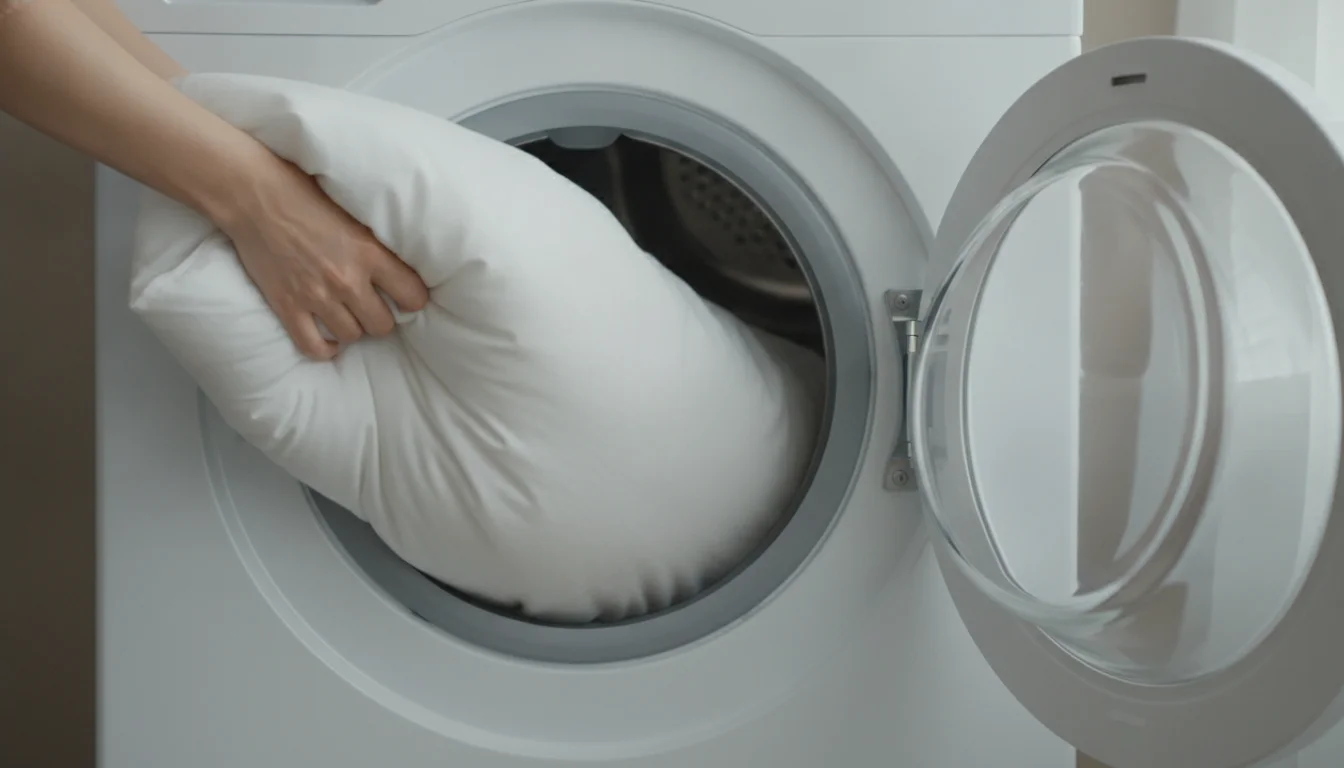
Wash two pillows at a time so the load stays balanced, on a gentle cycle in warm water, with an extra rinse. Keep chlorine bleach out of it, since bleach kills the enzymes. One r/CleaningTips commenter tried baking soda, vinegar, vodka and 3 weeks in the freezer on a smelly jacket, and only a wash worked.
3. Wash down in an enzyme-free detergent
Down and feathers are protein, and enzyme detergents are built to break protein down. That’s makers’ advice rather than lab work, but don’t gamble a good pillow on it.
Use 1 to 2 tablespoons of a liquid detergent made for down, with no enzymes, optical brighteners or bleach. Run a gentle cycle in warm water, at or below 104°F (40°C), with an extra rinse. A front-loader is best, since an agitator can damage the filling. Stitch up any hole or loose seam first, and skip the fabric softener, which coats the feathers and traps smells.
4. Blot-clean memory foam and latex
Solid foam never goes in the machine. Agitation, water and heat break it apart. Take the cover off and wash that on its own.
Mix a little mild detergent into lukewarm water. Dip a clean cloth, wring it out, and blot from the edges of the patch inward. Don’t scrub, because pressure breaks latex down. Dab off the soap with a fresh damp cloth, lay the pillow flat on a dry towel, and leave it at least 24 hours in moving air, flipping it now and then.
Ignore the advice to bake foam in the sun for hours. The Sleep Foundation says to dry memory foam away from direct heat and sunlight, and UV breaks latex down. A fan is fine.
Blotting only reaches the surface. A smell deep in solid foam may stay there, which is what method 8 is for.
5. Baking soda and a vacuum, as a stopgap
The top tip on most pages about this, and it takes the edge off. It doesn’t remove the oil.
Sprinkle baking soda over one side, leave it for 1 hour, and vacuum it off with the upholstery brush. Repeat on the other side. Do this after blotted foam is fully dry, not instead of blotting.
6. Dry it through to the center
A pillow can feel dry outside and stay wet in the middle, and a wet middle grows a musty smell that’s worse than the one you started with. A damp pillow can start molding within 24 to 48 hours.
Tumble it on low heat with two or three dryer balls, in the biggest dryer you can get. Down can take 2 to 3 hours, or two to three full cycles. Between cycles, break up clumps by hand, then push your fingers firmly into the center. A cool or damp patch means it goes back in. Don’t sleep on it until the middle feels the same as the outside.
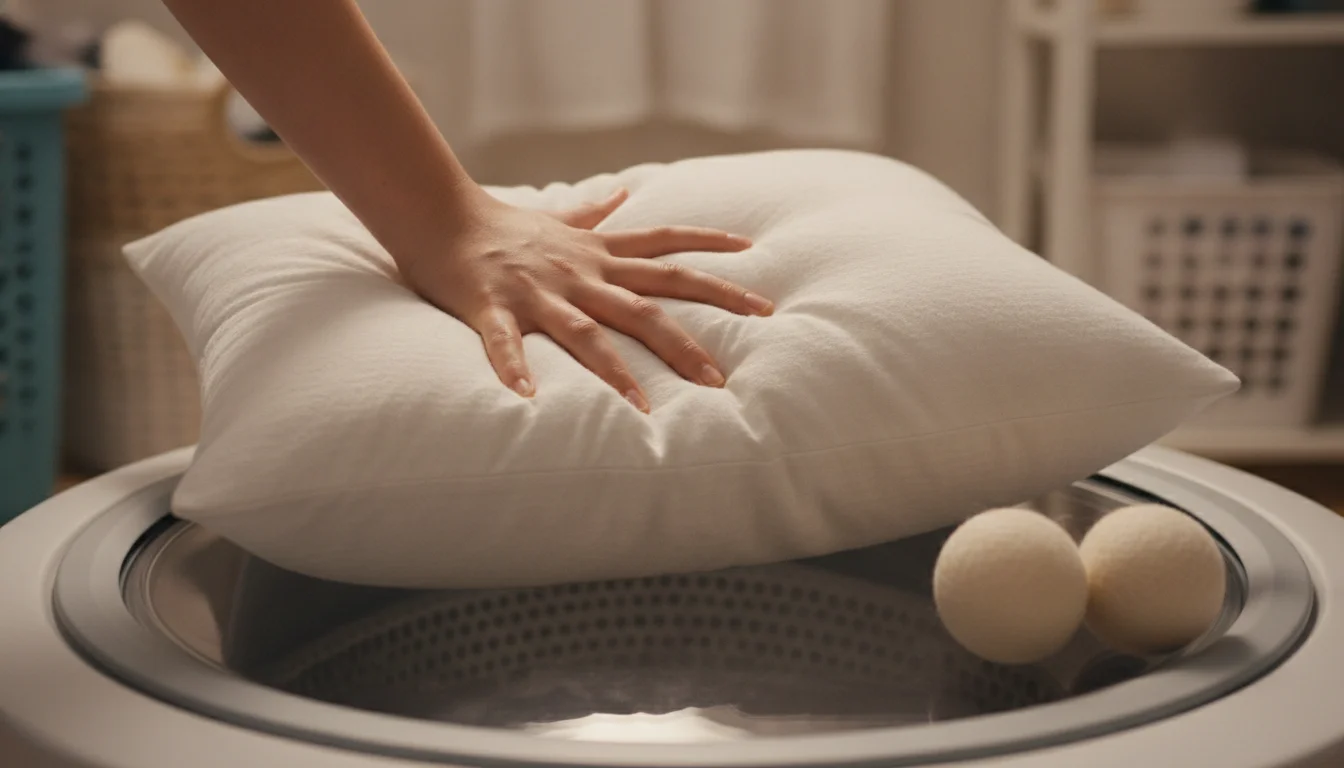
7. Rewash with less detergent and an extra rinse
Pillow smells again after washing? There are two usual culprits, and the finger test tells them apart. A cool, dense center with a musty smell is damp, so go back to method 6. A fully dry pillow that still smells off, or feels flat or matted, is probably holding detergent. Fill is very absorbent, and a normal laundry dose is too much.
Run it through the same gentle cycle with a small measured dose and an extra rinse, then dry it completely.
8. Bin it when it fails the last test
If the pillow has been properly cleaned, fully dried and rewashed once, and it still smells, the fill is the source. Bin a pillow with visible mold too.
Then do the fold test. CHOICE says to fold it in half on a flat surface, hold for 30 seconds to a minute, and let go. If it doesn’t spring back, replace it, because washing won’t change that. CHOICE’s rough lifespans are 6 months to 2 years for polyester, and 5 to 10 years or more for foam, latex, feather and down.
What causes body odor smell in pillows
Your head sits on the same spot for hours every night, and sweat, skin oil, drool and hair products soak through the case. Bacteria feed on that build-up, and what they leave behind is the smell. That’s why it’s strongest in the middle of the pillow, and why it needs cleaning rather than perfume.
A musty smell is different. That’s moisture, usually from damp hair or incomplete drying, and it needs drying more than washing.
How to get rid of body odor smell from pillows and prevent it coming back
Put a washable protector under the case, so sweat and oil reach something you can launder. Wash cases weekly. Don’t go to bed with wet hair. And clean the pillow itself about twice a year. That’s the Sleep Foundation’s number for memory foam, and down makers say once or twice, since frequent washing wears out the filling.
FAQ
How do I remove odor from pillows without washing them?
Air the pillow somewhere dry and well ventilated, then use baking soda and a vacuum (method 5). It reduces a mild smell. For a strong one, you need to clean the fill.
Why does my pillow smell even with a clean pillowcase?
Because the oil and sweat went through the case into the fill. Only cleaning or replacing the pillow fixes that.
Why does my pillow still smell after washing it?
Either the center is still damp or detergent is left in the fill. Use the finger test in method 7.
How often should pillows be washed?
Guidance runs from twice a year to four times a year.