Table of Contents
Working out how to get rid of scalp odor usually starts the same way: you wash your hair, and it still smells. One Reddit poster found out when her boyfriend told her, seriously, that her head smelled bad, and she shampoos almost every day. That rarely means you’re dirty. It means the shampoo isn’t reaching the skin, something you put on your head keeps putting the smell back, or your hair stays damp too long.
Most cases come down to sweat, oil, dead skin and product sitting on the scalp, and a routine fixes them. The steps run in order: the wash, the shampoos, then the habits nobody mentions (the gym towel, the damp pillow, the daily cap). If none of it works, the last section tells you when to see someone.
What causes scalp odor
Cleveland Clinic names the most common cause as a buildup of skin cells, sweat and sebum (the scalp’s own oil). Bacteria and yeast live on every scalp, and when that mix sits long enough, it smells. What feeds it:
- Product residue, dry shampoo above all, trapping sweat against the skin.
- Sweat from workouts, hot weather and hats. You can have it without body odor anywhere else.
- Damp hair under a pillow or a cap.
- Dirty fabric: pillowcases, towels, hat bands, brushes.
- Food, smoke and hormones: garlic, onions and alcohol, cigarette smoke, and changes around menopause, pregnancy or periods.
Flaking and itching often come with it. Step 3 deals with that.
1. Wash the scalp, not the lengths
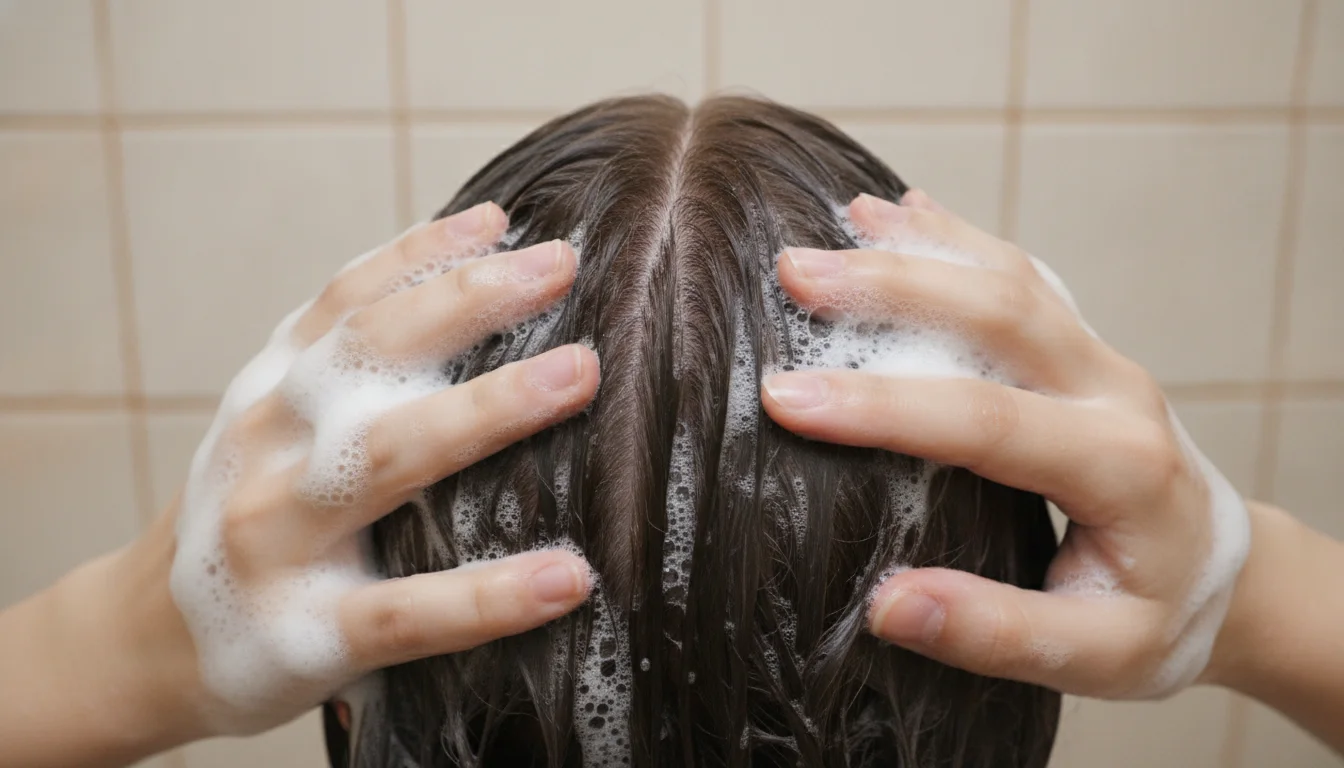
Shampoo is for the skin on your head. Most people lather the hair they can see and barely touch the crown, the nape and behind the ears, which is exactly where the oil sits.
Put a small amount of shampoo in your palm and work it into the scalp in sections with your fingertips (not your nails). The suds that run down clean the lengths on their own. Use lukewarm water and don’t scrub hard.
Then rinse longer than feels necessary. Residue left on the scalp traps bacteria and sweat.
How often depends on your scalp. Columbia University’s health service suggests daily or every other day for oily hair; if your scalp gets tight or flaky, wash less. But washing more often won’t fix a bad technique. The Reddit poster already washed daily.
2. Use a clarifying shampoo once in a while
Regular shampoo doesn’t always cut through layers of oil, silicone and dry shampoo. A clarifying shampoo is made to strip that buildup, and Cleveland Clinic suggests one first. It’s for now and then, not every wash: follow the label, and use it less if your scalp turns dry or tight.
Know its limits. One blogger with a musty, wet-dog smell used a clarifying shampoo and blow-dried her hair for a few weeks. No change. If buildup isn’t the problem, move on to step 3.
3. Let a medicated shampoo actually work
This is the step that fixed it for that blogger. Over-the-counter medicated shampoos (the ones sold for dandruff, flaking and itching) target the yeast and dead skin that feed the smell. Pick one by the active ingredient on the label: zinc pyrithione, selenium sulfide, ketoconazole (an antifungal), coal tar, or salicylic acid (which helps the scalp shed dead skin).
The trick is time. A medicated shampoo isn’t a 30-second rinse. Lather it into the scalp and leave it on for as long as the label says before you rinse. Use it as often as the label says, too, with your regular shampoo on the days between if the directions allow.
She used a coal tar shampoo, left it on for the couple of minutes the directions gave, and conditioned her lengths only. After one wash, her husband, who’d noticed the smell before, couldn’t find it. She used it exclusively for three to five washes and kept using it after that.
If one ingredient does nothing after you’ve used it as directed, try a different one. If two or three don’t help, read the last section.
4. Take a break from styling products
Gel, wax, pomade, hair oil, leave-in conditioner and dry shampoo all end up on the scalp, and each layer that doesn’t wash out holds sweat and oil against the skin. Cleveland Clinic suggests cutting products out for a time so the scalp can recover.
So stop. Wash with shampoo only, keep conditioner on the ends, and skip dry shampoo entirely for a while. If the smell improves, bring products back one at a time to find the culprit.
Dry shampoo makes hair look and smell fresher for a while, but it takes nothing off the scalp. The oil, the sweat and now the powder all stay until you wash.
5. Wash your hair after you sweat
Your scalp has plenty of sweat glands, and sweat smells once it sits with oil and bacteria, the same way armpit odor starts. After a workout, a hot day or hours in a helmet, wash your hair the same day. If you can’t shampoo, rinse with water and dry the scalp.
And bring your own towel. On a men’s grooming forum, a gym regular using the gym’s towel service said his scalp smelled “like mildew and corn chips” by evening, even after a shower. The first practical suggestion he got: take a towel from home and see what changes.
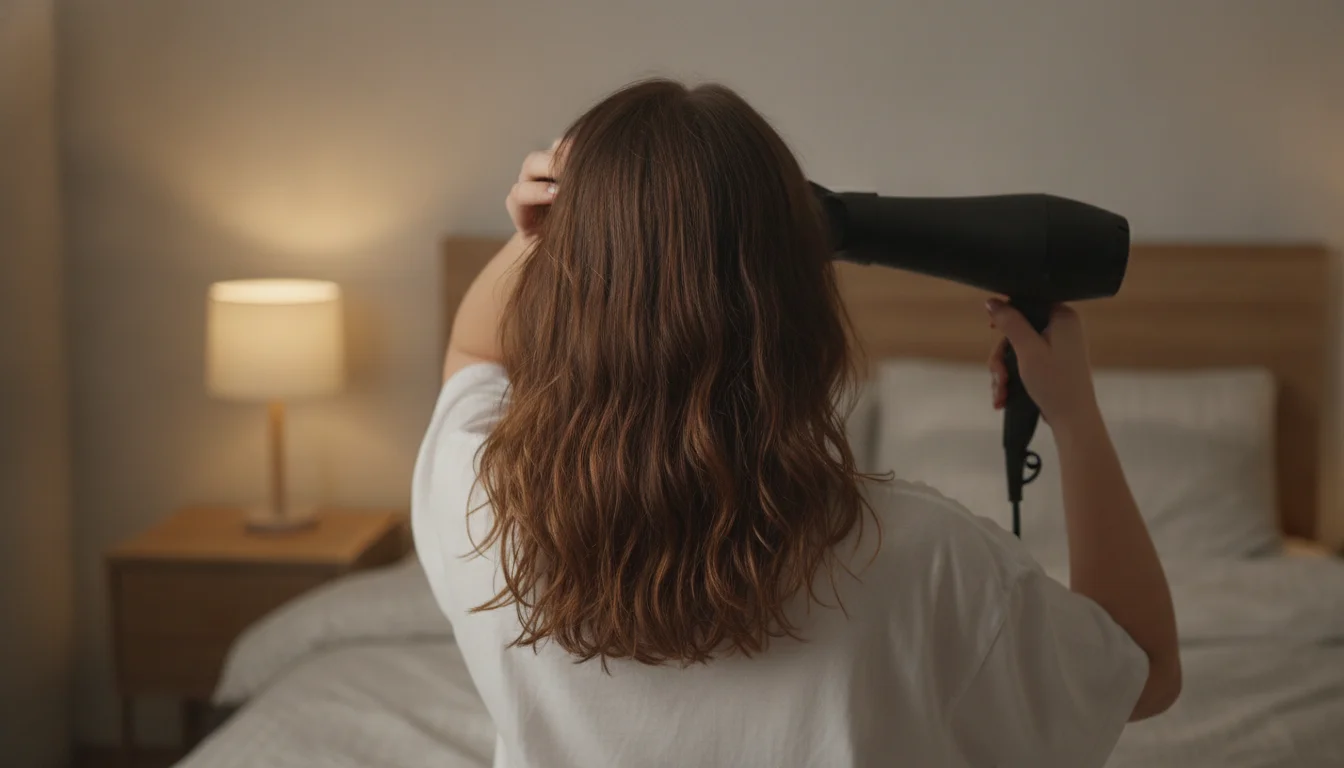
6. Dry your hair before bed or a hat
Damp hair pressed into a pillow or under a cap stays warm and wet for hours, with the night’s sweat and oil held against the scalp.
Pat and squeeze with a towel instead of rubbing. Then let your hair air dry with nothing on your head, or use a dryer on low or medium heat aimed at the roots. The ends can stay a little damp. The scalp shouldn’t. Thick hair is the trap: the crown can still be wet at bedtime when the lengths feel dry, so press your fingers against the roots to check.
7. Change your pillowcase often
Your pillowcase collects oil, sweat, dead skin and hair product every night, then puts them back on clean hair.
Change it at least once a week, more often while you’re working on the smell.
8. Clean hats, brushes and hair ties
A clean scalp under a sweaty cap starts the day half dirty. When that gym-goer asked for help, one of the first questions back was whether he wore a hat all day.
Wash hats, headbands, scarves and hair ties, especially the inside band of a hat where sweat collects. Check the care label first: if a cap can’t go in the machine, wipe the band and let it air out between wears. Pull the hair out of brushes and combs and wash them in warm, soapy water. Use a dry towel every time, and don’t share any of it.
9. Try an apple cider vinegar rinse
Optional, and the evidence is mostly people saying it worked for them.
Vinegar is an acid, so never put it on your scalp neat. Dilute it well with water, pour it over the scalp after shampooing, then rinse it out thoroughly. Nobody has tested a strength or a timing for the scalp, so keep it weak and don’t leave it on. Patch test it first, keep it out of your eyes, skip it if your scalp is broken or sore, and stop if it stings.
When to call a professional
See your primary care provider or a dermatologist if:
- The smell doesn’t go away after you’ve used a medicated shampoo as its label directs.
- The smell gets worse over time.
- Your scalp is red, swollen, painful or itches badly.
- You see thick scale, patches or crusts.
- Your hair is thinning or falling out.
- There are sores, pimples, oozing or bleeding, or blood or fluid on your pillow in the morning.
- You have a fever, or your scalp reacts to something you tried.
One forum poster had a smell “like an old dog” the day after washing, for years. She dried her hair, used clean pillowcases and tried two medicated shampoos. Nothing. That’s the case for a dermatologist, who can look at the scalp and work out what’s behind it. The gym-goer with the mildew smell saw a doctor in the end and got an answer.
Frequently asked questions
Why does my scalp still smell bad even when washed?
Usually the wash isn’t reaching the scalp, residue is left behind, or the smell comes back from a damp pillow, a sweaty cap or a dirty brush. Work through steps 1 to 8. If it survives all of them, see a professional.
What does an unhealthy scalp smell like?
People describe it as sour, cheesy or yeasty, musty like a wet dog, or like mildew. A description isn’t a diagnosis. The signs in the section above are what tell you to get it checked.
How do I get the smell out of my hair without washing?
You can’t, really. Dry shampoo covers it for a while and a water rinse clears fresh sweat. Both just buy time.
Can diet cause scalp odor?
It can play a part: garlic, onions, some spices and alcohol change how sweat smells. Cleveland Clinic suggests a food diary. Note what you eat and whether your scalp smells, cut suspects, then add them back one at a time.